Who backs who in the modern Conservative party?

Marie Le Conte | 23rd March 2021 | Uncategorised
CC BY-NC 2.0 Photo credit: UK Parliament/Jessica Taylor

In her latest Jackdaw circular, Marie Le Conte observes a rare ceasefire in Tory backbench alliances. Will it hold?

Is there anything the Conservative MPs of today like more than a research group? First came the ERG, on Europe; then there was the CRG, on China, and finally the NRG, on the north of England. Though it all started with Brexit, the parliamentary party has since developed a quasi-comical fondness for internal pressure groups, though it is not always clear they are of much use. It is not an entirely new phenomenon, however. According to an academic paper from 1961, backbench Tory MPs have no real factions to speak of as disagreements tend to form among “ad hoc groups”, then, as new issues arise, “the coherence of the former groups dissolves and new alignments appear”. Similarly, a study from 1972 concluded that “allies on one issue either become enemies on the next, or else simply do not feel strongly enough on the next issue to necessarily want to work together”. Or, to slightly paraphrase Richard Rose’s famous words: the Conservative party has tendencies, not factions. As a result, these groups should simply be the norm, but something still feels off. Take the Cabinet; in usual times, most senior ministers would have people behind them and, at the very least, be connected to a wing of the parliamentary party. This isn’t really the case at the moment. One way to think about this is to picture an impending leadership contest. Say Boris Johnson resigns tomorrow, and most of the Cabinet considers giving the top job a go - who is backing whose campaign? Liz Truss and Dominic Raab are quite straightforward, as the latter has run before and both have always openly been on the libertarian wing of the party. Michael Gove also has known allies, but it isn’t clear who, in the new intake, would back him. Similarly, Priti Patel’s time with Vote Leave and as Home Secretary have gained her fans on the right of the Conservatives, but we do not know yet whether this would translate into concrete support. Then, things get shadier. We know Rishi Sunak is popular - at least for now - but who would Team Rishi be? His rise was so quick he seemingly did not have the time to make any allies. On the flipside, Matt Hancock has been around for long enough that most will have a reason not to trust him. When it comes to less prominent secretaries of state, there just isn’t much to say. Does Robert Buckland have his own people? Does Kwasi Kwarteng? Robert Jenrick? Hell, Grant Shapps? Let’s not even mention Gavin Williamson. No man is an island, but many cabinet ministers currently stand alone. This is unusual - just look at David Cameron’s 2015 Cabinet, the last before the Brexit wars really began. People like George Osborne, Amber Rudd, Sajid Javid and John Whittingdale were known characters, in that it was easy to tell where they stood, and who they stood with. It was, as a result, simpler to track who was doing well and who wasn’t, and what that meant for the different groupings in the parliamentary party, as well as the direction of travel of the party itself. When the referendum happened, everything changed. The Leave and Remain camps were formed, then splintered into smaller factions, and the most unlikely of alliances were made. Aside from a few exceptions, Brexiteers tended to be more right-wing and Remainers more centrist, but it did not really matter; there was a war to be won and everything else was cast aside. This was the Parliament the 2017 intake came into, which is why it is not surprising that they mostly weren’t able to attach themselves to a particular group. Finally, the last earthquake was the election of 2019, in which swathes of the more liberal MPs left or got cast out, and countless new and unknown faces joined the fray. Because they have barely stepped foot on the estate and, well, there have been bigger things going on, few have been able to nail their colours to the mast. We know they are all Brexiteers, but that doesn’t mean much anymore. What will happen when Parliament comes back? Johnson has a lot on his plate at the moment, but should start getting worried about what is to come. Research groups are one thing, but once new MPs start socialising and politics returns to normal, some new, longer lasting groups of backbenchers will start to emerge. These tend to be fertile breeding grounds for leadership contenders, as well as effective tools to influence more broad brush policymaking. Conservative backbenchers also know their party has a large majority, and they are, as a result, the real opposition to the government. Number Ten can afford to ignore individual MPs for now, but there is strength in unity; backbenchers will realise it soon enough....

Subscribe to The Mace

Join the member community shaping British politics and stay ahead of what's really happening in the world of politics and public affairs, with expert analysis, breaking news, and insider insights from Westminster and Brussels. The Mace is the leading news source and resource for the government affairs industry, offering required reading and lobby intelligence for professionals.

To see what you are missing out on by not subscribing to The Mace, click here to download our full membership info-pack. This includes having no paywall on op-ed content or profiles/interviews, allowing professional profiles to be read with maximum impact and visibility by government, special advisers, MPs, peers, civil servants, and policy and political decision-makers.

Kemi’s true blue purge, with help from Sir Philip May

William Cash | July 26, 2026

The news that former Home Secretary Sir Grant Shapps has failed to make the new Tory candidate list has put fear into dozens of former Conservative MPs. Whether

UK ‘global investor’ visa proposed by lobby group to bring back UK’s non-doms

Lucy Carrier-Pilkington | April 23, 2026

New 'global investor visa' proposed by lobby group as UK struggles to attract the super-rich

London Elections latest polling: Green gains and Labour out

Lucy Carrier-Pilkington | April 22, 2026

Latest polling from YouGov suggests major gains for Greens and Reform UK in the capital.

Greens win Gorton and Denton

Oliver Dean | February 27, 2026

The Green's victory reflects a changing mindset in British politics
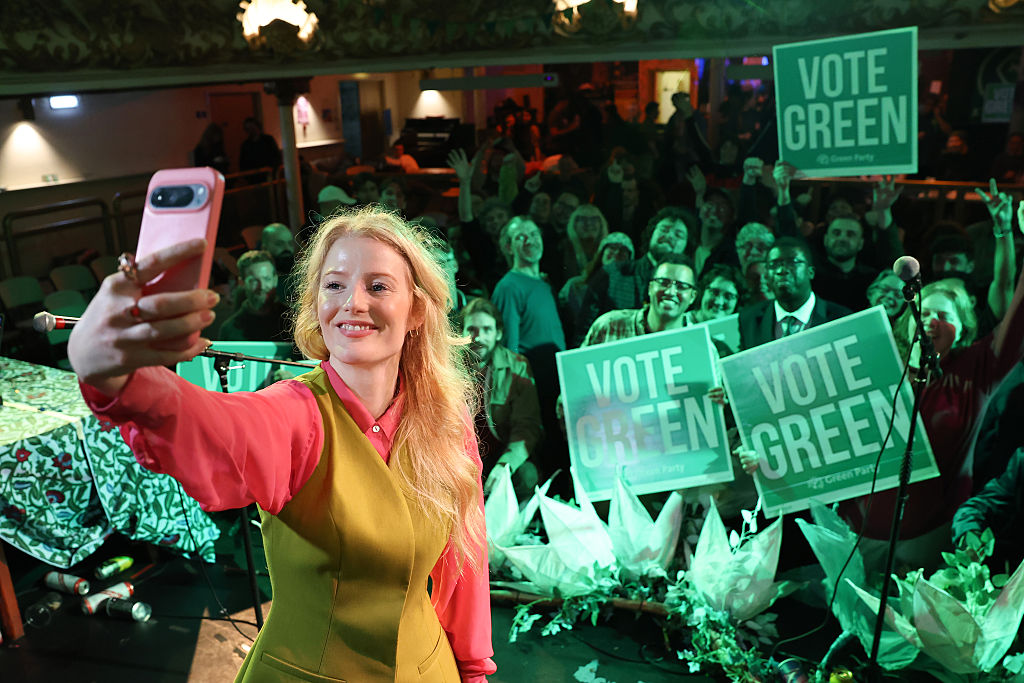
Green Party leader gets new communications advisor

Oliver Dean | February 17, 2026

Polanski's new communications advisor shows that the Green Party leader is serious about his public image.

Trade body describes the Government’s new electric HGV plan as a ‘monumental challenge’

Oliver Dean | February 17, 2026

With only 1 in 70 new HGV's being electric, the government must assist with infrastructure investment says industry leader

Blakeney bolsters its team with new additions

Madeline Dabbah | February 13, 2026

Blakeney has welcomed former drinks company Oatly managing director Tim Knight and pro-Brexit MEP Lucy Harris, in an effort to strengthen their position, the public affairs and strategic

Hanbury goes global

Oliver Dean | February 13, 2026

Hanbury's decision to erect offices in Washington and Sydney showcases the firms' strong public image.

Mandelson’s lobbying firm in disarray as CEO departs

Oliver Dean | February 6, 2026

Benjamin Wegg-Prosser, who co-founded the lobbying firm Global Counsel alongside Peter Mandelson has today resigned following significant backlash regarding the firm’s link to Jeffrey Epstein.

Russell Group turns to public policy veteran for next phase of university lobbying

Thomas Edwards | January 21, 2026

The Russell Group has picked Professor Libby Hackett, an Australia based public policy specialist, as its next chief executive, handing the UK’s most influential research university lobby to