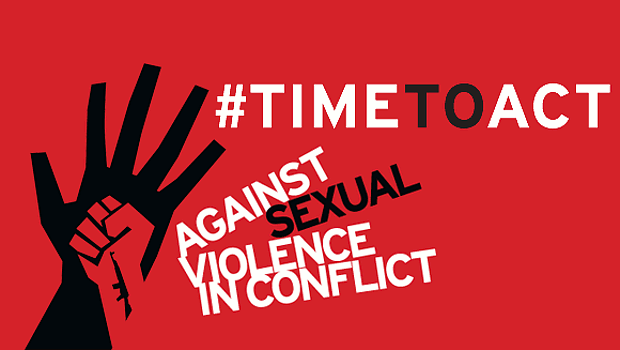
Preventing Sexual Violence in Conflict
Anthony Mangall MP, chair of the APPG on the prevention of sexual violence in conflict initative (PSVI) reminds Parliament why it’s time to reignite the UK’s global initiative in recognising, punishing and supporting the victims of crimes committed on the sidelines of war.
Conflicts, both old and new, are often viewed by the loss of life on the battlefield, the death and casualty lists, the land conquered, the treasures plundered, and the armies and arms deployed. But in reality, conflict is also about those on the sidelines: the innocent bystanders, the women, the children—those who bear the brunt of the conflict but receive little attention, recognition, support or, indeed, justice.
Now more than ever, we have not only the moral duty to act, but an international landscape that is calling for action. After all, in a digitalised world, we are now greeted daily with recordings, news articles and accounts of systematic conflict-related sexual violence. Far from the issue diminishing, it is becoming more acute. Yet the objectives of PSVI have always been clear: to end the culture of impunity for perpetrators; to provide support for survivors; and to document crimes of sexual violence in conflict. Those aims stood prominently at the initiative’s inception and they hold true today.
In 2012, the collaboration between a Bosnian refugee, a Yorkshireman and a Hollywood film star resulted in not only the UK Government-led initiative, but a seismic collective collaboration from the international community to address this issue. Speaking in the Foreign Office, the then Foreign Secretary Lord Hague spoke of the need for a “UK team of experts devoted to combating and preventing sexual violence in armed conflict.”
This short notice overseas deployment team was directed towards gathering evidence and testimony in the hope of supporting investigations and prosecutions. It used the expertise of doctors, lawyers, police, psychologists and forensic specialists. That team of experts was drawn down so as to help to protect victims, as well as support international organisations, lead training operations and develop laws and capabilities—all with a view to shattering the culture of impunity, ending rape as a weapon of war, bringing perpetrators to justice and raising awareness.
In the early years up to 2015, the UK deployed its team of experts no fewer than 65 times, to countries including Kosovo, Bosnia, Turkey, Mali and Kenya. These operations proved useful in gaining insight and experience and revealed the systematic use of rape and sexual violence in conflict areas around the world. The missions demonstrated not just that we were right to create such an initiative, but that there was a genuine need and requirement for action, so in 2014 the UK hosted the first ever global summit to end sexual violence in conflict, attracting 1,700 delegates from around the world and bringing together survivors, experts and Governments, all with the aim of addressing rape as a weapon of war.
Under UK leadership, we brought together 156 countries at the UN to denounce the use of rape as a weapon of war through the UN declaration of commitment to end sexual violence in conflict. The early success of that initiative was readily apparent: teams of experts were being deployed; the UK political leadership was ever present; the international community was full square behind the resolutions of the day; and countries were supporting PSVI through their own domestic and international training programmes. The action was tangible, the results were measurable and the optimism was infectious.
Unfortunately, as is so often the case, a change of Ministers and Governments saw PSVI pushed down the agenda. The high funding levels of 2013, 2014, 2015 and 2016 were steadily reduced. The PSVI team was amalgamated into different sections of the now Foreign, Commonwealth and Development Office as opposed to remaining as a stand-alone body. The levels of deployment were scaled back: from 2016 to 2020 they were reduced by almost 50%, despite the number of conflicts and the documentation of sexual violence increasing over that period. Today, the international community is no more at peace than it was nine years ago, so it is essential to fulfil our obligations to PSVI.
We now have a US President who has form in addressing gender-based violence and preventing sexual violence in conflict. With America resurgent and talking about multilateralism, that should be the hook on which we can hang our coat to ensure that initiatives such as PSVI are able to flourish over the coming years.
In Ethiopia, widespread sexual violence against the people of Tigray is ongoing. On Monday, I asked the Minister whether we would be deploying our PSVI team of experts to that area; I hope he might be able to answer when he responds to the debate. In Bangladesh, the Rohingyas are gathered in refugee camps and are detailing the appalling acts of sexual violence conducted against them in Myanmar. In Nigeria, the terrorist organisation Boko Haram kidnaps girls and forces them into marriage, as well as subjecting them to acts of sexual violence. In Iraq, we are only just beginning to learn about the true extent of sexual violence committed by ISIS.
Last yea...

Subscribe to The Mace
Join the member community shaping British politics and stay ahead of what's really happening in the world of politics and public affairs, with expert analysis, breaking news, and insider insights from Westminster and Brussels. The Mace is the leading news source and resource for the government affairs industry, offering required reading and lobby intelligence for professionals.
To see what you are missing out on by not subscribing to The Mace, click here to download our full membership info-pack. This includes having no paywall on op-ed content or profiles/interviews, allowing professional profiles to be read with maximum impact and visibility by government, special advisers, MPs, peers, civil servants, and policy and political decision-makers.