Meditations in an Emergency: Whitehall during COVID

Adam Solomons | 24th March 2021 | Uncategorised
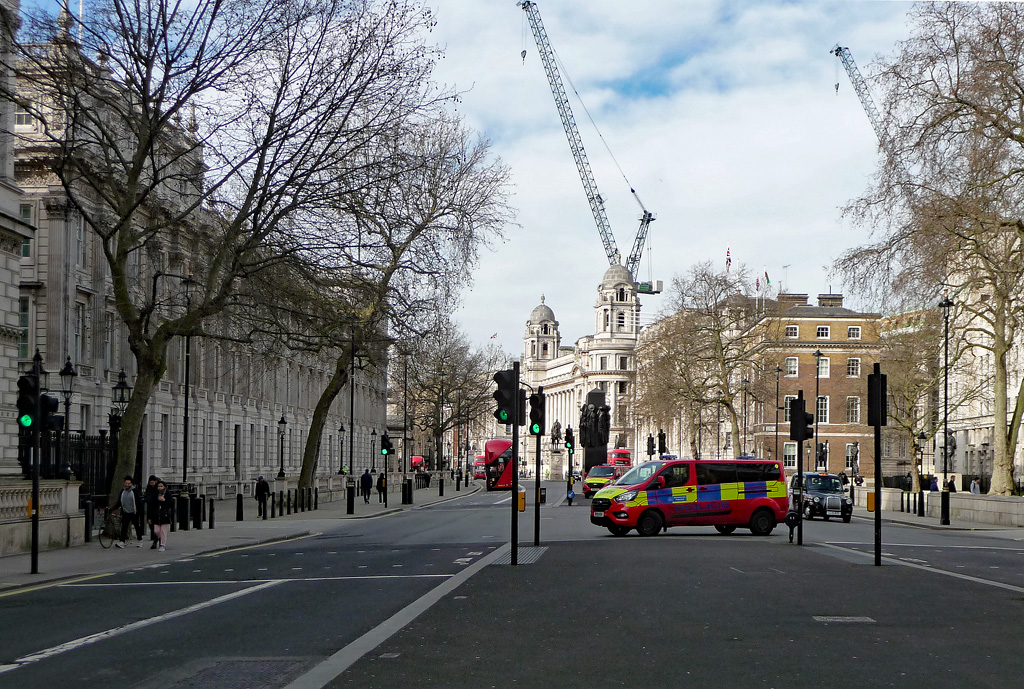
CC BY-SA 2.0. Photo credit: Stephen Richards

An Institute for Government report diagnosed Whitehall’s mixed success during the coronavirus pandemic. Its lead author said making the necessary changes will be no mean feat.

An Institute for Government report diagnosed Whitehall’s mixed success during the coronavirus pandemic. Its lead author said making the necessary changes will be no mean feat. The country may still be in the grip of COVID-19, with a rumoured third wave potentially on the horizon, but researchers have already begun examining what went wrong - and, sometimes, right - in the government’s response to the pandemic.  For a policy making and implementation machine “already strained by Brexit”, Alex Thomas and Rhys Clyne argue in a paper published yesterday, Whitehall was both unusually ready for a major crisis and caught totally unawares. The authors listed ten lessons for ministers and civil servants, informed by the first-hand experience of well-placed interviewees. A rare piece of useful contemporary social science, the twenty-page document is already proving influential in SW1. “The government for much of the early part of the pandemic suffered from the lack of a strategy”, Thomas told The Chamber, nearly summarising the report. He explains, somewhat unnervingly, that while staffers in the Treasury devised ingenious ways to protect the economy at all costs, civil servants in the Department of Health were modelling how to save as many lives as possible without considering the economy at all. As the report says, “The government has proved better at executing decisions than making them.” The authors evaluated an array of Whitehall policies devised and implemented over the past year as successful or otherwise, including (but not limited to) the furlough scheme, Test and Trace, PPE procurement, Universal Credit expansion, Nightingale Hospitals, regional lockdowns, Eat Out to Help Out and the vaccine rollout. Such analysis is never free from the odd bit of pork-barrel politics: the report advises hiring more civil servants in order to improve the government’s “response capacity”. Yet the rationale behind this - chronic NHS shortages, local government starvation, chaos across the social care sector - are compelling and not insignificant. And in hoping their paper to be as popular among ministers themselves as think tank staffers and journalists, the authors are wisely diplomatic. For example, they criticise the nature of Cobra decision-making, rather than cabinet ministers who missed successive meetings and misrepresented SAGE guidance.  Thomas explained this as an indecision problem, citing a year of consistently unpredictable lockdowns. “If a prime minister is unwilling or unable to make a decision, there’s very little that can be done short of all the cabinet resigning to force the pace on that decision. “There’s an assumption I think, sometimes, that the Cabinet Secretary steps in and says ‘prime minister, you need to do x, y and z.’ Actually I think what we learned from both the lockdown and the pandemic, where Johnson was unwilling to act quickly, and Brexit, where Theresa May was unable to act quickly because of the political constraints on her, is that there’s no real way to cut through.” Even still, the report doesn’t shy away from praising, and criticising, individuals. In lamenting rushed and ad hoc policy decisions such as last summer’s exams debacle, Thomas and Clyne explain: “More genuine and thoughtful incorporation relies on the willingness of key individuals to work with the right people at the right time. The Vaccine Taskforce is made up of a diverse range of experts from different organisations and sectors, in part because Patrick Vallance [...] knew who to bring to the table.” The opposite, they said, applies to Gavin Williamson’s stewardship of an atomised Department for Education, which has proved overly distant from unions and schools. The touted yet underutilised Nightingale Hospitals are another example. “Had [...] Matt Hancock incorporated outside expertise more substantially [...] the outcome might have been more effective.” Don’t tell Michael Gove.  Yet it isn’t all bad news. Thomas and Clyne commended departments’ (albeit varying) success in ensuring essential work could be done from home. “[Government] as a whole coped surprisingly well with the need to radically change working patterns in a very short period of time.” In contrast, someone who became infamous on Whitehall for trying to force the pace on issues was Dominic Cummings. Yet with much of the report citing poor relationships between tiers of government, ministers and civil servants, it’s not clear whether Cummings’ “hard rain” approach helped or hindered mutual trust within government.  In fact, Thomas says, much of the civil service was perfectly open to the Number Ten strategist’s big ideas. “I think a lot of what Cummings wanted to do - when you strip away all the briefing and the sound and fury - was not bad, and needed. A lot of civil servants agreed with that and they recognised the importance and insights Cummings was offering. “What I think was counterproductive was the pitched battle style of it. You need a bit of grit...

Subscribe to The Mace

Join the member community shaping British politics and stay ahead of what's really happening in the world of politics and public affairs, with expert analysis, breaking news, and insider insights from Westminster and Brussels. The Mace is the leading news source and resource for the government affairs industry, offering required reading and lobby intelligence for professionals.

To see what you are missing out on by not subscribing to The Mace, click here to download our full membership info-pack. This includes having no paywall on op-ed content or profiles/interviews, allowing professional profiles to be read with maximum impact and visibility by government, special advisers, MPs, peers, civil servants, and policy and political decision-makers.

Kemi’s true blue purge, with help from Sir Philip May

William Cash | July 26, 2026

The news that former Home Secretary Sir Grant Shapps has failed to make the new Tory candidate list has put fear into dozens of former Conservative MPs. Whether

UK ‘global investor’ visa proposed by lobby group to bring back UK’s non-doms

Lucy Carrier-Pilkington | April 23, 2026

New 'global investor visa' proposed by lobby group as UK struggles to attract the super-rich

London Elections latest polling: Green gains and Labour out

Lucy Carrier-Pilkington | April 22, 2026

Latest polling from YouGov suggests major gains for Greens and Reform UK in the capital.

Greens win Gorton and Denton

Oliver Dean | February 27, 2026

The Green's victory reflects a changing mindset in British politics
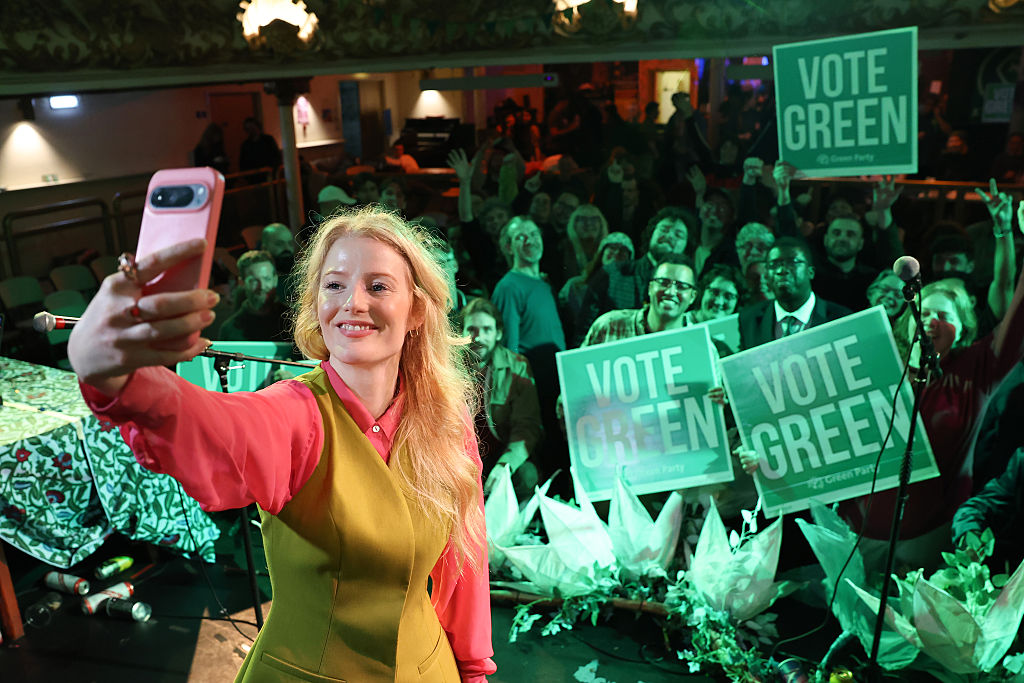
Green Party leader gets new communications advisor

Oliver Dean | February 17, 2026

Polanski's new communications advisor shows that the Green Party leader is serious about his public image.

Trade body describes the Government’s new electric HGV plan as a ‘monumental challenge’

Oliver Dean | February 17, 2026

With only 1 in 70 new HGV's being electric, the government must assist with infrastructure investment says industry leader

Blakeney bolsters its team with new additions

Madeline Dabbah | February 13, 2026

Blakeney has welcomed former drinks company Oatly managing director Tim Knight and pro-Brexit MEP Lucy Harris, in an effort to strengthen their position, the public affairs and strategic

Hanbury goes global

Oliver Dean | February 13, 2026

Hanbury's decision to erect offices in Washington and Sydney showcases the firms' strong public image.

Mandelson’s lobbying firm in disarray as CEO departs

Oliver Dean | February 6, 2026

Benjamin Wegg-Prosser, who co-founded the lobbying firm Global Counsel alongside Peter Mandelson has today resigned following significant backlash regarding the firm’s link to Jeffrey Epstein.

Russell Group turns to public policy veteran for next phase of university lobbying

Thomas Edwards | January 21, 2026

The Russell Group has picked Professor Libby Hackett, an Australia based public policy specialist, as its next chief executive, handing the UK’s most influential research university lobby to