The death throes of the Trump presidency

Brooks Newmark | 10th January 2021 | Comment, Magazine, Politics, Washington
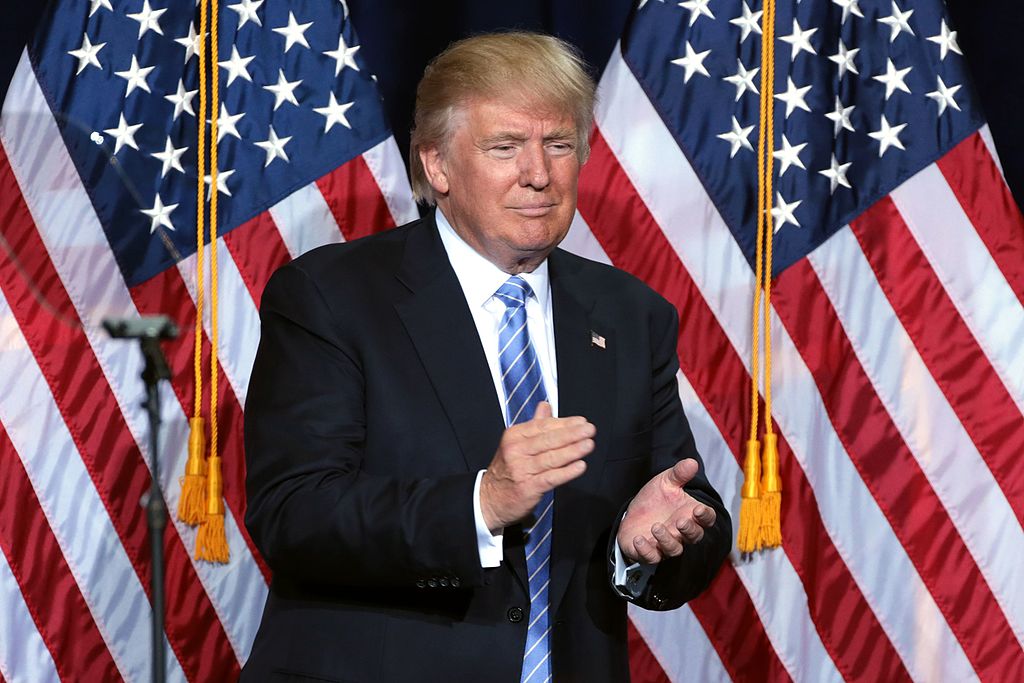
Donald Trump (Credit: Gage Skidmore) (https://creativecommons.org/licenses/by-sa/2.0)

The last days of Trump have seen the US descend into chaos amid riots and the invasion of the Capitol building in Washington, but it's not the last of the Donald, says Brooks Newmark

“They’ve realised that this country has gone so flabby that any gang daring enough and unscrupulous enough, and smart enough not to seem illegal, can grab hold of the entire Government and have all the power and applause.” Sinclair Lewis’s prophetic observation in It Can Happen Here (1934) of a future America came closer to reality than ever with the invasion of the US Capitol building for the first time since the British Army took it over and set it on fire in 1814. The fact that this invasion was instigated by a sitting President only made matters worse.

The President-elect Joe Biden said of the attack on the Capitol “They weren’t protestors…they were rioters, a mob. Insurrectionists. Domestic Terrorists.” He went on “I wish we could say we couldn’t see it coming. But that isn’t true. We could. For the past four years, we have had a President who has made his contempt for our democracy, our constitution and the rule of law clear in everything he has done.” It was only the threat of invoking the 25th Amendment (to determine the President’s fitness for office) and the resignation of two of his cabinet members that led to Trump calling off the dogs of war only just before all the major social media platforms (Twitter, Facebook and Instagram) suspended his accounts.

Trump is now seeking to pardon himself before he leaves office to make him immune from Federal prosecution. Notwithstanding, this doesn’t stop Trump from facing State or civil prosecutions in what is a highly litigious country. Further, the mechanisms for pardoning himself are somewhat complicated and would probably necessitate Trump resigning at the last hour to enable a “President” Pence to take office and pardon him. Unlikely. Trump will not give his “enemies” further ammo by admitting guilt – which in essence a resignation would imply.

Joe Biden, meanwhile, will wish to heal the nation and may seek to offer some sort of gesture to Trump. However, while he may be tempted to echo the words of Gerald Ford at his inauguration when he took office from Richard Nixon, “my fellow Americans, our long national nightmare is over,” in reality, there is too much bad blood not just between Democrats and Trump but between moderate Republicans and Trump too. So the end of the  Trump years in office may herald the beginning of the Trump years in court.

With a few days to go to the inauguration any further calls for impeachment are likely to be merely symbolic. Further, Trump has announced to much fanfare that he will not be attending the inauguration on the 20th January. He will be the first president since Andrew Johnson in 1869 not to do so.

So where will Trump be on the last day of his presidency? Playing golf.

Is this the last we have heard from Donald Trump? I suspect not. Almost 75 million Americans voted for Trump in 2020. That’s 10 million more voters than he had in 2016.  In 2024 he will still be younger than Joe Biden is today. Watch this space.

Subscribe to The Mace

Unlock access to all Mace content by subscribing.

Burnham is reorganising Whitehall, not reforming it

Mace | July 27, 2026

Andy Burnham is shaking up government with more changes than by any incoming prime minister in memory. But, asks Sir Bernard Jenkin MP, does he understand why the

Kemi’s true blue purge, with help from Sir Philip May

William Cash | July 26, 2026

The news that former Home Secretary Sir Grant Shapps has failed to make the new Tory candidate list has put fear into dozens of former Conservative MPs. Whether

Why Burnham’s energy VAT cut will make a difference

Mace Magazine | July 25, 2026

Cameron Brown, a former special advisor to the Chancellor of the Exchequer, explains why Burnham's VAT cut on energy bills is a measure people will actually notice.

If Burnham wants growth, he must start by backing AI and Tech founders and risk-takers, says Liam Houghton

Mace | July 23, 2026

New Prime Minister Andy Burnham has an opportunity to make Britain the best place to start and scale a business, argues CEO Liam Houghton.

The continuing political Whydunnit of the murder of Ann Widdecombe

Mace Magazine | July 23, 2026

The strangely guilty way that the media, and some politicians have reacted to Widdecombe’s shocking death shows the double standards that can operate when a politician of the

The King of the North Takes Downing Street: Burnham’s Great Purge

Mace Magazine | July 21, 2026

The ruthlessness of Andy Burnham’s purge has taken the country back to Macmillan's Night of the Long Knives. Media reaction has been predictably partisan, with the choice of

What James Purnell’s return to No 10, along with the new cabinet, reveals about Burnham’s Labour network

Mark Leftly | July 21, 2026

James Purnell’s return to frontline politics is more than a nostalgic Blair-Brown era reunion. As Andy Burnham builds his Downing Street operation, public affairs professionals will need to

Reform’s international policy: Farage looking to balance ideals with new foreign policy advisor

Jonathan Singh | July 16, 2026

To date, Reform is yet to appoint a foreign affairs spokesperson. Jonathan Singh looks at Reform's new approach to international affairs with the appointment of Dr Alan Mendoza

Ann Widdecombe Devon hamlet murder mystery continues as tributes make her a political saint

William Cash | July 16, 2026

The death of Ann Widdecombe raises serious questions about the security of high-profile politicians. The shocking episode seems out of Midsomer Murders with the former Tory minister being turned into

The Families Left Out of the Nicotine Policy Debate

Beatriz Santos | July 15, 2026

Beatriz Santos argues that both scientific evidence and lived experience should remain the foundation of policymaking, especially for understanding how people succeed in quitting cigarettes.