Frances Leach | 8th December 2020 | Comment, Culture & Travel, Magazine, Social Wire
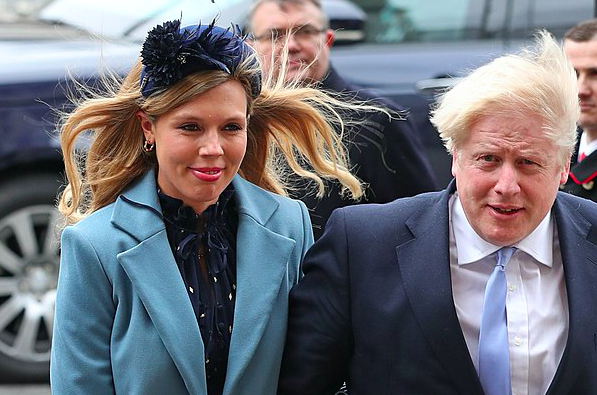
Carrie Symonds and Boris Johnson on Commonwealth Day 2020 (Credit: No 10 Downing Street)
Fashion can make or break in Westminster, says former aide to Jeremy Corbyn Frances Leach
Style in Westminster is an odd phenomenon. For some of the most visible people in the world, what they wear is often overlooked (rightly) for the political decisions they take and the convictions they hold.
But what is fashion’s role in the corridors of power? And does it really matter what you wear when you’re jostling for influence in such a volatile and superficial environment? The short answer is yes – of course, it does.
When working as an adviser in Westminster, it is always amusing to see the fresh blood arriving into the House of Commons after recess or a General Election. New MPs and their staffers alike must choose their style of dressing in a matter of days. For MPs, it can go one of two ways – either they arrive with a wardrobe that screams “I own the entire West Wing boxset on DVD” or, for MPs who come from more humble backgrounds, it’s simply whatever they could afford to put on their already eye-wateringly high credit card statements.
One such MP, who had just won a hotly contested by-election, remarked to me that she was in so much debt from her campaign she could only afford to purchase one smart dress for her first week in parliament. She simply hoped to disguise it with various coats so her more affluent colleagues wouldn’t notice.
For many, fashion in Westminster can be as much a tool of oppression as it is one of expression. The class divide between politicians and their staffers alike is easily seen in the clothes they wear. How you dress is just as important as what you wear. How would a young man from Warrington know that a shirt from a packet with a pocket on the chest is a clear indication of class? How is a young woman from Hull to know that a dress showing both chest and legs is considered as gauche as can be?
Former MP for Ashfield Gloria De Piero notes that she would wear a “dress or pencil skirt with a blouse and always heels though the height of my heels is reducing with my age.” De Piero says “I come from a working-class background and I think it’s a crucial part of your upbringing to dress up and look smart at work. When I went to university, I was really confused that those from well off backgrounds prided themselves on dressing down. It made no sense to me then and I still scratch my head about it now.”
A young male Conservative staffer is often easily spotted around SW1 in a crisp blue suit, which indicates somewhat of a slingshot from St Pauls, Winchester or Eton into Westminster, with a career trajectory to taking their new boss’ seat in a mere matter of years. In the era of Corbyn’s Labour, bright young staffers would arrive with tatty rucksacks covered in badges of any number of student movements, only to find that the old guard looked upon them with such disdain that a hasty trip to Marks and Spencers could potentially repair the worst of the damage inflicted on their first day.
For male politicians entering Westminster for the first time, the need to wear a well-tailored suit in the flagship colours of your party is as much a part of your day one checklist as turning up to the whips office to get the ‘line’ tattooed across your forehead. A ministerial Red Box is as much a style ambition as a political one. The desire to cart one around SW1 like the latest designer handbag makes one do mad, mad things.
For decades men’s style in Westminster was simply an array of suits and Oxford shoes. When parliament is made up of a small section of the elite, the style of politicians ends up being just the style of the upper classes – whichever look was preferred of high society at the time. However, as parliament began to diversify with class, gender, race and age - fashion became a key part in the political convictions of its inhabitants and a way to identify who’s who amongst the Westminster set.
In the era of Cool Britannia, in the 90s, Labour politicians would sport garish t-shirts on their weekends away from London and host questionable celeb-filled parties with the likes of Noel Gallagher, in wide-collared shirts and jaunty suit blazers. Doing away with the establishment and its straight-laced uniforms, what was “in fashion” for politics was to be as far away from the stuffy confines of Westminster as possible.
In a different era of Labour politics, Jeremy Corbyn was lambasted by all sides for his “scruffy” appearances. Former Prime Minister David Cameron famously scathed across the despatch box to Corbyn saying; “put on a proper suit, do up your tie and sing the national anthem" in response to a heckle about his own mother’s opposition to Conservative welfare cuts. Here, Cameron revealed a clear distinction in the classism of fashion. Here are two men, both at the top of their respective political parties, although Corbyn did not attend a school as well-heeled as Cameron’s (Eton College) he was himself a privileged individual. However, although they were both “equal” in one regard, Cameron’s clear disdain for Corbyn’s ambivalence towards his appearance was worthy of s...
Subscribe to The Mace
Join the member community shaping British politics and stay ahead of
what's really happening in the world of politics and public affairs,
with expert analysis, breaking news, and insider insights from
Westminster and Brussels. The Mace is the leading news source and
resource for the government affairs industry, offering required
reading and lobby intelligence for professionals.
To see what you are missing out on by not subscribing to The Mace, click here to download our full membership info-pack. This includes
having no paywall on op-ed content or profiles/interviews, allowing
professional profiles to be read with maximum impact and visibility by
government, special advisers, MPs, peers, civil servants, and policy
and political decision-makers.
For 10 months, ex-army officer James Jeffrey trekked 3500 km across Europe by foot. The scale of migration he witnessed may not have been as dramatic as the
The Civil Service is ready to support Dame Antonia Romeo's flagship changes to government machinery - notably relating to AI and devolution - under new prime minister Andy
Andy Burnham is shaking up government with more changes than by any incoming prime minister in memory. But, asks Sir Bernard Jenkin MP, does he understand why the
UK aviation can decarbonise while meeting growth ambitions, but urgent government action is needed to prevent costs increasing for passengers and the sector losing its competitive edge.

The news that former Home Secretary Sir Grant Shapps has failed to make the new Tory candidate list has put fear into dozens of former Conservative MPs. Whether
Cameron Brown, a former special advisor to the Chancellor of the Exchequer, explains why Burnham's VAT cut on energy bills is a measure people will actually notice.
The strangely guilty way that the media, and some politicians have reacted to Widdecombe’s shocking death shows the double standards that can operate when a politician of the