EU Boosts Research Spending but Misses Long Standing Three Per Cent Target

Mace | 8th December 2025 | Brussels
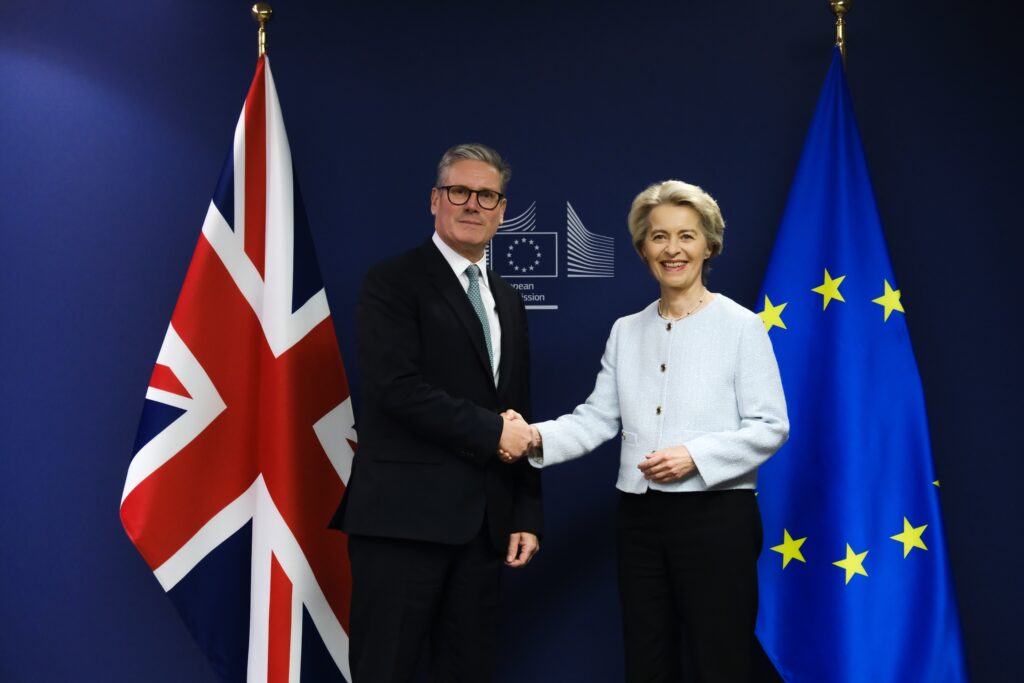
Union_Jack_and_the_european_flag

EU research spending reaches record levels but remains well below the three per cent goal, prompting renewed debate over investment gaps and competitiveness.

The latest figures show that research and development spending in the European Union has reached a record level in money terms but still falls short of the long standing target for investment. In 2024 total spending on research and development across the bloc was estimated at 403.1 billion euro, a rise of 3.6 per cent compared with 2023 when it stood at 389.2 billion euro. Measured as a share of economic output the picture is less dramatic. Research and development intensity in the European Union, defined as research spending as a percentage of gross domestic product, stood at around 2.2 per cent in 2024. That level is broadly unchanged from recent years and remains below the agreed objective for combined public and private investment to reach three per cent of gross domestic product. Over a longer horizon spending has clearly increased. Between 2014 and 2024 total research and development expenditure in the European Union grew by just over 62 per cent, rising from 248.6 billion euro to 403.1 billion euro according to official data. The intensity of research spending has moved more slowly, increasing by about 0.1 percentage points over the same ten year period. Government budgets have also expanded. In 2024 the total amount allocated by European Union governments for research and development reached an estimated 127.9 billion euro which is about 0.71 per cent of gross domestic product. That represents a 3.4 per cent increase on 2023 levels and a rise of almost 60 per cent compared with 2014 allocations. The spending target itself has a long history. European countries first committed to raise combined public and private research and development outlays to three per cent of gross domestic product by 2010 and later extended the goal to 2020. In more recent policy discussions ministers and the European Commission have reaffirmed the three per cent objective and shifted the deadline again toward 2030. Some policy documents now refer to even more ambitious objectives. A draft Council declaration on the next European research and innovation framework programme has mentioned an eventual goal of four per cent of gross domestic product for research and innovation spending. Parliamentary and Commission briefings continue to describe the three per cent benchmark as the central target for the current decade. The aggregate figures conceal significant differences between member states. Recent data show that in 2024 research and development intensity equal to or above three per cent of gross domestic product was recorded in only a handful of European Union countries. Sweden, Belgium, Austria, Finland, Germany and Denmark were among the states above or at the three per cent mark while several others recorded intensities at or below one per cent. Regional disparities also appear at sub national level. Statistics compiled by the German Federal Statistical Office for the European comparison of regions indicate that only twenty five regions across the Union currently meet or exceed the three per cent research intensity goal, with areas such as Stuttgart among the top performers. Many regions particularly in southern and eastern Europe remain below the European average. In a global comparison the European Union remains an important research player but does not lead in intensity. Analysis by the United States National Science Foundation shows that in 2022 the European Union accounted for about 18 per cent of global research and development expenditure with an intensity a little above two per cent of gross domestic product. The United States and China each represented larger individual shares of global spending with higher or rapidly rising intensities. Recent strategic reports have added new urgency to debates around the target. Mario Draghi’s assessment of European competitiveness recommended that the Union move toward annual research and innovation spending of between 750 and 800 billion euro if it wishes to match other major economies. The report repeats the call for the three per cent objective to be met and highlights the role of European framework programmes and national budgets in closing the gap....

Subscribe to The Mace

Join the member community shaping British politics and stay ahead of what's really happening in the world of politics and public affairs, with expert analysis, breaking news, and insider insights from Westminster and Brussels. The Mace is the leading news source and resource for the government affairs industry, offering required reading and lobby intelligence for professionals.

To see what you are missing out on by not subscribing to The Mace, click here to download our full membership info-pack. This includes having no paywall on op-ed content or profiles/interviews, allowing professional profiles to be read with maximum impact and visibility by government, special advisers, MPs, peers, civil servants, and policy and political decision-makers.

EU backs 13 overseas projects to secure critical raw materials

Mace | June 5, 2025

The European Commission has approved 13 new strategic projects outside the EU to secure critical raw materials vital for electric vehicles, renewable energy, and defence. Spanning countries from

Bulgaria cleared to join Eurozone in 2026

Mace | June 5, 2025

The European Commission and ECB have approved Bulgaria’s accession to the eurozone, with the country set to adopt the euro on 1 January 2026. Final approval from EU

Poland faces fiscal strain amid deep political divisions

Mace | May 28, 2025

Poland’s public deficit hit 6.6% of GDP in 2024, driven by defence and social spending. Rising debt, polarised politics, and stalled reforms have raised concerns among ratings agencies

UK–EU strike landmark post-Brexit deal covering trade, defence and mobility

Mace | May 20, 2025

Britain and the European Union have agreed a major new post-Brexit settlement, extending fishing rights, easing trade barriers, and opening defence and youth mobility cooperation. The deal marks

EU approves €201 billion budget amid tensions over climate goals and rising debt

Mace | April 24, 2025

The EU has agreed a €201 billion budget for 2025, prioritising research, health, education and climate action. Key programmes such as Horizon Europe and Erasmus+ receive increased funding,

Brussels Targets Apple in First Major Crackdown Under Digital Markets Act

Mace | April 24, 2025

The European Commission has launched formal proceedings against Apple over suspected breaches of the Digital Markets Act, focusing on restrictive App Store policies. Developers claim Apple’s compliance measures

Huawei Faces Brussels Courtroom Over Corruption Allegations

Mace | April 4, 2025

Huawei representatives faced a Brussels court this week, accused of corruption and money laundering linked to their lobbying efforts in the EU. As the investigation unfolds, it could

Brussels faces transparency showdown as Patriots for Europe target EU funding contracts

Mace | April 2, 2025

Patriots for Europe has launched an unprecedented transparency offensive, submitting 86 freedom of information requests to the European Commission demanding access to thousands of EU contracts with NGOs.

Index Launch: Countries With The Most Effective Anti-Smoking Policies

Federico N. Fernández | November 21, 2022

The "Effective Anti-smoking Policies" Index analyses public policies aimed to eradicate smoking, in 59 countries

The EU Special Representative to the Gulf will play a key role in EU-GCC relationship

Mace | November 21, 2022

Luigi Di Maio's candidacy irks key countries across the EU and the Gulf