UK’s economic stability starts at sea, says the CEO of the Chamber of Shipping

Mace | 28th April 2026 | Comment, Policy & Think Tanks, Politics
Rhett Hatcher

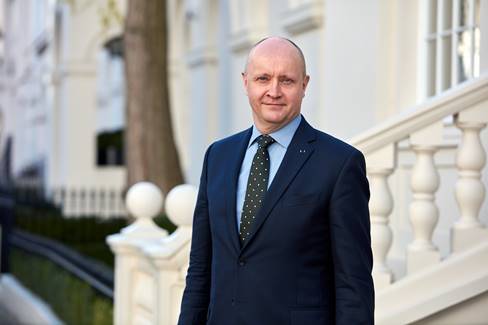
Shipping moves 95 per cent of the UK’s trade. Most of the time, this happens smoothly until there is a global crisis, writes Rhett Hatcher, CEO of the Chamber of Shipping

In moments of regional (the Gulf) or global (COVID) crisis, shipping becomes visible in a way the country rarely notices. Supply chains tighten, routes come under pressure, and the system that powers the economy moves rapidly from the background to the centre of national attention. That is where we find ourselves now. Conflict in the Gulf and the impact of this on the Strait of Hormuz show how quickly a regional issue results in a domestic one for the UK. This is one of the most important arteries of world trade. When it comes under pressure, vessels are delayed, energy shipments face uncertainty, and the UK’s economic rhythm is disrupted almost immediately. What is often treated as distant geopolitical risk suddenly becomes a direct challenge to national economic stability. Seafarers feel this strain long before anyone else. They keep goods moving through areas of heightened risk while facing increased threat levels, longer rotations at sea and greater uncertainty about what lies ahea...

Subscribe to The Mace

Join the member community shaping British politics and stay ahead of what's really happening in the world of politics and public affairs, with expert analysis, breaking news, and insider insights from Westminster and Brussels. The Mace is the leading news source and resource for the government affairs industry, offering required reading and lobby intelligence for professionals.

To see what you are missing out on by not subscribing to The Mace, click here to download our full membership info-pack. This includes having no paywall on op-ed content or profiles/interviews, allowing professional profiles to be read with maximum impact and visibility by government, special advisers, MPs, peers, civil servants, and policy and political decision-makers.


Hostages to history

John Kampfner | May 6, 2022

The Russian invasion of Ukraine has forced Germany to reconsider the penance it has paid to its past – and, unwittingly, to Putin


The shape of things to come

Naweed Khan | May 5, 2022

Naweed Khan hears from Future Shape’s tech guru Tony Fadell how skills honed in Silicon Valley can solve the climate crisis

A nation divided

John Curtice | May 4, 2022

Complex circumstances mean the 2022 local elections are unlikely to deliver the definitive coup de grace some are hoping for

What actually matters to voters?

Lucy Kenningham | May 1, 2022

It's the economy, stupid!

The communications dilemma of PartyGate

Giles Kenningham | April 24, 2022

David Cameron's former Head of Press at No 10 recalls the vital and prescient lessons of 2011's phone hacking scandal
P&O ‘crisis’ requires a steady hand on the tiller

Roger Green | April 16, 2022

The restructuring at P&O ferries is an unfortunate but inevitable consequence of a wider storm in the sector

Chewing over better health

Olivia Carey | April 11, 2022

At times of humanitarian crisis, small measures can solve complicated problems

Are our freedoms under threat?

David Campbell Banermann | March 22, 2022

Tearing down statues is just one manifestation of a direct attack on our values, institutions and shared history

Doomed to succeed

François Valentin and Jorge González-Gallarza | March 8, 2022

The euro may have fallen short of its objectives, but on its 20th birthday its survival inspires calls for further European integration

How will the war in Ukraine end?

Lucy Kenningham | March 7, 2022

Finnish Ambassador to the UK Jukka Siukosaari reveals the Finnish insight on Russia and speculates on how the conflict will end