The Spike: Natasha Sindeyeva

Lucy Kenningham | Issue 6 | Kyiv, Magazine

From the Archive

Natasha

The remarkable story of the exuberant socialite who founded Russia’s only independent television channel

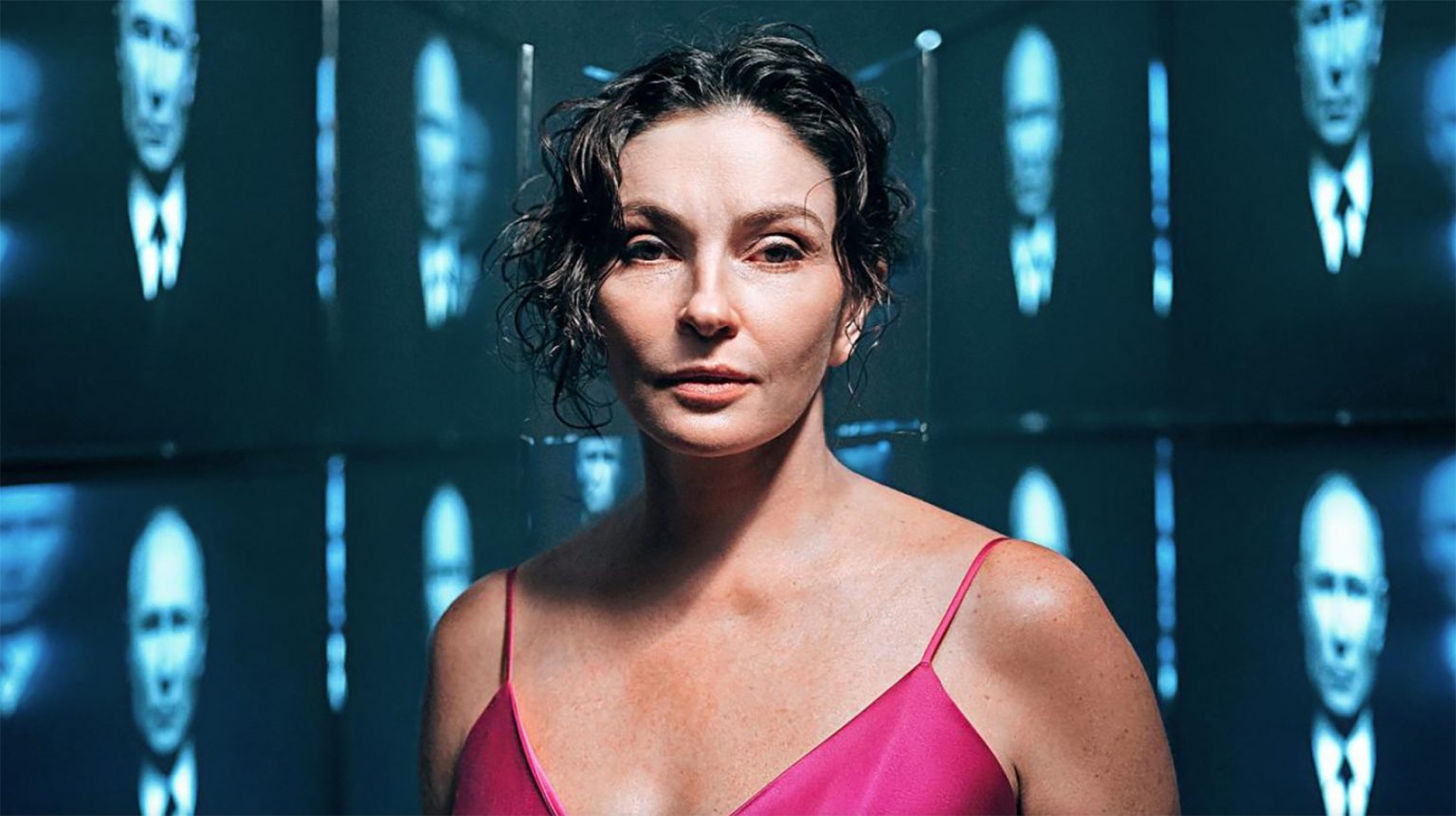
The tango: a ballroom dance from Buenos Aires, distinguished by marked rhythms, postures and abrupt pauses. It’s dramatic, extravagant and ostentatious, also intimate and sexy: it’s a suitable passion for a glamorous Muscovite. But tango-lover Natasha Sindeyeva is not just a dancer; she is the founder and CEO of Russia’s only independent TV channel and the face of journalistic resistance.  Sindeyeva is an exhibitionist, from her vibrant suits to her garish earrings. “Today is all about me, Natasha Sindeyeva,” she announces, giggling, in a clip filmed at a glitzy party in the noughties. “Without any false modesty I’m going to sing and dance. Prepare to get sick of seeing me on stage.”  Not long later, she swapped stage for screen. “Why isn’t there TV for normal people? That’s how it started,” her husband, ex-oligarch Aleksandr Vinokurov explains, although he must have been aware that his wife was far from “normal”. So why? Her co-founder, Vera Krichevskaya, describes Sindeyeva as a “dre...

Subscribe to The Mace

Join the member community shaping British politics and stay ahead of what's really happening in the world of politics and public affairs, with expert analysis, breaking news, and insider insights from Westminster and Brussels. The Mace is the leading news source and resource for the government affairs industry, offering required reading and lobby intelligence for professionals.

To see what you are missing out on by not subscribing to The Mace, click here to download our full membership info-pack. This includes having no paywall on op-ed content or profiles/interviews, allowing professional profiles to be read with maximum impact and visibility by government, special advisers, MPs, peers, civil servants, and policy and political decision-makers.


Vance: Ukraine war won’t end ‘any time soon’ as Trump downplays past peace promise

Mace | May 2, 2025

U.S. Vice President JD Vance admitted the Ukraine war is unlikely to end soon, contradicting Donald Trump’s earlier pledge to settle it in 24 hours. Trump has since


“Everythingism”: the policy disease paralysing Britain

Gabriel Whitwam | April 8, 2025

Britain’s policymakers are trying to make every policy achieve every goal — and ending up achieving none. From spiders halting housing to carbon targets blocking diplomacy, “everythingism” is

EU Weighs Seizing Frozen Russian Assets to Fund Ukraine’s Reconstruction

Mace | February 26, 2025

EU eyes €200 billion in frozen Russian assets to rebuild Ukraine—risking legal battles and global financial shockwaves.
Embracing Flexible Solutions to Ease the Energy Crisis

Ryszard Czarnecki MEP | December 22, 2022

The energy disruption can be eased if the EU opts for a common-sense approach

The EU Should Avoid Following the US Approach on Forced Labour

Marton Gyongyosi MEP | December 21, 2022

Forced labour and child labour not only is a moral outrage but also an illegitimate economic activity that undercuts products produced fairly in Europe.

Unspun: How and why to write a speech

Ed Amory | December 18, 2022

Many of us have no time for long-form oration, but there are good reasons why political speeches are still important

EU Enlargement: Montenegro’s accession is a milestone for the future of Europe

Rade Vujacic | December 14, 2022

After a decade of negotiations, citizens must now secure Montenegro’s path to EU membership

Sports is a Mental Recovery Mechanism for Ukrainian Children Fleeing War

Mace | December 5, 2022

Exercise has long been understood by psychologists as one of the most powerful tools for mental health improvement.

Relations with Post-War Russia; a Mirror for Europe?

Szabolcs Szalay | November 29, 2022

Foreign policy planning has never been the strong asset of the European Union

We can force Putin pay for Ukraine’s reconstruction

Mace | November 20, 2022

The New Lines Institute, a leading US Foreign Policy think tank, presented at the roundtable event the framework by which Russian funds already frozen by several Western Nations