The Spike: Natasha Sindeyeva

Lucy Kenningham | Issue 6 | Magazine

From the Archive

Natasha

The remarkable story of the exuberant socialite who founded Russia’s only independent television channel

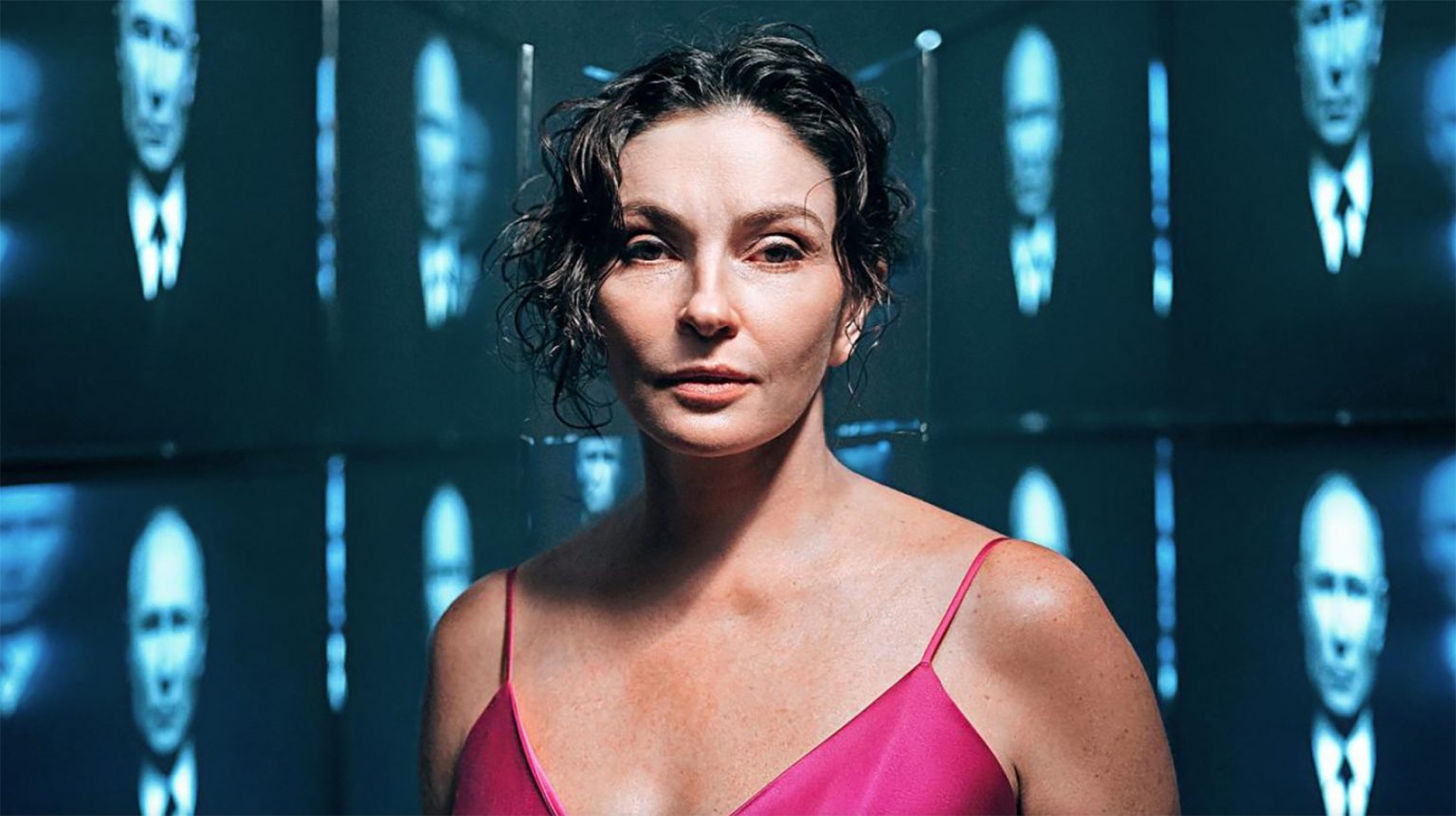
The tango: a ballroom dance from Buenos Aires, distinguished by marked rhythms, postures and abrupt pauses. It’s dramatic, extravagant and ostentatious, also intimate and sexy: it’s a suitable passion for a glamorous Muscovite. But tango-lover Natasha Sindeyeva is not just a dancer; she is the founder and CEO of Russia’s only independent TV channel and the face of journalistic resistance.  Sindeyeva is an exhibitionist, from her vibrant suits to her garish earrings. “Today is all about me, Natasha Sindeyeva,” she announces, giggling, in a clip filmed at a glitzy party in the noughties. “Without any false modesty I’m going to sing and dance. Prepare to get sick of seeing me on stage.”  Not long later, she swapped stage for screen. “Why isn’t there TV for normal people? That’s how it started,” her husband, ex-oligarch Aleksandr Vinokurov explains, although he must have been aware that his wife was far from “normal”. So why? Her co-founder, Vera Krichevskaya, describes Sindeyeva as a “dreamer” with ideas for a fun lifestyle channel with Western-style chat shows. Plus, entrepreneurial innovation was the flavour of the month and independent business was thriving in the relatively liberalised Russia of President Medvedev (he served from 2008 to 2012).  “Natasha knew nothing about TV, how it works or what it’s for,” Vinokurov says. Their budget wasn’t limitless either; the first studio was an old Soviet factory, smelling of “caramel and rats”. And rather than the stalwart professionals that dominated Russian television, Sindeyeva populated her channel with younger, diverse staff and fostered an untraditional, DIY attitude. Everything was buoyed by her enthusiasm and boundless generosity – the champagne flowed freely. Unsurprisingly, on launching in 2010 they became “TV’s biggest joke”, according to Krichevskaya, but their viewers grew steadily. As CEO and a presenter, Sindeyeva was involved in all the big conversations and was the face of the brand. “The optimistic channel”, she dubbed her new project, TV Rain, in a promotional video, as she tangos in pink heels on a rooftop while fake rain comes pouring down on her.  The station couldn’t avoid politics for long. A year after its launch, the Domodedovo International Airport was subject to a suicide bombing which killed 37 people. TV Rain found themselves the only Russian channel covering it live. “Suddenly we found ourselves in a different reality to the one pictured by other TV stations,” Sindeyeva explains. It continued. In 2012, Sindeyeva found herself urging viewers to vote, even though it was the first time she would be voting. In the protests that followed Putin’s re-election, which TV Rain helped expose as rigged, the channel obstinately covered activists and their resistance. Sindeyeva and Vinokurov even attended the protests, chanting with others “Russia without Putin”. “When I found myself on this wave of information, I realised just how much injustice there was around us, which I simply didn’t see before,” Sindeyeva says. TV Rain depicted the fighting in Chechnya and Kyiv and provided platforms for Boris Nemtsov (before his probable murder) and Alexey Navalny (before his arrest). Reporters risked abuse and arrest. “I realised I couldn’t keep not having an opinion.”  Her commitment to showing the truth became unwavering. “On our TV station, nobody can make us do something or not do something – that person doesn’t exist,” Sindeyeva told Vice. She totally dedicated herself to her staff, who determined the editorial policy. In 2013, Putin passed the infamous anti-gay propaganda laws that in effect created second-class citizens. The staff of TV Rain was 50 per cent LGBTQ+. When one of her staff became the first Russian journalist to come out as gay, Sindeyeva applauded. The channel continued to champion LGBTQ+ rights. While President Medvedev had visited TV Rain (albeit in slightly ominous circumstances). Putin’s government waged a “campaign to destroy our TV channel” Sindeyeva told Vice. Two years after his election, Putin took TV Rain off air in January 2014 for its coverage of protests, wiping out its source of income from advertising revenue. It lost 80 per cent of an audience of 15 million. In an interview with the Guardian, Sindeyeva recalls this as a “moment when I wanted to quit everything: the day when our landlord in the Red October district, in the very centre of Moscow, said that we were no longer allowed to work there. But that despair lasted, I guess, for 24 hours or so.” Sindeyeva and Vinokurov lost all their money and moved out of their huge white mansion to “live a simpler life”. “Those decisions weren’t so hard,” she told the Guardian. “Because when we were selling our house, the audience for the channel was growing. We didn’t see it as some sort of a tragedy.” Sindeyeva had invested everything in TV Rain. She didn’t want to let it go. They had some support: activists demonstrated with umbrellas as a symbol of support for TV Rain in Moscow ...

Subscribe to The Mace

Join the member community shaping British politics and stay ahead of what's really happening in the world of politics and public affairs, with expert analysis, breaking news, and insider insights from Westminster and Brussels. The Mace is the leading news source and resource for the government affairs industry, offering required reading and lobby intelligence for professionals.

To see what you are missing out on by not subscribing to The Mace, click here to download our full membership info-pack. This includes having no paywall on op-ed content or profiles/interviews, allowing professional profiles to be read with maximum impact and visibility by government, special advisers, MPs, peers, civil servants, and policy and political decision-makers.

Unspun: Private Equity and Public Affairs

Ed Amory | April 15, 2026

Private equity investing in public affairs firms only makes sense if both sides know what they want

The Mace Questionnaire: Bob Blackman MP: “It is time to rebuild our party”

Mace | March 31, 2026

The ‘pragmatic’ new chair of the 1922 Committee could shape the direction of the Conservative Party

The Pope vs Trump: Is the Vatican becoming a new super-power ?

William Cash | March 31, 2026

With a new American pope, William Cash investigates the global power dynamics behind the throne of St Peter.

Sarah Vine: Scenes from a Brexit Marriage

Mace | March 30, 2026

In her bestselling book, Sarah Vine reinvented the political wife memoir. Soon out in paperback, Melanie McDonagh sat down with the ex-wife of Michael Gove to discuss the

Special Relationships: Westminster power couples of 2026

Mace | March 25, 2026

Which special relationships are really running the country? Emily Hill surveys the top political romances in Westminster.

The Mace Questionnaire: Andrew Griffith MP, Shadow Secretary for Business and Trade

Mace | March 25, 2026

After running Sky, Andrew Griffiths become a high flying MP who rose through the Johnson and Sunak governments. In his Mace profile, the Shadow Secretary for Business and

Toby Young’s House of Lords Diary

Mace | March 24, 2026

With invitations coming in to speak at the 2026 autumn party conference season, freedom of speech campaigner Toby Young reflects on his political status 'upgrade' from hack to

Digital Confidential: Politics and technology column by Damian Collins

Mace | March 12, 2026

As AI turbocharges social media, tech giants must be held accountable says the former chair of the DCMS select committee who now leads law firm Geradin Partners' public

The Westminster art of selection: How to become an MP

Gus Carter | February 20, 2026

With Reform receiving 600 new candidate applications in 48 hours, it's clear some people still want to become an MP. Our Westminster insider reveals how to get selected

The Mace Questionnaire: Preet Gill MP

Mace | February 16, 2026

Westminster Index 2026: Edgbaston Labour MP Preet Gill reveals she's no fan of the Assisted Dying Bill but loves Jack Kerouac's On the Road. Her musical tastes range