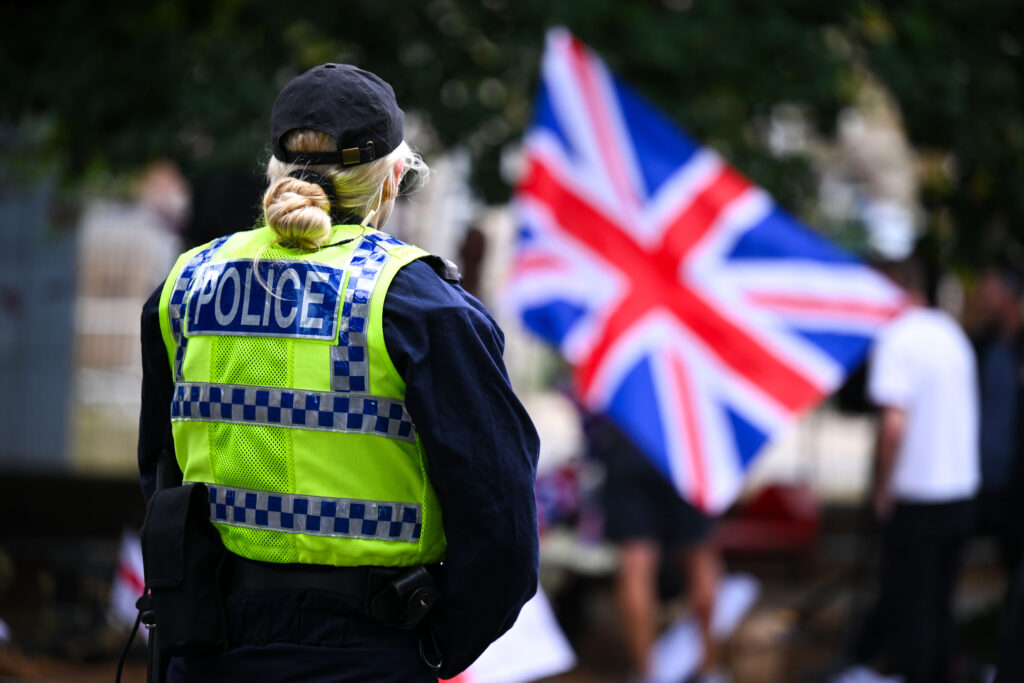
The political and cultural crisis surrounding London's police force has shone a light on an intolerable governance system
A bizarre hiring procedure came to light during the recent ugly spat between the Metropolitan Police and London’s Mayor Sadiq Khan. It was the fact that Cressida Dick, who recently resigned as Commissioner of Police of the Metropolis (better known as London’s Met Police), had not one boss but two. The Home Office and the Mayoral Office are dually responsible for the Met, meaning that Dick answered both to Home Secretary Priti Patel and Mayor of London Sadiq Khan.
The problems associated with having multiple bosses hardly need spelling out. Google “two bosses” and the top articles on the subject have titles like “the miserable two bosses problem” and “how to handle multiple bosses & not lose your sanity”.
So why does the UK’s most important police force, which covers national crime (details below) and the security of the Royal Family, have such an objectionable structure? Let’s start at the beginning.
The night watchmen go gently…
No official police force existed until the 19th century; instead night watchmen and parish constables patrolled the streets. London’s population was around 1.5 million, its streets patrolled by a mere 450 constables and 4500 watchmen.
In the 1820s, mounting crime levels and increasing political and industrial disorder pushed some to call for reform. In response Sir Robert Peel, then Home Secretary and later prime minister, established the …
Subscribe to The Mace
Join the member community shaping British politics and stay ahead of
what's really happening in the world of politics and public affairs,
with expert analysis, breaking news, and insider insights from
Westminster and Brussels. The Mace is the leading news source and
resource for the government affairs industry, offering required
reading and lobby intelligence for professionals.
To see what you are missing out on by not subscribing to The Mace, click here to download our full membership info-pack. This includes
having no paywall on op-ed content or profiles/interviews, allowing
professional profiles to be read with maximum impact and visibility by
government, special advisers, MPs, peers, civil servants, and policy
and political decision-makers.
The dismal results of reducing the police force in Scotland should act as a cautionary deterrent for English police reform, writes Sharon Dowey, a former member of the
Tristan Breijer is the new London head of Checkmate Government Relations. The move into London gives the US lobby firm its first European base, bringing its global power-broking
Latest Dept of Education figures reveal over 40,000 independent school pupils dropping out since Labour's VAT raid. But, The Mace argues, surging fees, an arms race for facilities
As politicians call for more external appointments in Whitehall, Professor Nada Kakabadse argues that the real challenge lies not in recruitment, but governance.
Andy Burnham may struggle to win the Makerfield by-election if ‘Wigan Man’ emerges as the new median voter whom parties must attract to win the next election, says
The former deputy prime minister and foreign secretary will be advising Kreab global clients on defence and intelligence-related issues, as well as international geopolitics and Westminster issues.
After leaving Linklaters, Jessica joined the Conservative Party’s Shadow Energy and Climate Change team in 2008 just as energy security and climate policy were rising rapidly up the