Forty years after Big Bang, the City cannot write its own rules for growth
Greater deregulation for the financial sector in the City is not the way forward, writes Mick McAteer.



The new government protocol raises concerns about whether young people are getting the necessary exposure they need in their early careers
The government wants to make it more difficult for employers to block flexible working requests, since hybrid work is becoming the status quo for many of the UK’s higher-skilled biggest earners. However, this raises concerns for young people – who may not be developing critical soft skills and networking within their organisation to set the necessary foundation for their careers.
Since the 2020 pandemic, only a small number of companies have made it mandatory for people to work from the office every day. For instance, full office attendance has been enforced by the likes of JPMorgan, Amazon and Instagram. Even in hybrid working environments, UK employers have increased the minimum number of days they expect staff to be in the office.
On one hand, there is evidence demonstrating that the hybrid working model grants a degree of productivity improvement in parts of the public sector that do not require team interaction and are built on data entry tasks. For example, a 2025 study of the crime recording unit at Greater Manchester Police found a 12% productivity boost from hybrid work. However, these findings are not applicable across the economy and businesses tend to assert that staff need at least in-person training to be productive.
This has sparked a particular conversation around the training and career development of young people. Last month, EY, the professional services firm, said it wanted to encourage its younger employees to spend more time at the office to improve their interpersonal skills. EY emphasised “the importance of meaningful time spent together” in an industry where AI tools are changing the way the company and the economy operates.
Sayeh Ghanbari, EY’s UK head of consulting, told the Financial Times, “This change we’ve seen in the last few years where people have set up their lives to be … at home a lot is just not the route to success in the world of AI.”
She added that, with AI increasingly doing more of the routine work, human consultants will “have to be good at what we’re really good at, which is to be human. To build a career in consulting and develop all of those human skills … you cannot do that through so much remote work”.
However, the majority of the workforce that WFH are senior leaders and managers. In the UK, nearly 90 per cent of people who have access to working from home are managers, directors, senior officials and professionals. Furthermore, figures released by the Centre for Cities think tank showed that 18 to 24-year-olds in London spend an average of 3.1 days a week in the office, compared with 2.5 days for 35 to 44-year-olds and 2.7 days for those over 55. Therefore, while companies such as EY are encouraging young people to come into the office, that is only so effective if their management is still likely to be operating from home.
However, an interview by The Times with 23-year-old Olivia Crowshaw lifts the lid on what it is like as a young person operating in a hybrid workplace. Olivia, who worked for a London cosmetics company, said: “I felt like I wasn’t getting the most out of my career because I wasn’t meeting as many people.
“You’re going into an empty office and it just felt like it wasn’t worth the effort. It was a 50-minute drive [from her home in Bedford] for me to sit in silence.”
The youngest members of the workforce now would have experienced a significant chunk of their secondary or higher education during the COVID pandemic, and with hybrid working still being the norm in most professional environments, the youngest people in the workforce are at risk of not developing necessary soft skills.
Greater deregulation for the financial sector in the City is not the way forward, writes Mick McAteer.
This summer exposed the chain of vulnerabilities faced by the agricultural industry, Ella Beadman writes.

The government's new 5% tourism tax and overnight levy is the last thing the UK's hospitality sector needs, says William Cash

What happens when the technology that could one day threaten humanity begins to destroy the institution responsible for warning us about it?

As speculation mounts over further tax rises, Britain’s ultra-rich investors and job creators are choosing to take their wealth elsewhere.

In an exclusive op-ed for Mace, hospitality industry leader Robert Richardson sets out why the sector must do more to become accessible to young families.

End Fuel Poverty Coalition coordinator Simon Francis examines the four stories politicians hear about electricity and gas, and argues that the fight over which story shapes the agenda

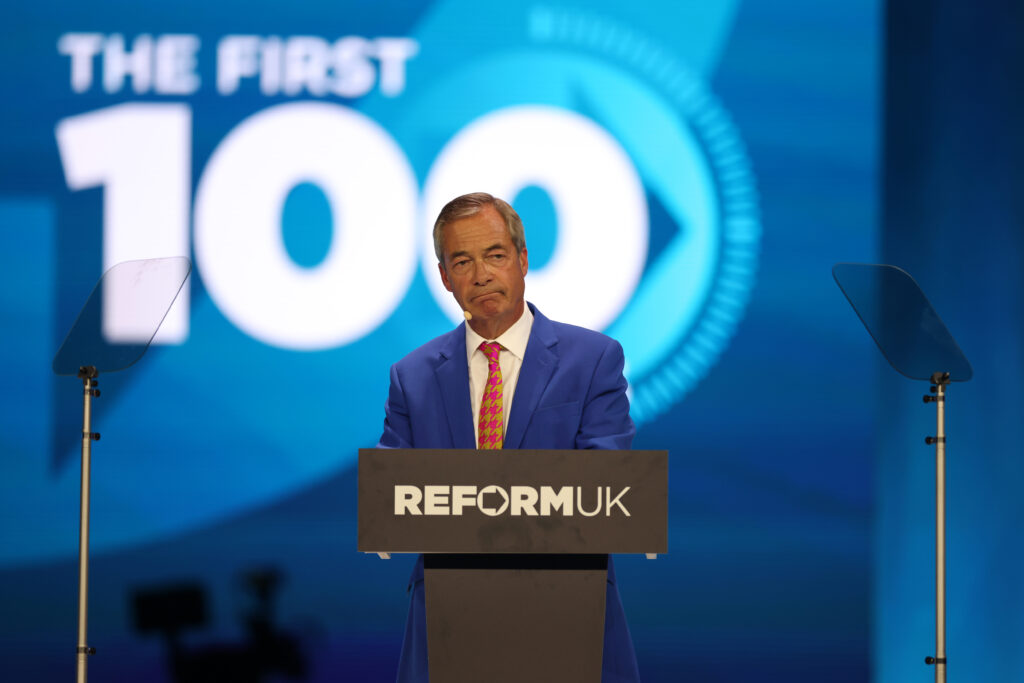
Seasoned Farage aide-de-camp Gawain Towler reflects on Reform's first ever Business Day at the NEC - and what it's like when a media grenade goes off during the
Britain’s farmers have battled repeated heatwaves and droughts, but MP John Cooper says the government’s Family Farm Tax is piling further pressure on an industry that desperately needs
You don’t have to like the Sussexes to believe the government has a duty to protect them.