Is money a factor behind Prince Harry’s move back to the UK?
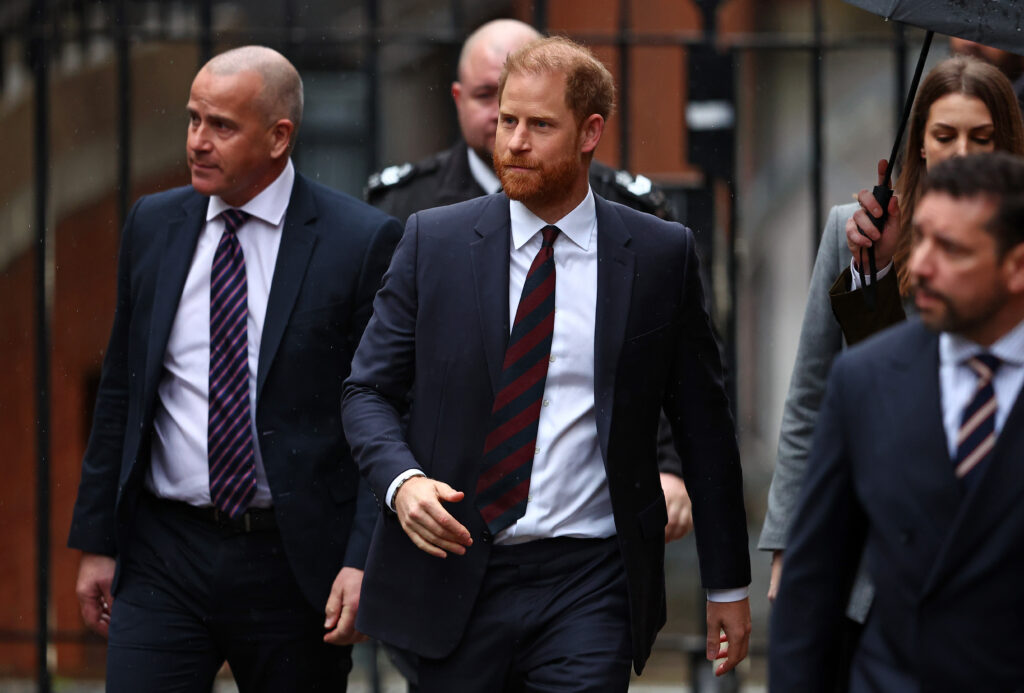
Is there a connection between Prince Harry's share of a £34 million legal bill and his sudden move back to the UK? The Mace follows the money.


The new government protocol raises concerns about whether young people are getting the necessary exposure they need in their early careers
The government wants to make it more difficult for employers to block flexible working requests, since hybrid work is becoming the status quo for many of the UK’s higher-skilled biggest earners. However, this raises concerns for young people – who may not be developing critical soft skills and networking within their organisation to set the necessary foundation for their careers.
Since the 2020 pandemic, only a small number of companies have made it mandatory for people to work from the office every day. For instance, full office attendance has been enforced by the likes of JPMorgan, Amazon and Instagram. Even in hybrid working environments, UK employers have increased the minimum number of days they expect staff to be in the office.
On one hand, there is evidence demonstrating that the hybrid working model grants a degree of productivity improvement in parts of the public sector that do not require team interaction and are built on data entry tasks. For example, a 2025 study of the crime recording unit at Greater Manchester Police found a 12% productivity boost from hybrid work. However, these findings are not applicable across the economy and businesses tend to assert that staff need at least in-person training to be productive.
This has sparked a particular conversation around the training and career development of young people. Last month, EY, the professional services firm, said it wanted to encourage its younger employees to spend more time at the office to improve their interpersonal skills. EY emphasised “the importance of meaningful time spent together” in an industry where AI tools are changing the way the company and the economy operates.
Sayeh Ghanbari, EY’s UK head of consulting, told the Financial Times, “This change we’ve seen in the last few years where people have set up their lives to be … at home a lot is just not the route to success in the world of AI.”
She added that, with AI increasingly doing more of the routine work, human consultants will “have to be good at what we’re really good at, which is to be human. To build a career in consulting and develop all of those human skills … you cannot do that through so much remote work”.
However, the majority of the workforce that WFH are senior leaders and managers. In the UK, nearly 90 per cent of people who have access to working from home are managers, directors, senior officials and professionals. Furthermore, figures released by the Centre for Cities think tank showed that 18 to 24-year-olds in London spend an average of 3.1 days a week in the office, compared with 2.5 days for 35 to 44-year-olds and 2.7 days for those over 55. Therefore, while companies such as EY are encouraging young people to come into the office, that is only so effective if their management is still likely to be operating from home.
However, an interview by The Times with 23-year-old Olivia Crowshaw lifts the lid on what it is like as a young person operating in a hybrid workplace. Olivia, who worked for a London cosmetics company, said: “I felt like I wasn’t getting the most out of my career because I wasn’t meeting as many people.
“You’re going into an empty office and it just felt like it wasn’t worth the effort. It was a 50-minute drive [from her home in Bedford] for me to sit in silence.”
The youngest members of the workforce now would have experienced a significant chunk of their secondary or higher education during the COVID pandemic, and with hybrid working still being the norm in most professional environments, the youngest people in the workforce are at risk of not developing necessary soft skills.
Is there a connection between Prince Harry's share of a £34 million legal bill and his sudden move back to the UK? The Mace follows the money.
Could the Sussexes’ shock UK return finally bring peace with the royals - and the British press?

Andy Burnham is shaking up government with more changes than by any incoming prime minister in memory. But, asks Sir Bernard Jenkin MP, does he understand why the

The Civil Service is ready to support Dame Antonia Romeo's flagship changes to government machinery - notably relating to AI and devolution - under new prime minister Andy

UK aviation can decarbonise while meeting growth ambitions, but urgent government action is needed to prevent costs increasing for passengers and the sector losing its competitive edge.

With the new Prime minister championing policies which go beyond Labour’s very confined 2024 manifesto, an early election is not illogical.

Andy Burnham's inner circle appears to perpetuate Labour's long-running culture of nepotism, and is doomed to cause frustration among backbenchers.

The news that former Home Secretary Sir Grant Shapps has failed to make the new Tory candidate list has put fear into dozens of former Conservative MPs. Whether

Cameron Brown, a former special advisor to the Chancellor of the Exchequer, explains why Burnham's VAT cut on energy bills is a measure people will actually notice.

New Prime Minister Andy Burnham has an opportunity to make Britain the best place to start and scale a business, argues CEO Liam Houghton.
