In September 2026, London-listed mining company Ferrexpo secured shareholder approval for a $100m fundraising. The deal included a $50m commitment from Ukrainian businessman Andriy Verevskyi and approximately $40m from Fevamotinico, the company’s largest shareholder, which is linked to Ukrainian businessman Kostyantyn Zhevago. Shareholders approved the fundraising on 21 September.
The company has faced mounting financial difficulties, legal proceedings and suspended VAT refunds following Ukrainian sanctions against Zhevago, who denies allegations of wrongdoing. According to Ferrexpo, the withholding of VAT refunds since March 2025 has placed considerable pressure on its finances.
The situation illustrates the changing fortunes of Ukraine’s business elite. How did entrepreneurs who acquired former Soviet assets turn economic wealth into political influence, and how has Russia’s full-scale invasion altered that relationship?
Privatisation and the rise of big business
Following Ukraine’s independence in 1991, the privatisation of state-owned enterprises helped establish powerful financial-industrial groups. Under President Leonid Kuchma, who served from 1994 to 2005, close relationships developed between business and political elites, particularly in metallurgy, energy and banking. Ownership of major media outlets also gave business leaders opportunities to influence political debate.
In a 2021 Chatham House report, John Lough described this network of shared interests as “systema”, arguing that Ukraine’s model of crony capitalism “reflects the absence of a strong state”.
Drawing on data from 2015, Lough found that politically connected businesses accounted for less than 1% of Ukrainian companies but controlled more than 25% of their assets. These relationships provided privileged access to state resources and opportunities to influence government decisions.
How business became political power
Ukraine’s leading business groups converted economic wealth into political influence through media ownership, political financing and relationships with successive governments.
Before Russia’s full-scale invasion, Rinat Akhmetov controlled the Ukraine television channel, Ihor Kolomoisky was associated with 1+1 Media, and Viktor Pinchuk owned ICTV and STB through his StarLight Media group.
These media holdings provided platforms for promoting political allies and challenging opponents. Lough’s 2021 Chatham House study documented how business groups financed political campaigns and provided favourable media coverage, while politicians could advance legislation and regulatory decisions that served their commercial interests.
Although the Orange Revolution of 2004–05 transformed Ukraine’s political landscape, it did not dismantle these networks. Major business groups adapted to successive governments and competing political parties, maintaining connections within state institutions and influence over economic policymaking.
Revolution and the anti-oligarch law
Following the 2014 Revolution of Dignity, Ukraine introduced anti-corruption reforms, although influential business groups retained political connections and access to state institutions, according to Chatham House’s 2021 assessment.
In 2021, President Volodymyr Zelenskyy initiated legislation intended to restrict oligarchic influence over politics and the media. “We do not want to kill big business,” he said at a press conference on 20 May, outlining his government’s stated intention to separate commercial activity from excessive political influence.
The legislation nevertheless attracted international scrutiny. In June 2023, the Council of Europe’s Venice Commission recommended postponing its implementation and pursuing systemic reforms instead, including stronger competition policy, greater transparency of media ownership and tighter political party financing rules.
The commission expressed concerns that measures targeting individuals through an oligarch register could be misused and conflict with fundamental rights and principles of political pluralism and the rule of law. Ukraine subsequently postponed implementation of the law and prioritised broader institutional reforms.
How the war changed the balance of power
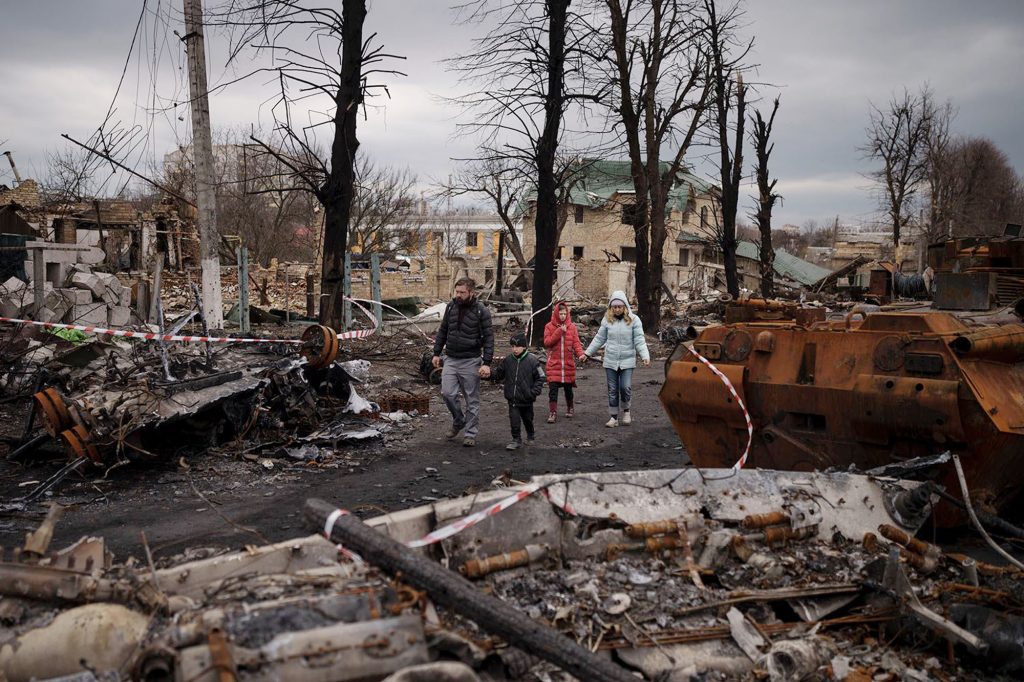
Russia’s full-scale invasion in February 2022 disrupted Ukraine’s largest business groups through the destruction of industrial assets and severe restrictions on exports.
In May 2022, Poland’s Centre for Eastern Studies reported substantial losses among leading Ukrainian business figures, including Akhmetov, whose Metinvest group lost its Azovstal and Ilyich steelworks in Mariupol. Russia’s blockade of Black Sea ports also disrupted industrial and agricultural exports, placing further pressure on major businesses.
The war coincided with changes in the oligarchs’ media influence. In July 2022, Akhmetov announced that SCM would withdraw from the broadcasting industry, describing the move as “an involuntary decision”.
He said the six-month deadline for disposing of media assets under Ukraine’s anti-oligarch legislation, combined with wartime conditions, made it impossible to sell the business on market terms. SCM consequently surrendered its Ukrainian broadcasting licences and ceased its online media operations.
However, economic losses, declining media influence and changing relationships with the state are distinct developments. Major business figures also contributed to Ukraine’s defence and humanitarian efforts. A May 2022 assessment by the Centre for Eastern Studies documented substantial financial assistance from Akhmetov and Pinchuk, among others.
Together, these developments altered established relationships between large businesses and political authorities, although their long-term consequences remain uncertain.
Has oligarchic influence disappeared?
Ferrexpo’s $100m fundraising, approved by shareholders in September 2026, illustrates the financial and legal pressures facing some of Ukraine’s largest business groups. The London-listed company has reported suspended VAT refunds and continuing litigation, including disputes linked to Ukrainian sanctions against its founder, Kostyantyn Zhevago.
Zhevago denies wrongdoing, and sanctions do not themselves establish criminal guilt. Financial losses and diminished media influence do not necessarily mean that oligarchic power has disappeared.
The longer-term test will be the implementation of systemic reforms, including effective competition policy, transparent ownership, political party financing rules and institutional independence — measures identified in the Venice Commission’s 2023 recommendations.