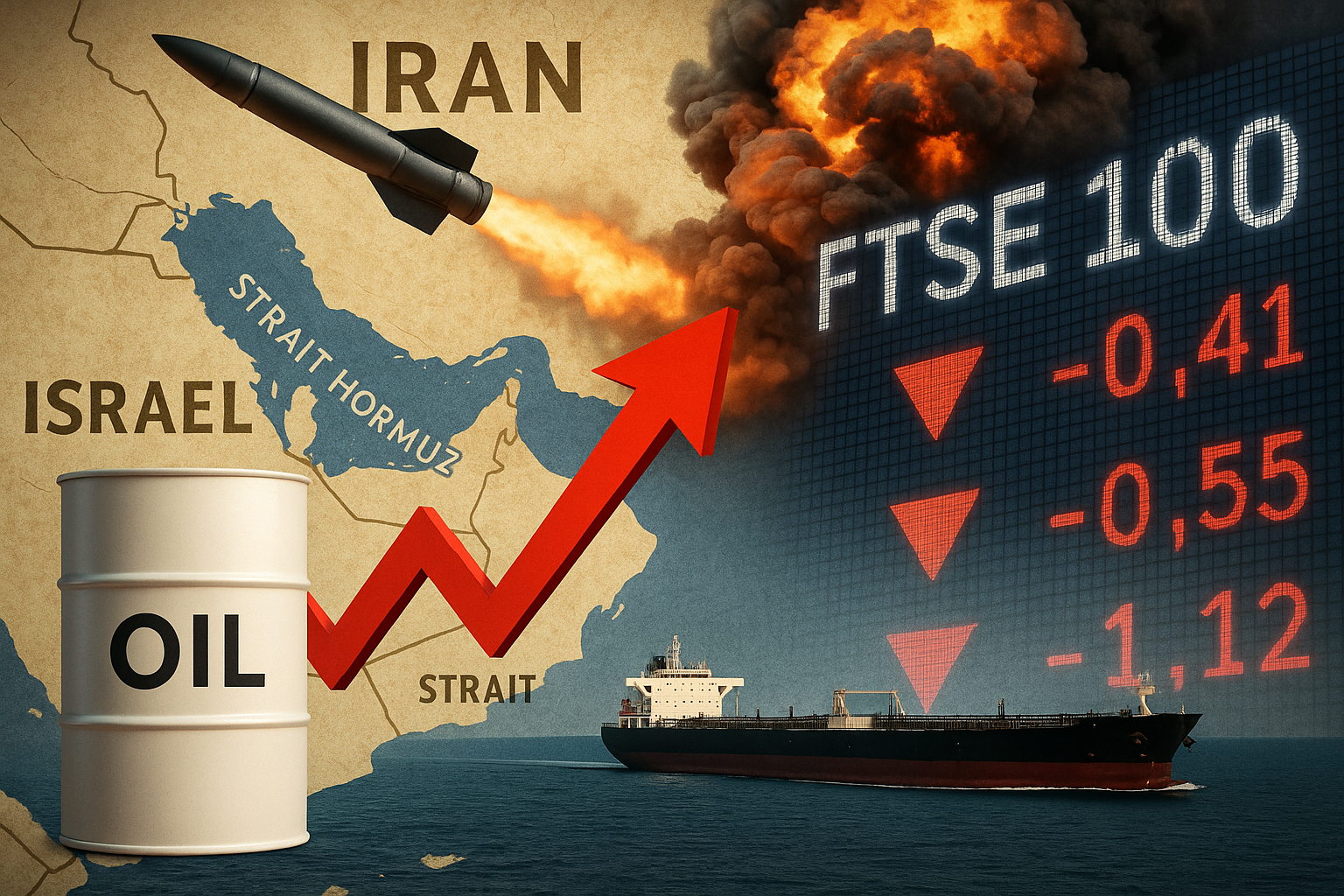
Rising conflict between Israel and Iran is driving oil prices up and unsettling global markets. Brent crude and tanker insurance costs have surged, the FTSE 100 has dipped, and central banks remain cautious. Investors are watching closely amid fears of disruption in the vital Strait of Hormuz.
Escalating military activity in the Middle East, particularly between Israel and Iran, has driven crude oil prices higher over the past week. Following Israeli airstrikes on Iranian energy infrastructure, Brent crude surged around 7 per cent initially, briefly exceeding $75 per barrel, before settling near $74.5 per barrel during calmer trading sessions. The rise reflects concerns over supply disruption amid growing hostilities.
Reports from international energy traders suggest that the threat of Iran blocking the Strait of Hormuz has prompted a surge in tanker insurance costs. Tanker charter rates have more than doubled, jumping from around $20,000 to $47,600 per day for very large crude carriers. Despite these premiums, shipments continue to transit via alternative routes, albeit at increased cost.
Global market sentiment has softened in response to these developments. The FTSE 100 edged down by approximately 0.4 per cent in mid‑June trading, with around 70 per cent of its index components recording losses. The downturn reflected the influence of rising energy costs and uncertainty surrounding central bank monetary policy.
In the United States, major stock exchanges remained largely flat, with indices exhibiting volatility tied to oil price swings. After the Federal Reserve held interest rates steady, markets showed minor fluctuations amid concerns about the geopolitical backdrop. Oil continued to trade near its recent highs, over $75 per barrel for WTI, amid speculation that the conflict may draw in external powers.
These tensions have also influenced currency and commodity markets. The US dollar has strengthened while gold has edged upwards, both seeking refuge amid geopolitical jitters. Investor appetite for safe‑haven assets has been bolstered by intermittent reports of calm, causing brief windfalls in precious metals.
Energy analysts warn that a shutdown of the Strait of Hormuz could inflate oil prices above $100 per barrel, potentially reaching $150 in extreme scenarios. This narrow shipping channel accounts for almost a fifth of global oil trade and is critical to supply chains for many nations. Closures would amplify inflationary pressures worldwide.
Within the UK, the Bank of England is poised to maintain interest rates at 4.25 per cent amid rising energy prices. Inflation, currently around 3.4 per cent, remains well above the central bank’s target. The BOE has paused rate cuts since August last year and is cautiously monitoring the oil‑price boom as a key inflation risk.
In tandem with oil volatility, UK petrol prices are expected to increase by approximately 5 pence per litre. Soaring wholesale oil costs have prompted pump price warnings from consumer bodies. As of mid‑June, UK forecourts averaged around 132 pence per litre, reversing a downward trend seen earlier this year.
European energy markets are also on alert. Chartered vessel premiums have escalated, reflecting widespread shipping avoidance of the Hormuz region. Despite heightened maritime risk, oil exports from the Middle East have continued, though under costly and adjusted logistical arrangements.
Overall, current market reactions remain measured despite recent escalation. Oil price gains have been modest compared with previous global crises. However, the possibility of broader conflict, including the risk of retaliatory strikes or a blocked strait, remains a key concern for financial institutions, central banks, and commodity markets worldwide....
Subscribe to The Mace
Join the member community shaping British politics and stay ahead of
what's really happening in the world of politics and public affairs,
with expert analysis, breaking news, and insider insights from
Westminster and Brussels. The Mace is the leading news source and
resource for the government affairs industry, offering required
reading and lobby intelligence for professionals.
To see what you are missing out on by not subscribing to The Mace, click here to download our full membership info-pack. This includes
having no paywall on op-ed content or profiles/interviews, allowing
professional profiles to be read with maximum impact and visibility by
government, special advisers, MPs, peers, civil servants, and policy
and political decision-makers.
King Charles’s address to Congress was designed to steady a strained special relationship. Twelve standing ovations later, the Palace had given Downing Street something politics could not: a
As European policymakers push a 'Buy European' line, lobbyists and officials in Washington are keen to maintain dominance over the European arms market
Britain has secured a significant win for Scotland’s iconic whisky industry, with China agreeing to cut tariffs on Scotch whisky from 10 per cent to 5 per cent.
Trump’s shifting Greenland strategy at Davos unsettles NATO, strains transatlantic trust, and leaves the UK balancing sovereignty principles against alliance stability
Davos is meant to be the place where the global public affairs class can compress a year of stakeholder management into five days, with a badge, a diary,