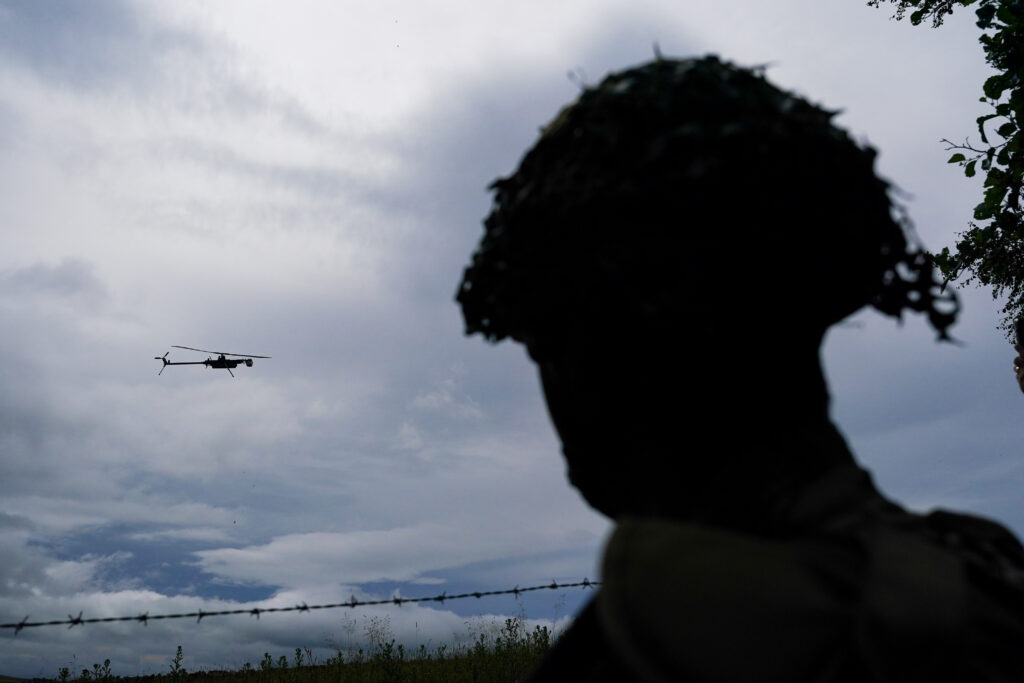
Kaliningrad Is Where Putin Is Testing Europe’s Defences
Europe may already be entering a new phase of confrontation with Russia, one in which the distinction between peace and conflict becomes increasingly difficult to identify.



In an exclusive special for Mace, expert Dr Daniel Frampton discusses the pivotal shift of the Strategic Defence Review towards a new age of defence technology for NATO.
In setting UK defence priorities for the next ten years and beyond, the Strategic Defence Review (SDR) 2025 signalled a pivotal shift from conventional armed forces to an Integrated Force model defined by uncrewed systems, AI and non-kinetic warfare, in which cost-exchange dynamics and mass production increasingly determine advantage. “Whoever gets new technology into the hands of their Armed Forces the quickest will win,” the SDR stated, underlining the importance of procurement as a strategic lever. The Ministry of Defence has already taken some steps to make this vision a reality.
“Whoever gets new technology into the hands of their Armed Forces the quickest will win”
Following Ukraine’s example, the British Army has accelerated its adoption of First Person View (FPV) drones. At the forefront is 2 PARA’s Uncrewed Aircraft Systems Platoon, founded in 2024, which has been training soldiers to use one-way attack drones carrying explosive payloads. Training combines classroom instruction, simulator work, and live exercises, as the Army continues to experiment with tactics, coordination, and logistical integration for this emerging capability. In May 2025, Minister of State Maria Eagle confirmed that the Army bought 450 FPV drones, with a further 3,000 scheduled for delivery in August 2025.
Alongside drone procurement, the Ministry of Defence has invested in training infrastructure, awarding a £4.16 million contract to Anartes under the RAPSTONE FPV Strike Tranche 2 programme in 2025. The initiative will equip troops with thousands of quadcopters, control stations and simulators, using commercially available components and open-source systems to keep costs low. Soldiers must complete simulator training before progressing to live drone operation.
“The trial saw over one hundred drones tracked and neutralised, marking the Army’s largest counter-drone swarm exercise to date.”
The UK is also developing countermeasures to the growing drone threat. In a major trial led by the Ministry of Defence in partnership with Defence Equipment and Support and Defence Science and Technology Laboratory, British soldiers successfully used a Radio Frequency Directed Energy Weapon (RF DEW) to defeat drone swarms. The trial saw over one hundred drones tracked and neutralised, marking the Army’s largest counter-drone swarm exercise to date. Developed by an industry team led by Thales Group, the system offers a potentially low-cost alternative to missile-based air defence at a claimed 10 pence per shot.
A layered counter-drone defence network also includes the RAF’s Rapid Sentry system, developed by Thales Group and recently deployed in the Middle East. The Rapid Sentry uses missile interceptors costing around £50,000 per shot, a cheaper alternative for countering large-scale drone threats.
The Ministry of Defence’s most vaunted new weapon system is DragonFire, a directed-energy laser weapon set to be deployed on a Royal Navy Type 45 destroyer by 2027. Developed in partnership with MBDA, Leonardo and QinetiQ, the system offers a cheaper alternative to traditional missile defence, with each shot costing around £10. To shorten procurement timelines, the Ministry of Defence prioritised delivering a minimum deployable capability, with further development continuing in service. The laser was first successfully demonstrated in January 2024, when it achieved the UK’s first high-power laser engagement against an aerial target. The programme began with approximately £100 million in joint government/industry funding to develop a technology demonstrator, before transitioning into procurement with a £316 million contract awarded in 2025.
The Ministry of Defence’s centrepiece “Digital Targeting Web” is also expected to be a vital element of the UK’s response to the growing importance of drone warfare, connecting sensors, data, and weapons into a single AI-enabled network. Built around the “sensor-to-shooter” loop, the Web is intended to enable faster targeting and decision-making. At its core, the system links platforms across land, air, sea, cyber, and space. Threats detected by one asset—such as an F-35 Lightning II—can then be rapidly engaged by another, including drones, artillery, or cyber capabilities.
The SDR has committed over £1 billion to the Digital Targeting Web, signalling its importance to the Ministry of Defence’s vision for 2035, with a target to deliver the capability by 2027, while initial elements are expected earlier. Progress is already visible in operational trials: during exercises in Norway, software developers were deployed alongside Royal Marines Commandos, integrating real-time data from UK systems and linking ground forces with assets such as the F-35 and HIMARS artillery. This enabled targeting data and battle damage assessments to be shared and acted upon in milliseconds.
The Ministry of Defence has also developed the system’s digital backbone through programmes such as Asgard. In January 2026, contracts were awarded to twenty-six companies—including QinetiQ, Leonardo, Faculty AI, and Oracle—to deliver AI-enabled targeting and decision-support tools, forming the “decide” layer of the wider network and helping accelerate battlefield decision-making.
“Autonomous kill-chains carry significant risk of misidentifying civilians as legitimate targets.”
However, doubts remain about whether the Digital Targeting Web can be delivered as planned, with analysts pointing to challenges around organisational complexity, unclear outcomes, and procurement and funding constraints. As Tony Reeves, founder of MAIAR, a UK disruptive defence enterprise, told Mace: “Autonomous kill-chains carry significant risk of misidentifying civilians as legitimate targets.”
Europe may already be entering a new phase of confrontation with Russia, one in which the distinction between peace and conflict becomes increasingly difficult to identify.
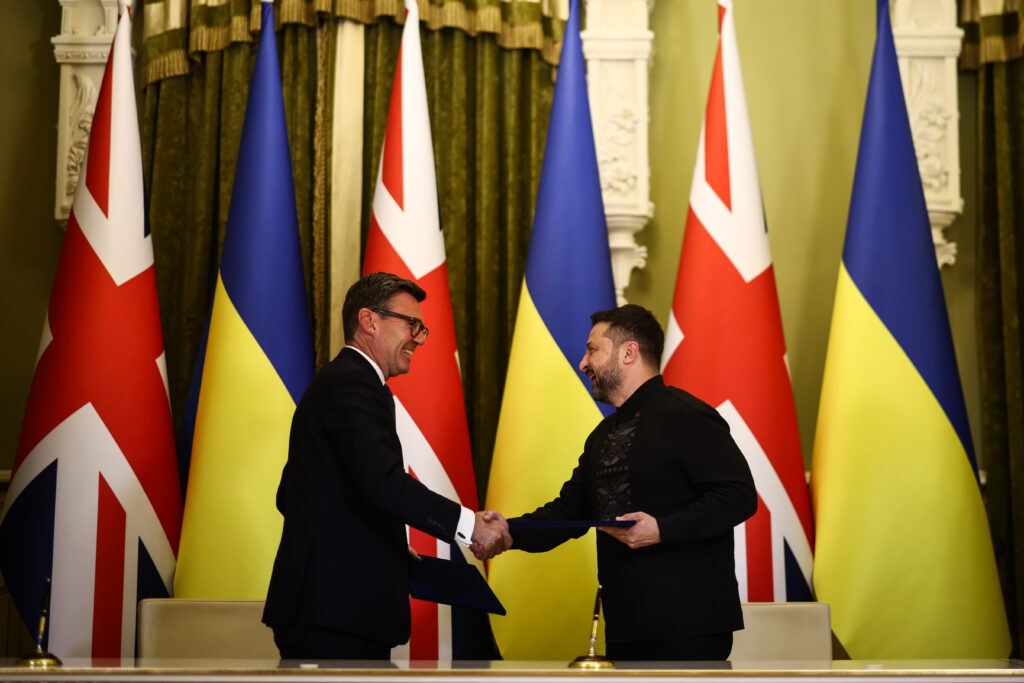
The Prime Minister’s first foreign visit was a welcome act of solidarity. But for Ukraine, British friendship will be judged by whether it can help unlock the air
Britain’s farmers have battled repeated heatwaves and droughts, but MP John Cooper says the government’s Family Farm Tax is piling further pressure on an industry that desperately needs

As a parliamentary Boz of modern times, Quentin Letts has recently found himself under fire in the Commons press gallery. He tells us why sketch writers don't need

For 10 months, ex-army officer James Jeffrey trekked 3500 km across Europe by foot. The scale of migration he witnessed may not have been as dramatic as the

Prime Minister Andy Burnham’s surprise move to appoint former Defence Secretary John Healey as Chancellor of the Exchequer proves that Westminster politics is an unpredictable game of cabinet

James Purnell’s return to frontline politics is more than a nostalgic Blair-Brown era reunion. As Andy Burnham builds his Downing Street operation, public affairs professionals will need to

Mace defence expert, Dr Daniel Frampton, highlights the importance of SME's for UK and NATO defence - and warns they are at a disadvantage.
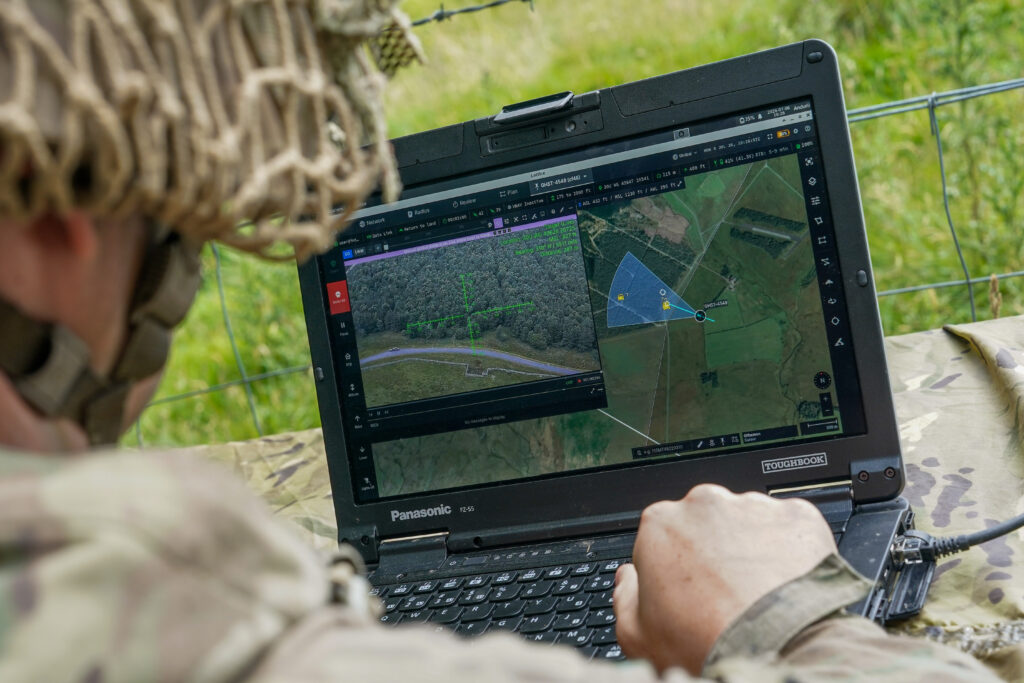
With the NATO summit in Ankara today, our defence expert Dr Daniel Frampton argues that supply chains have become a strategic asset for the NATO Alliance.
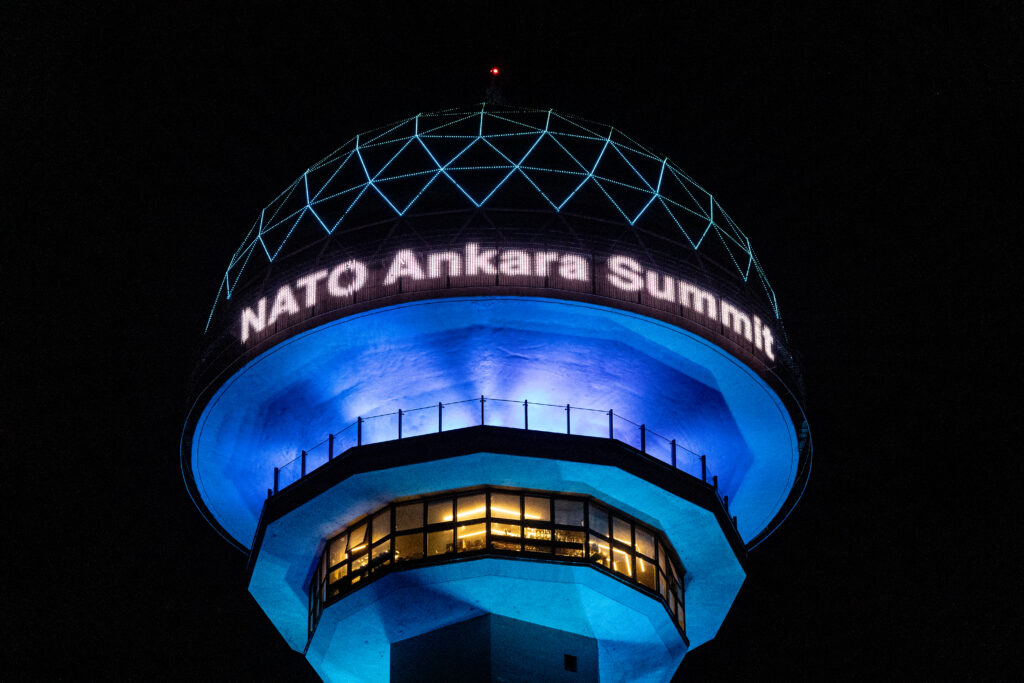
With the NATO Summit in Turkey, our defence expert Dr Daniel Frampton looks at whether the UK is bringing enough security and spending to the table.