The Mace Defence Special Report: Experts warn we have fallen behind our NATO allies

Daniel Frampton | 7th July 2026 | Defence, Editor's Pick
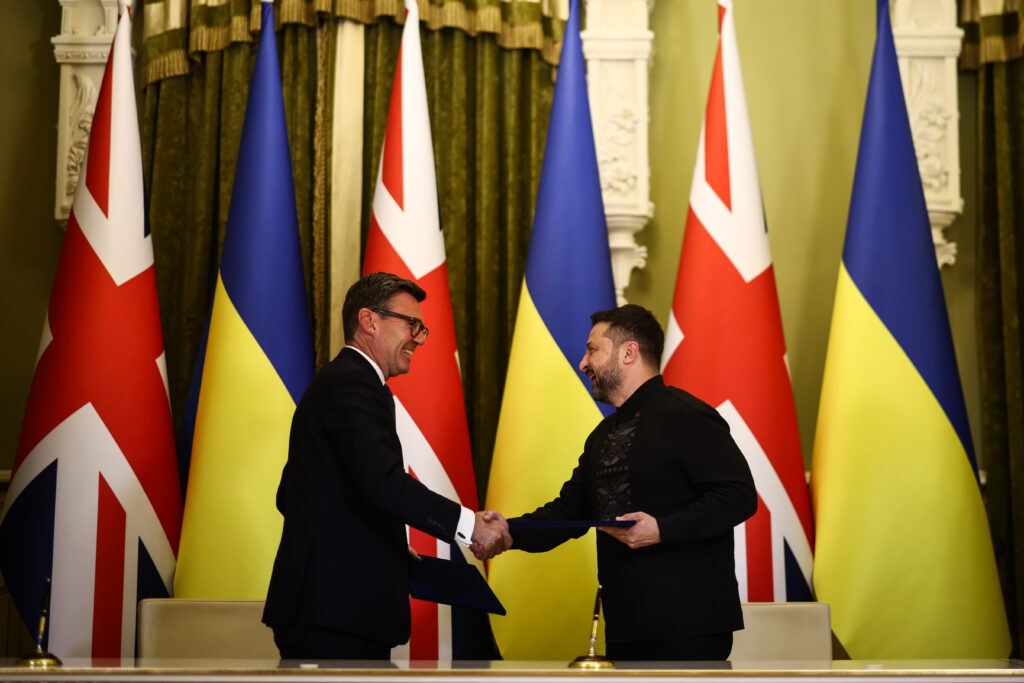
Photo by Ian Forsyth/Getty Images

With the NATO Summit in Turkey, our defence expert Dr Daniel Frampton looks at whether the UK is bringing enough security and spending to the table.

Modern military advantage is increasingly defined by speed, adaptability, and the ability to scale production rapidly. Yet as warfare accelerates into the drone age—seen most starkly in Ukraine—the UK was mired in delays to the long-awaited Defence Investment Plan (DIP), intended to underpin delivery of the Strategic Defence Review (SDR) 2025. In light of the plan being published ahead of the NATO summit today, some critics argue that the delay has caused significant harm, reflecting a broader issue in defence: whether the UK’s procurement and industrial systems are sufficiently enabled to deliver the capabilities required for modern warfare. The Ministry of Defence (MoD) itself has acknowledged the pressure, with National Armaments Director Rupert Pearce noting that “there are some things we are waiting for the DIP to do, and that delay is costing people… Time is money in procurement.” This tension between strategic ambition, funding and implementation is feeding wider unease about national preparedness and the extent to which defence is treated as an urgent political priority. Those concerns are echoed by Andriy Dovbenko, a London-based Ukrainian entrepreneur and founder of the UK-Ukraine TechExchange, a platform connecting Ukrainian defence and technology companies with UK investors and industry partners. Speaking to Mace Magazine, Dovbenko said: “As someone who works closely with both the UK and Ukraine, I worry that too many people still see defence spending as an abstract political debate rather than a question of national preparedness.”

"Countries across Europe are moving with greater urgency because they recognise the world has changed"

Dovbenko argues that the UK risks falling behind its NATO allies. “Countries across Europe are moving with greater urgency because they recognise the world has changed,” he said, pointing to Germany’s shift in defence investment, Poland’s military modernisation, and growing US engagement with Ukraine’s defence technology ecosystem. While the UK remains a strong supporter of Ukraine, Dovbenko warns that “goodwill alone is not a defence strategy,” adding that there is a need for “greater urgency, a clearer long-term plan and a more honest public conversation about why defence spending matters.” He concludes that “preparedness is always expensive, but history shows that being unprepared costs far more.”

"History shows that being unprepared costs far more."

If preparedness now depends on speed and adaptability, nowhere is that reality clearer than in Ukraine, where drone warfare has transformed both combat and procurement. Rapid deployment of low-cost systems—particularly first-person view (FPV) drones—has become central to operational effectiveness. By late 2025, reports suggested Ukrainian drones were responsible for killing more Russian soldiers than were being recruited in the same period. Robert Brovdi, commander of Ukraine’s unmanned systems forces, claimed that his units accounted for around one-third of Russian battlefield casualties, with each kill or incapacitation costing roughly $878. The cost-exchange ratio is indeed stark: FPV drones typically cost between $400 and $500, compared with around $3,000 for a single 155mm NATO artillery shell. In many cases, six to eight FPVs can be produced for the price of one shell, reinforcing the economic logic behind Ukraine’s shift towards mass drone production and use on the battlefield. As Brovdi told The Economist, “We need to keep milking this cow, the Russian army, for everything it’s worth, exhausting it beyond its maximum capacity.”

"Ukraine has restructured procurement at speed"

This radical change in warfare is not only tactical but industrial. In January 2026, Ukraine’s National Security and Defence Council claimed domestic production capacity of up to eight million FPV drones annually, supported by more than 160 firms operating inside the country. Ukraine has restructured procurement at speed, allowing frontline units to source systems directly from manufacturers and feed real-time operational feedback into production cycles. Initiatives such as the “Army of Drones” programme and the Brave1 tech incubator have further accelerated this model by enabling rapid certification, funding, and deployment of privately produced systems. By 2025, more than 500 Ukrainian manufacturers were contributing to drone production, supported by simplified contracting procedures and tax incentives designed to scale output quickly. The effectiveness of this approach is reflected in battlefield outcomes. A single $500 FPV drone reportedly disabled a Russian Buk air-defence system valued at around $40 million—an extreme illustration of the asymmetric cost dynamics now defining modern conflict. As Brooks Newmark, founder of UK defence drone company Trypillian, observed: “What we are seeing in Ukraine is a very different model, where rapid iteration and continuous updates are essential. In some cases, even short delays between requ...

Subscribe to The Mace

Join the member community shaping British politics and stay ahead of what's really happening in the world of politics and public affairs, with expert analysis, breaking news, and insider insights from Westminster and Brussels. The Mace is the leading news source and resource for the government affairs industry, offering required reading and lobby intelligence for professionals.

To see what you are missing out on by not subscribing to The Mace, click here to download our full membership info-pack. This includes having no paywall on op-ed content or profiles/interviews, allowing professional profiles to be read with maximum impact and visibility by government, special advisers, MPs, peers, civil servants, and policy and political decision-makers.

The uncancellable Quentin Letts

Lucy Carrier-Pilkington | August 6, 2026

As a parliamentary Boz of modern times, Quentin Letts has recently found himself under fire in the Commons press gallery. He tells us why sketch writers don't need

Racing the sunset: a pilgrim odyssey across a dying Europe

Mace | August 4, 2026

For 10 months, ex-army officer James Jeffrey trekked 3500 km across Europe by foot. The scale of migration he witnessed may not have been as dramatic as the

John Healey as Chancellor: a Westminster surprise chess move and a safe pair of hands

Lucy Carrier-Pilkington | July 21, 2026

Prime Minister Andy Burnham’s surprise move to appoint former Defence Secretary John Healey as Chancellor of the Exchequer proves that Westminster politics is an unpredictable game of cabinet

What James Purnell’s return to No 10, along with the new cabinet, reveals about Burnham’s Labour network

Mark Leftly | July 21, 2026

James Purnell’s return to frontline politics is more than a nostalgic Blair-Brown era reunion. As Andy Burnham builds his Downing Street operation, public affairs professionals will need to

The Mace Defence Special Report: NATO must focus on new tech

Daniel Frampton | July 8, 2026

In an exclusive special for Mace, expert Dr Daniel Frampton discusses the pivotal shift of the Strategic Defence Review towards a new age of defence technology for NATO.

The Mace Defence Special Report: Why NATO and the UK need to support SME’s

Daniel Frampton | July 8, 2026

Mace defence expert, Dr Daniel Frampton, highlights the importance of SME's for UK and NATO defence - and warns they are at a disadvantage.
From Dependency to Deterrence: Why Supply Chains Matter to NATO and the UK

Daniel Frampton | July 7, 2026

With the NATO summit in Ankara today, our defence expert Dr Daniel Frampton argues that supply chains have become a strategic asset for the NATO Alliance.
Industry Reacts: Burnham’s ambitious housebuilding plans  

Lucy Carrier-Pilkington | July 2, 2026

Andy Burnham has promised the ‘biggest rebalancing of power our country has ever seen’. The Mace investigates what industry insiders think of his vision.

UK’s £4.7 billion Defence black hole: Dan Jarvis is inheriting a defence settlement Britain can no longer afford

Mace Magazine | July 1, 2026

Britain cannot afford to fall behind its NATO allies on defence spending, writes Jasset Harlech.

Keir Starmer resigns as Prime Minister as Labour prepares for Burnham succession

Emelia Wild | June 22, 2026

Sir Keir Starmer has announced that he will resign as Prime Minister and leader of the Labour Party, triggering a leadership process that now looks increasingly likely to