Starmer's position is unquestionably weak, and businesses would do well to prepare for his eventual ousting, argues Oliver Dean
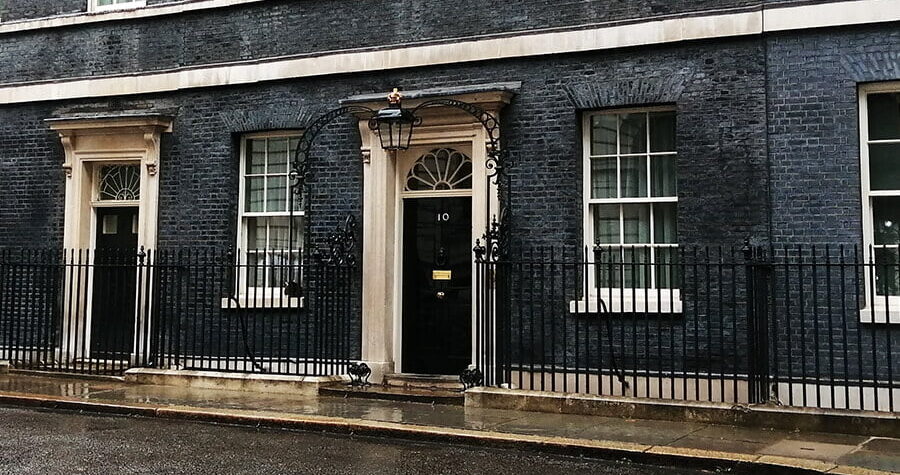
To say that Starmer is in a bad position would be to undersell the situation. His leadership has been shaky for some time, with rumours of leadership challenges becoming commonplace in Westminster. The Prime Minister’s recent spat with Burnham, has not helped matters. Whilst viewed by some as the NEC’s decision rather than Starmer’s personally, such bickering has only added to the Prime Minister’s woes. Were the situation not bad enough, the new revelations surrounding Mandelson and Epstein may well turn out to be the straw that broke the camel’s back.
Speaking at the despatch box during Prime Minister’s questions on Wednesday, Starmer admitted that he was aware of Mandelson’s links to Epstein following his conviction, and yet appointed him to the position of Ambassador nevertheless. It was an admission that could prove to be fatal, with many waiting in the wings to replace the Prime Minister.
Yet, perhaps one of the more interesting roots of the Prime Minister’s troubles is Mandelson’s lobbying practices and Starmer’s lack of due diligence. Reports suggest that the information handed to Starmer on Mandelson amounted to no more than a cut and pasted page of Google research. This reveals a lack of judgement and ignorance that demonstrates the Prime Minister may not be up to the job. In appointing Mandelson despite these concerns, Starmer has only himself to blame for the position in which he now finds himself.
True, a leadership challenge is almost certainly brewing in the corridors of Westminster. Appearing on Newsnight on Wednesday evening, Labour MP Barry Gardiner expressed his anger with the administration. When pressed on if the Prime Minister should step down, Mr Gardiner said that Starmer must, “think very hard about what is in the country’s best interest, and the party’s best interest.” Adding to this was Rachel Maskell, who on Thursday said that there are “serious questions” over Starmer’s position as Prime Minister.
If MPs are willing to voice such anger in public, one must wonder how heated the situation is behind closed doors.
But MPs are not the only ones who have expressed their concerns over the Prime Minister. The markets have also showcased their lack of confidence in Starmer too. On Thursday morning, for instance, the pound fell by 0.7 per cent against the dollar to a value of $1.356, and fell 0.5 per cent against the Euro. Borrowing costs have also risen, with the 10 year yield reaching levels as high as 4.6 per cent. Indeed, the markets are telling Starmer a very blunt, but necessary truth. That they do not think his position is sustainable, and are hedging their bets accordingly.
With such significant opposition mounting against the Prime Minister, businesses would do well to prepare themselves for a post-Starmer future. What this looks like may well change from business to business, however being aware of what future leaders might bring is essential for long-term planning.
This thus raises an important question for those who are seeking to do business with this government. Where do they place their bets? Public affairs professionals are of course aware that putting all one’s eggs in a single basket is not a viable strategy, and thus almost certainly have plans in place for if Starmer is ousted. But Starmer’s successor is by no means guaranteed.
Angela Rayner is currently tipped to be Starmer’s replacement, with her odds shifting from 4/1 to 13/8 over the last few days. At the same time, Wes Streeting, who was the previous favourite, dropped to 3/1.
With Rayner positioning herself on the soft left of the party, her ascension would signal a shift in Labour’s policy priorities. Trade Unions would likely gain more influence over the Downing Street operation, whilst business groups could expect to be left out in the cold. A vocal champion of the Employment Rights Bill and Renters Rights Act, a government with her at the head would almost certainly mean more interventionism and regulation.
By contrast, Streeting would mark a continuation of Blairism, supporting greater private sector involvement and a more hands-off approach to government. His time as Health Secretary has already been marked by a shift away from the traditional Labour approach to the NHS, advocating for reforms that reduce bureaucracy and streamline public services.
This all assumes, of course, that Starmer is ousted. He may very well continue on – albeit in a significantly weaker capacity. However, there comes a point where a Prime Minister can only take so much. When MPs are publicly questioning a Prime Minister’s authority, it often signals the beginning of the end. It would not be unwise, nor irrational, therefore for public affairs professionals, trade bodies and other groups to begin hedging their bets....
Subscribe to The Mace
Join the member community shaping British politics and stay ahead of
what's really happening in the world of politics and public affairs,
with expert analysis, breaking news, and insider insights from
Westminster and Brussels. The Mace is the leading news source and
resource for the government affairs industry, offering required
reading and lobby intelligence for professionals.
To see what you are missing out on by not subscribing to The Mace, click here to download our full membership info-pack. This includes
having no paywall on op-ed content or profiles/interviews, allowing
professional profiles to be read with maximum impact and visibility by
government, special advisers, MPs, peers, civil servants, and policy
and political decision-makers.
The Civil Service is ready to support Dame Antonia Romeo's flagship changes to government machinery - notably relating to AI and devolution - under new prime minister Andy
Andy Burnham is shaking up government with more changes than by any incoming prime minister in memory. But, asks Sir Bernard Jenkin MP, does he understand why the
UK aviation can decarbonise while meeting growth ambitions, but urgent government action is needed to prevent costs increasing for passengers and the sector losing its competitive edge.
The news that former Home Secretary Sir Grant Shapps has failed to make the new Tory candidate list has put fear into dozens of former Conservative MPs. Whether
Cameron Brown, a former special advisor to the Chancellor of the Exchequer, explains why Burnham's VAT cut on energy bills is a measure people will actually notice.
The strangely guilty way that the media, and some politicians have reacted to Widdecombe’s shocking death shows the double standards that can operate when a politician of the
James Purnell’s return to frontline politics is more than a nostalgic Blair-Brown era reunion. As Andy Burnham builds his Downing Street operation, public affairs professionals will need to