Autumn Budget 2025: family finances squeezed, welfare rules eased
Mace | 29th November 2025 | Comment, Uncategorised
After weeks of tax rumour and expectation-setting, the 26 November Budget landed as a welfare-first package that lifts the benefits cap but tightens the screw on household incomes, property and education.
Nobody can say they were not prepared for the Budget on 26 November. Almost daily, Rachel Reeves’ aides dropped suggestions for further tax rises, from new property taxes to removing the family home allowance from inheritance tax, to extending National Insurance to rental income. It was rumoured that the Chancellor would cut the Gordian knot and abandon Labour’s manifesto promise not to raise income tax rates.
Then came the reversal. After the Budget, even Labour-aligned analysts at the Resolution Foundation, the think tank chaired by pensions minister Torsten Bell, indicated that Reeves would have been better off coming clean and raising headline rates outright, rather than presiding over a Budget described by critics as one of political illusion, which has broken multiple promises not to raise taxes for ‘working people’.
Working people, it turns out, are not the only demographic in retreat. Against the backdrop of stagnant productivity, the Budget offered a markedly more generous settlement to those on benefits, with roughly £6 million directed toward welfare uplifts, including larger families who stand to gain most from the abolition of the two-child benefit cap. No wonder Kemi Badenoch compared the package to a victory for welfare dependency over work incentives.
The conditioning was deliberate. Prime the public to expect catastrophe, and disappointment might feel like relief. Yet nothing disguises the overall picture: middle-class households, around a £50,000 average salary, face the steepest cumulative hit. This comes after the International Monetary Fund earlier forecast that the UK would endure the highest inflation in the G7.
The public finances were, undeniably, in disarray when Labour took office. But Reeves created her own fiscal trap by approving substantial public sector pay hikes within days of entering government. Those rises made up £9 billion of the £22 billion shortfall she claimed was inherited from the Conservatives. The government also shied away from even modest welfare restraint when backbench dissent threatened a parliamentary rupture. Growth, Keir Starmer’s promised ladder out of penury, has been weighed down by last year’s increase in employer National Insurance and the looming Employment Rights Bill, which employers warn will add costs and suppress hiring.
Reeves’ proposals for a new Mansion Tax may delight Labour’s equalitarian wing, but does throttling the housing market help the Treasury’s long-term balance sheet? The Independent Schools Council disclosed that parents were removing pupils from fee-paying schools at a faster pace than HMRC predicted once VAT was placed on school fees. Likewise, economists expect that a fall in buy-to-let investment will erode stamp duty returns, potentially leaving last year’s surcharge on additional properties as a net revenue loser. The Treasury cautioned earlier that a large increase to Capital Gains Tax could suppress transactions and remove several billion pounds a year from receipts as taxpayers hold assets longer.
In Europe, wealth taxes are rare. Switzerland remains the sole major example within the region to raise consistent revenue via an annual wealth tax, but it operates as a substitution model—not an addition—designed to replace CGT and inheritance tax, not sit alongside them.
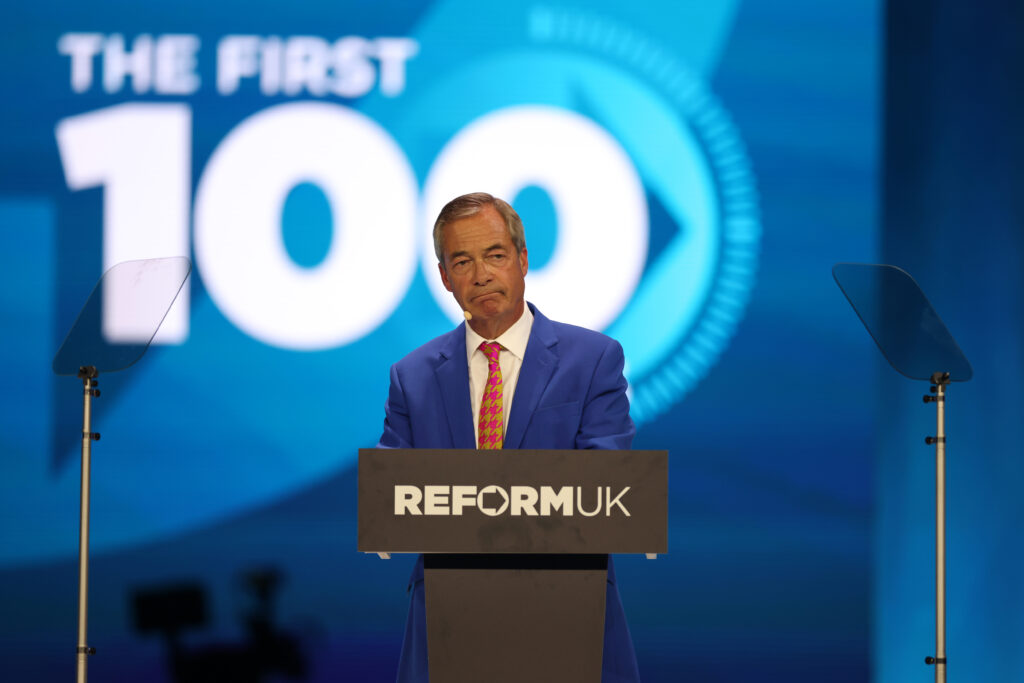
Meanwhile, Badenoch gained ground. Her pledge to abolish stamp duty stands in contrast to Labour’s tax layering, appealing to aspirational voters priced out of mobility. It was enabled by proposals to remove £47 billion from public spending, a scale of retrenchment Reeves cannot yet emulate. Labour’s allergy to ‘austerity’ blocks even modest pruning of departmental outgoings. Nigel Farage and Richard Tice acknowledged that Reform UK’s 2024 manifesto was uneven, but voters are unlikely to ignore incoherence in 2029, should Reform present itself as a governing alternative. Their next manifesto will face unsparing scrutiny.
A gathering fiscal emergency makes responsibility electorally potent. In 2010, the UK’s £160 billion deficit, worsened by financial crash and Gordon Brown’s earlier spending boom, handed the premiership to a party offering credible restraint. Whoever carries the same argument in 2029 will likely enjoy the same advantage. Covid’s age of boundless intervention is over. Voters now want sums to add up.
The Conservatives and Reform UK will each hope to court supporters with the offer of modest tax relief, but their appeal will hinge on whether they convince a wary public that borrowing, dependency and drifting inflation can be halted before the UK reaches breaking point. Lobbyists and policy institutes will shape those choices, applying pressure where governments fear to tread....
Subscribe to The Mace
Join the member community shaping British politics and stay ahead of
what's really happening in the world of politics and public affairs,
with expert analysis, breaking news, and insider insights from
Westminster and Brussels. The Mace is the leading news source and
resource for the government affairs industry, offering required
reading and lobby intelligence for professionals.
To see what you are missing out on by not subscribing to The Mace, click here to download our full membership info-pack. This includes
having no paywall on op-ed content or profiles/interviews, allowing
professional profiles to be read with maximum impact and visibility by
government, special advisers, MPs, peers, civil servants, and policy
and political decision-makers.
The Civil Service is ready to support Dame Antonia Romeo's flagship changes to government machinery - notably relating to AI and devolution - under new prime minister Andy
Andy Burnham is shaking up government with more changes than by any incoming prime minister in memory. But, asks Sir Bernard Jenkin MP, does he understand why the
UK aviation can decarbonise while meeting growth ambitions, but urgent government action is needed to prevent costs increasing for passengers and the sector losing its competitive edge.
The news that former Home Secretary Sir Grant Shapps has failed to make the new Tory candidate list has put fear into dozens of former Conservative MPs. Whether
Cameron Brown, a former special advisor to the Chancellor of the Exchequer, explains why Burnham's VAT cut on energy bills is a measure people will actually notice.
The strangely guilty way that the media, and some politicians have reacted to Widdecombe’s shocking death shows the double standards that can operate when a politician of the
James Purnell’s return to frontline politics is more than a nostalgic Blair-Brown era reunion. As Andy Burnham builds his Downing Street operation, public affairs professionals will need to