Sir Bill Cash is impressed by a compelling account of the occupants of Number Ten
Anthony Seldon’s book The Impossible Office? is a work of consolidated scholarship about our prime ministers, based on many sources, ranging across several centuries. It is compelling reading, but leaves seminal questions unanswered, particularly on the relationship of the office itself to democracy.
The book is published to mark the 300th anniversary of the office of the British prime minister, the first claimed to be Robert Walpole, although he did not recognise the title himself. Furthermore, there are serious historians who believe that Walpole was not the first prime minister. Henry Pelham, who was prime minister between 1743 and 1754, owed his power to the confidence of the House of Commons, whereas for the most part Walpole owed his own power to George II and Queen Caroline of Ansbach. Both of these prime ministers, however, did rely heavily on bribing members of parliament. Only since 1902 has the combined office of prime minister and that of First Lord of the Treasury always been held by a member of the House of Commons and therefore, crucially, by virtue of democratic election, by the voters.
Indeed, the intrinsic power of an individual prime minister, as we have seen in recent years, has depended not only on the size of their majority but also on the extent to which the prime minister has gained and retained the confidence of the government’s own backbenchers. For example, the fundamental democratic question of “who governs?” turned on the issue of our relationship with the European Union.
As a particular example, the Conservative Party has had a dramatic history, in recent times, of backbench rebellion against incumbent prime ministers, particularly through the aegis of the 1922 Committee. A Conservative prime minister appoints a Conservative cabinet, but is ultimately dependent on his or her own backbenchers, who in their turn depend on democratic election by their constituency voters and the confidence of their own associations. David Cameron, then prime minister, tried to neutralise the 1922 Committee in June 2010 by inducing a vote of the parliamentary party as a whole to bring ministers appointed by him into the voting arrangements and frustrate rebellion by his own backbenchers on the European question. Churchill was urged to do the same during the Second World War, but wisely refused to do so.
Had Cameron been able to make a lawful change to the constitution of the Conservative Party in the way he proposed, which he was forced to accept he did not and had to abandon, it would have become possible for him to ram through policies and to avoid rebellions by his backbenchers. In the words of Churchill, who was himself challenged in his own seat by supporters of appeasement when he was a member of parliament: “Your first duty is to your country, your second is to your constituents, only in the third place is your duty to your party.” Churchill understood that as an MP, you do not do what the whips tell you if you believe it is inconsistent with your duty to your country or constituents. The more fundamental the democratic principle in the national interest, the more reason why you would rebel if you disagreed with party policy and wanted to ensure this fundamental principle and national interest is achieved. Theresa May fell, Cameron failed and Major’s policy on Europe fractured because they did not take heed.
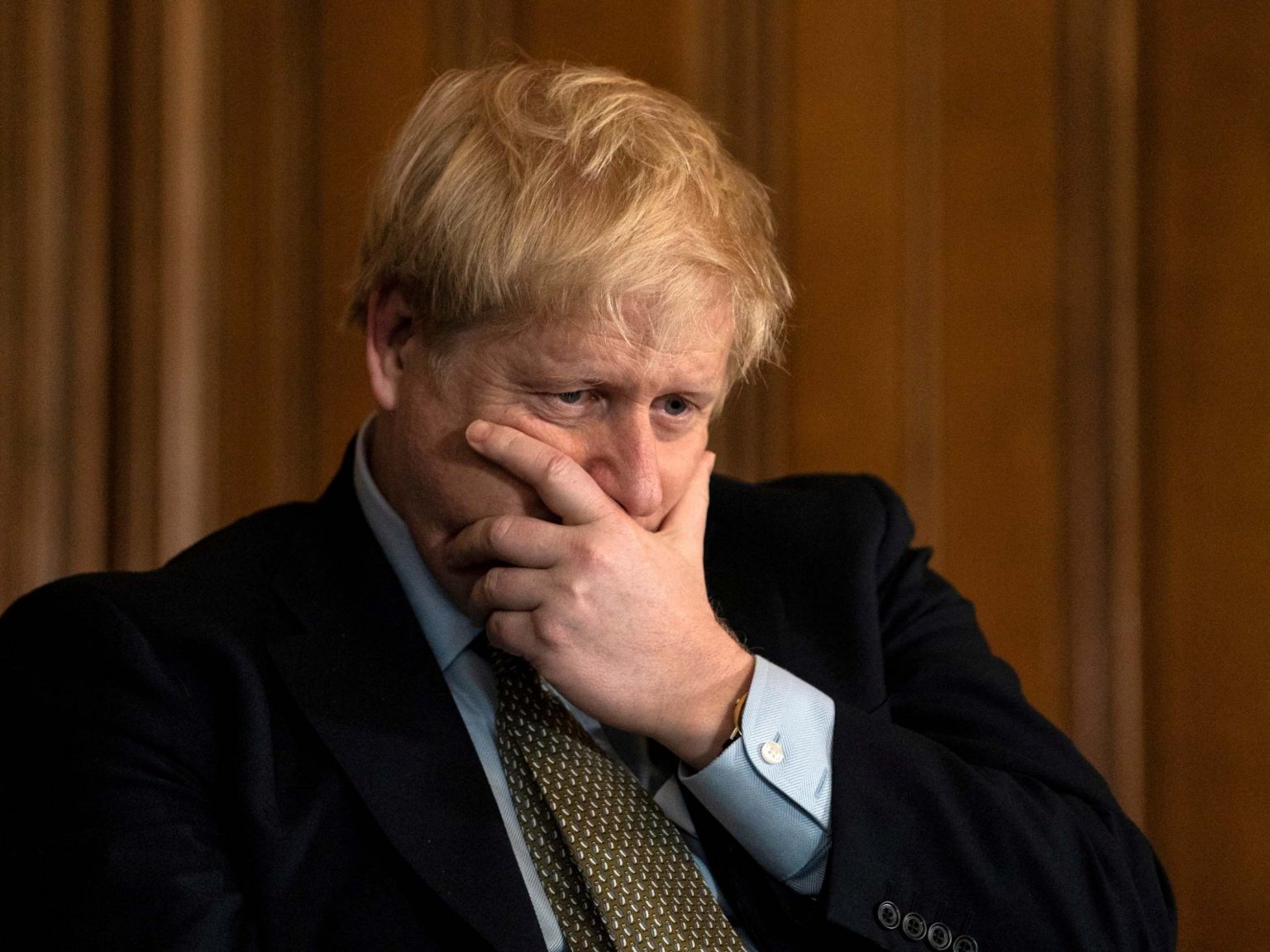
Seldon’s book clearly reflects a number of conscious and some unconscious attitudes, derived from the influence of his closest mentors and advisers, who are well known for their dislike of Brexit, as reflected in his observations, such as: “the noisy ERG... containing purist Brexiteers”. This misses the point, which is that particularly the Spartans, who were not all members of the ERG, were representing the views of their constituents and the British voters on the third withdrawal agreement vote, as proved by the result of the referendum itself and then its endorsement in the general election of December 2019. This was not a question of “banging on about Europe”, it was about prime ministerial acceptance or rejection on the fundamental democratic question and sovereignty, which lay at the heart of our membership of the European Union, and which Boris Johnson (pictured) understood as a matter of sovereignty in a way his predecessors failed to comprehend. Seldon describes Euroscepticism and Brexit in chapter ten as merely “ide- as” which helped Johnson win the general election in 2019. They were not ideas; they are based on democratic principles which are the foundations of our system of democratic government. These must be at the heart of a prime minister’s tenure of office – who governs and how. Seldon’s suggestions in this chapter to improve the characteristics of the role of prime minister fall short of answering these questions, and are a collection of proposals to make the task of prime minister more manageable and professional, but not more purposeful or democratic.
I...
Subscribe to The Mace
Join the member community shaping British politics and stay ahead of
what's really happening in the world of politics and public affairs,
with expert analysis, breaking news, and insider insights from
Westminster and Brussels. The Mace is the leading news source and
resource for the government affairs industry, offering required
reading and lobby intelligence for professionals.
To see what you are missing out on by not subscribing to The Mace, click here to download our full membership info-pack. This includes
having no paywall on op-ed content or profiles/interviews, allowing
professional profiles to be read with maximum impact and visibility by
government, special advisers, MPs, peers, civil servants, and policy
and political decision-makers.
The news that former Home Secretary Sir Grant Shapps has failed to make the new Tory candidate list has put fear into dozens of former Conservative MPs. Whether
Blakeney has welcomed former drinks company Oatly managing director Tim Knight and pro-Brexit MEP Lucy Harris, in an effort to strengthen their position, the public affairs and strategic
Benjamin Wegg-Prosser, who co-founded the lobbying firm Global Counsel alongside Peter Mandelson has today resigned following significant backlash regarding the firm’s link to Jeffrey Epstein.
The Russell Group has picked Professor Libby Hackett, an Australia based public policy specialist, as its next chief executive, handing the UK’s most influential research university lobby to