Whitehall grinds to a halt after resignation chaos
Senior advisor warns that the change of prime minister is a “colossal waste of energy”, as the business of politics comes to a standstill.

The government has pledged billions more for Britain's military. But can it finance those promises without squeezing other public services?
Chancellor John Healey will deliver his first Budget on 28 October, a test of Prime Minister Andy Burnham’s priorities, according to the Institute for Government – however, Britain’s defence ambitions face an increasingly difficult financial backdrop.
Figures released by the Office for National Statistics on 21 October show that September borrowing reached £24.5 billion, £1.9 billion above forecast, while debt interest cost £10.9 billion. The Institute for Fiscal Studies (IFS) estimates that interest already consumes roughly £1 in every £13 of government spending.
The Ministry of Defence and Treasury’s Defence Investment Plan provides an additional £15 billion between 2026–27 and 2029–30, bringing planned defence investment across those four years to £298 billion. According to the government, core NATO defence spending will reach 2.7% of GDP in 2027–28. Britain has also committed to 3% in the next Parliament and 3.5% by 2035. How the longer-term targets will be financed remains unresolved.
Of the £15 billion increase, the Treasury has identified funding sources for £10.3 billion, mainly through reprioritising departmental budgets. A September parliamentary answer specified contributions from transport and energy budgets.
Speaking to MPs on 13 October, Defence Secretary Wes Streeting acknowledged the shortfall: “There was a £4.7 billion gap, which needs to be plugged at this Budget for the immediate term.”
Further savings, taxes or borrowing could potentially cover the remainder, but no final decision has been announced. IFS economist Max Warner has warned that additional defence funding carries consequences for other public spending, taxation or borrowing. The central question is not simply how much Britain can spend on defence, but what other priorities may have to give way.
Already announced priorities include £790 million for air and missile defence, £11 billion for munitions and weapons, more than £5 billion for drones and autonomous systems, and £2.5 billion for cyber and electromagnetic capabilities.
Yet procurement is already facing constraints. Data from the National Infrastructure and Service Transformation Authority show that the planned whole-life budget for the Mechanised Infantry programme, which includes Boxer vehicles, fell by about £1.86 billion.
In a 14 October parliamentary answer, defence minister Luke Pollard confirmed that three proposed capabilities, including repair and recovery vehicles, would no longer be pursued. The Army is considering alternatives; 623 Boxer vehicles were already under contract. The changes highlight the tension between military modernisation and spending limits.
The government argues that stronger defence is necessary while maintaining fiscal discipline. Conservatives are demanding sharper cuts. Reuters reported on 20 October that party leader Kemi Badenoch proposed immediate welfare savings to help fund defence and reduce borrowing.
“Let’s cut spending. Let’s live within our means, and let’s bring in policies that will actually grow our economy,” she told reporters.
Labour also wants lower welfare spending, but favours helping more people into work. Meanwhile, IFS director Helen Miller warned against spending plans that rely on cuts ministers might not deliver: “Simply pencilling in implicit cuts that he has no intention of delivering would make the Budget a work of fiction.” The political disagreement is not only over rearmament, but who ultimately pays for it.
On 28 October, the government is expected to explain how it will cover the £4.7 billion gap. But according to a September Treasury answer to Parliament, the timetable for reaching 3% of GDP and the path to the 3.5% target in 2035 will come at the next Spending Review. The Budget will therefore be an early test of whether Britain’s financial plans can match its military ambitions.
Senior advisor warns that the change of prime minister is a “colossal waste of energy”, as the business of politics comes to a standstill.
Love or hate the current American administration, at least they have a consistent electoral cycle where the choice of the electorate is upheld.
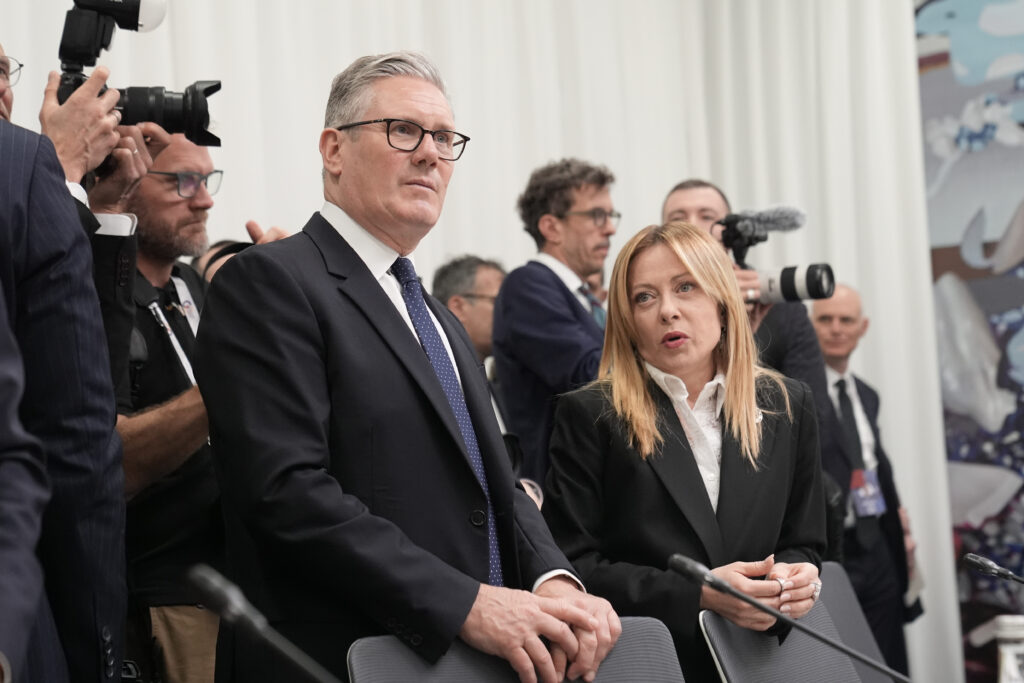
Sir Keir Starmer has announced that he will resign as Prime Minister and leader of the Labour Party, triggering a leadership process that now looks increasingly likely to

As vultures circle Downing Street, now that Burnham is back as an MP, Starmer must realise that resigning is going to be better for the Labour Party than

What will a Burnham government look like ? Lucy Carrier-Pilkington analyses what a change of prime minister will mean for the country and who will be the likely
Ex-Royal Marines commando emerges as the plan B candidate in the race for Labour leadership.

Debate has erupted over whether the new policy is an overdue attempt to rein in Silicon Valley or a short-sighted, politically motivated move that will push children towards

With Restore and Reform tearing votes off each other, the Makerfield by-election could propel Andy Burnham into Number 10. But, asks William Cash, will Restore's percentage of the
Creating a Defence Industrial base with no new money is going to be a challenge for any Defence Secretary. But, argues defence expert William Wallace, there are several
May’s local elections completely transformed London’s political landscape, argues CEO Jonny Popper.
