By-election day: Is it now or never for Zack Polanski?
The day of the Holborn and St Pancras by-election has arrived; Mace investigates where public opinion is and what this means for the future of the Green Party
What will a Burnham government look like ? Lucy Carrier-Pilkington analyses what a change of prime minister will mean for the country and who will be the likely winners and losers.
For those who underestimate the importance of today’s by-election in Makerfield, hear it from the horse’s mouth. In an eve-of-poll speech to supporters, Andy Burnham said: “It’s been a long month. But it’s all for a purpose. And that is to make sure that this by-election changes British politics.”
Of course, the consequences of the Makerfield by-election stretch far and wide beyond the Mancunian constituency. This morning’s front cover of the Manchester Evening News simply said, ‘It’s about Makerfield’. While I hold the utmost respect for the publication – I must disagree. It is no secret that if Burnham wins the by-election, he will make a beeline to Westminster and challenge Keir Starmer for the premiership. If all goes his way, he could be Downing Street’s ‘top dog’ in as little as ten days.
I’ve written previously about the perils of a Downing Street revolving door undermining policymaking and democracy. Today is a day that highlights that most of all, as the results of a vote by a constituency of 75,000 could overturn the nominated leader of 2024’s general election. An election which represented the interests of 70 million people. However, little can be done about that now. Which is why it is time to seriously investigate what a Burnham government could look like.
Devolution and powering up the north
First and foremost, Burnham’s priority is powering up the North. His mission statement is to bring power to areas of the UK that have been neglected by successive governments. In his recent speech, he said: “This by-election is going to put power where it should be in the hands of people here, in the hands of you, in the hands of 75,000 people across this constituency, a place that has been overlooked by Westminster in the past.”
He added that a vote for him is “a vote to power up the north of England – about time that that happens – as well as to re-industrialise the north.” Burnham also suggested that if he became prime minister, every policy in his government would have to pass the “Makerfield test”, saying that “if it doesn’t work for the people here then it shouldn’t be introduced.”
Burnham will likely shift power and funding away from central government towards cities and regions to promote economic activity outside of London. This could include greater government investment in transport, housing and healthcare outside of the capital.
Increased public spending
Burnham sits firmly to the left of Keir Starmer and fellow leadership rival Wes Streeting. Thus, his premiership would likely see an increase in public spending and a hike in tax on wealth and property. The key question here is whether that would be sufficient to offset increased spending, as powering up the north would be a significantly expensive investment project.
“At a sector level, there will be a mixed bag of winners and losers from Burnham’s economic strategy.”
At a sector level, there will be a mixed bag of winners and losers from Burnham’s economic strategy. Construction and housebuilding may benefit from increased public investment. Similarly, defence and renewables could gain from higher spending on the green transition. However, utilities face regulatory and re-nationalisation risks, private healthcare might feel pressure from an increased focus on the NHS, and London property will likely be exposed to higher property tax.
If Burnham becomes PM, he will only have a matter of months before facing a very difficult and politically sensitive budget. It will inevitably force trade-offs that city mayors don’t have to deal with. This could present a series of issues for him as even Burnham’s allies are anxious about his tendency to duck difficult fiscal decisions. As Mayor of Greater Manchester, he tried to back off an unpopular planning strategy that was going to use green belt land, and he eventually moved to scrap a prospective clean air charging zone. Unlike Sadiq Khan, who accepted the political cost of pursuing environmental and public health reforms in London, Burnham failed to follow through.
The price of democracy
The immediate impact of Burnham taking the Labour crown would be economic uncertainty. Ongoing leadership instability as well as the prospect of policy shifts is already weighing on UK assets. The constant revolving door of leaders and chancellors means major projects such as HS2 get repeatedly ignored, altered, or abandoned altogether.
“Ongoing leadership instability as well as the prospect of policy shifts is already weighing on UK assets.”
For equities, the results are mixed. The FTSE 100 tends to be relatively insulated from domestic political developments, helped by the fact that around three quarters of its revenues are generated overseas. However, the FTSE 250 is more sensitive due to its greater domestic exposure, meaning political risk is felt far more heavily.
Replacing the House of Lords
Burnham has also called for the House of Lords to be replaced with a ‘Senate of Nations and Regions’. However, it is not yet clear what specific model of the second chamber Burnham would propose. In the Labour 2024 manifesto there were a number of changes promised. Now, all hereditary peers have been removed, and parties have to provide a ‘citation’ explaining each of their nominations. However, it is possible Burnham will take a much harder line. Alas, this move would take time and is unlikely to be implemented before the next general election.
A worthy opponent to Reform? Don’t be so sure
Burnham is undeniably popular among Labour members. If he wasn’t, he would not be such an immediate threat to Sir Keir. The King of the North was a hugely successful mayor in Greater Manchester and has won the hearts and minds of many. The primary argument expressed by those who have defected from Starmer is that Burnham would be better placed to tackle Reform in the next election. However, this is not a certainty. Reform is popular, and in order for Labour to beat them in the next election they will not only have to keep their own voters interested – but also win over the centre.
“In the land of first-past-the-post, tactical voting is king”
In the next general election, it would not be surprising if centrist and even conservative voters became the tie-breakers. While Keir Starmer might not be the most charismatic leader – he certainly appeals more to the centre than Burnham, who is positioned further to the left. In the land of first-past-the-post, tactical voting is king – and for that Starmer is a much more palatable candidate.
The day of the Holborn and St Pancras by-election has arrived; Mace investigates where public opinion is and what this means for the future of the Green Party
"Education is why I came into politics, and it is hardly talked about"

Greetings from Birmingham and the Conservative Party Conference, with Editor William Cash.
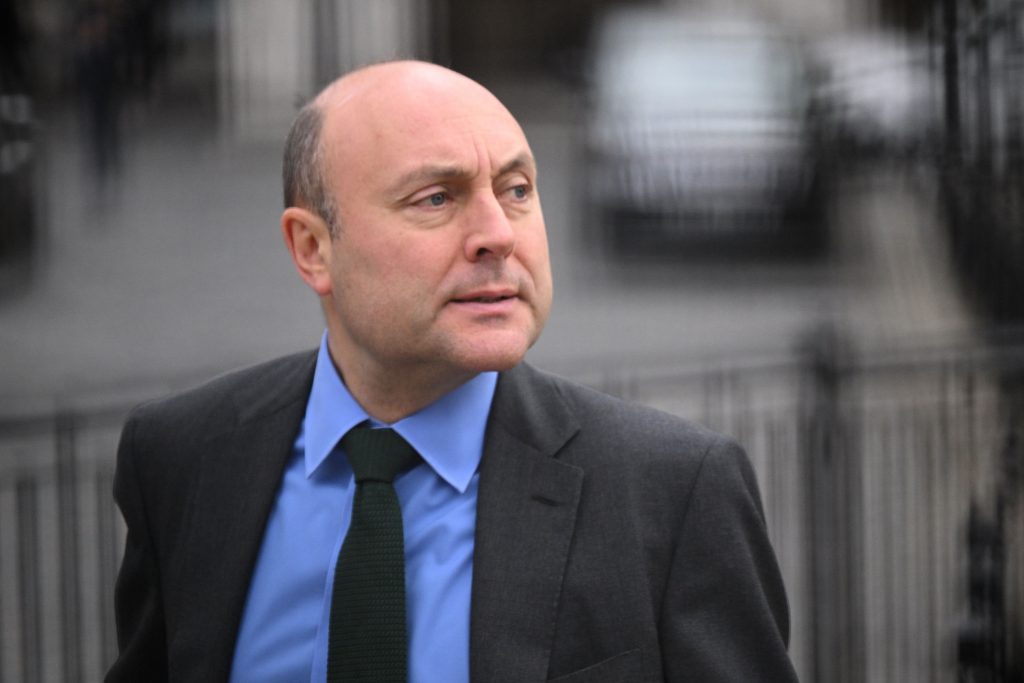
Healey’s affirmative line “There is nothing progressive about losing control” did little to stir ‘hype’ amongst conference attendees nor City bankers, but he is right to say it

Greater deregulation for the financial sector in the City is not the way forward, writes Mick McAteer.

In the latest addition of the Industry Reacts series, Lucy Carrier-Pilkington approaches leaders in hospitality to see their thoughts on the proposed ‘tourist tax’
This summer exposed the chain of vulnerabilities faced by the agricultural industry, Ella Beadman writes.
The government's new 5% tourism tax and overnight levy is the last thing the UK's hospitality sector needs, says William Cash

The new government protocol raises concerns about whether young people are getting the necessary exposure they need in their early careers

The question of money buying influence in politics is centuries old and not going away
