
The importance of sovereign defence capability in an uncertain world

John Howie MBE | 31st March 2026 | Comment
John Howie MBE
John Howie MBE

As uncertainty spreads across the continent, now more than ever the UK should learn the value of sovereign defence capability, says John Howie MBE

Following the end of the Cold War, the UK like so many of our allies, not only accepted what we now refer to as the “peace dividend” but also continued a journey to modernise our defence procurement system. Part of the reform agenda was to move away from the dominance of single-source or non-competed contracts which made up over 70% of all MOD procurement (by volume) in 2009/10 through an increasing focus on the use of competition as the principal method of determining value-for-money. By 2021/22, competition was the basis of awarding over 50% of all MOD contracts placed, a significant increase. With that policy of driving towards competition came a willingness to open up the UK defence market to international competitors without constraint, a policy that has never really been adopted by any of our allies or competitors. Whilst this, in theory, brought the benefits of gaining access to the best available warfighting capability and allowed the UK to benefit from larger non-UK programmes...

Subscribe to The Mace

Join the member community shaping British politics and stay ahead of what's really happening in the world of politics and public affairs, with expert analysis, breaking news, and insider insights from Westminster and Brussels. The Mace is the leading news source and resource for the government affairs industry, offering required reading and lobby intelligence for professionals.

To see what you are missing out on by not subscribing to The Mace, click here to download our full membership info-pack. This includes having no paywall on op-ed content or profiles/interviews, allowing professional profiles to be read with maximum impact and visibility by government, special advisers, MPs, peers, civil servants, and policy and political decision-makers.


The Silent Engine: Why we must stop kicking the Civil Service and learn to love our Civil Servants

Neil Woollard | April 28, 2026

As the Charity for Civil Servants marks its 140th anniversary, Neil Woollard argues that the officials who keep Britain functioning are too often caricatured, underpaid and overlooked —


UK’s economic stability starts at sea, says the CEO of the Chamber of Shipping

Mace | April 28, 2026

Shipping moves 95 per cent of the UK’s trade. Most of the time, this happens smoothly until there is a global crisis, writes Rhett Hatcher, CEO of the

Modern history shows the Open University is key to rehabilitating extremists — so why are we making cuts to prison education?

Lucy Carrier-Pilkington | April 28, 2026

Amid cuts to prison education hours in England, Lucy Carrier-Pilkington looks back at the historic success of the Open University in Northern Ireland and why it is still

A lobby system not fit for purpose

Mace | April 22, 2026

CIPR's latest poll of 250 public affairs professionals makes clear that there is majority backing for radical reform of lobbying rules to make the profession more transparent.

Mobile phone ban in schools: lobby groups say “it’s about time”

Lucy Carrier-Pilkington | April 22, 2026

The Children's Wellbeing and Schools Bill will be amended to introduce a legal ban on mobile phones in schools in England.

Future-facing industries need 120,000 technicians

Dr Kelly Vere MBE | April 22, 2026

Dr Kelly Vere MBE, Director of the UK Institute for Technical Skills & Strategy and Director of Technical Strategy for the University of Nottingham highlights the technical skills

Whitehall continues to throw Starmer under the bus as the Robbins saga continues

Lucy Carrier-Pilkington | April 21, 2026

As the blame game between Keir Starmer and Olly Robbins unfolds, Lucy Carrier-Pilkington argues this is just the latest in a pattern of governments pinning responsibility on civil

Forty years after Big Bang, the City cannot write its own rules for growth

Mick McAteer | April 21, 2026

Greater deregulation for the financial sector in the City is not the way forward, writes Mick McAteer.

Starmer’s successor may not be Labour’s knight in shining armour

Ted Newson | April 21, 2026

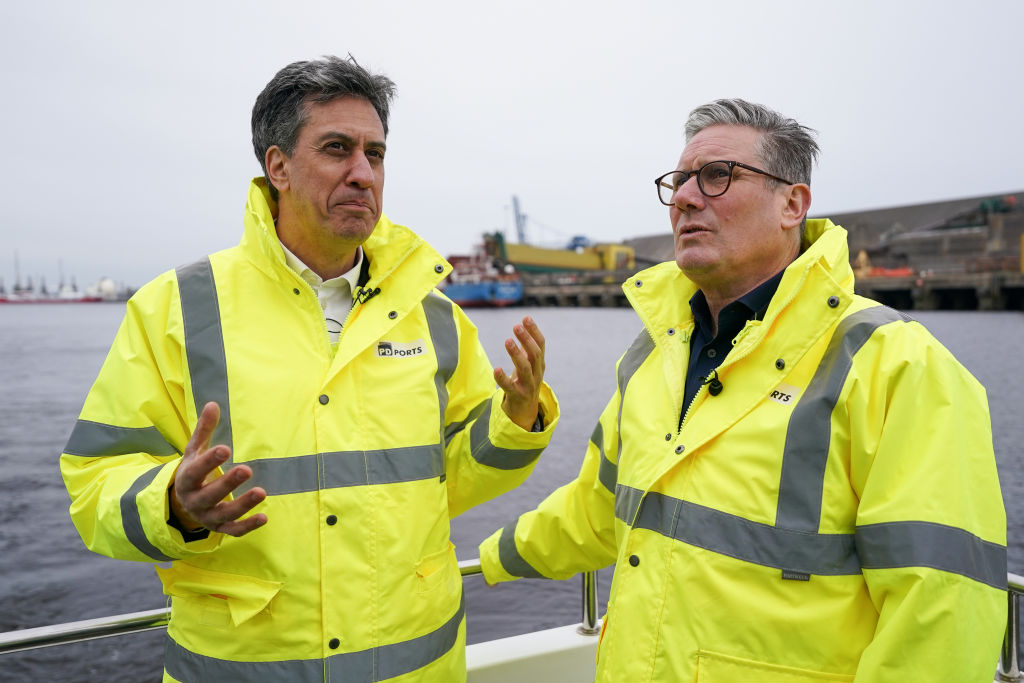
With Ed Milliband poised to be one of the favourites to succeed Starmer as Prime Minister, we must remember what a Milliband premiership would look like, writes Ted

Hiding in plain sight – The UK’s rising accident crisis

Matilda Smith | April 20, 2026

For too long, preventable accidents have been viewed as an afterthought, but more should be done to ensure they do not occur in the first place, writes Matilda