Hiding in plain sight – The UK’s rising accident crisis

Matilda Smith | 20th April 2026 | Comment
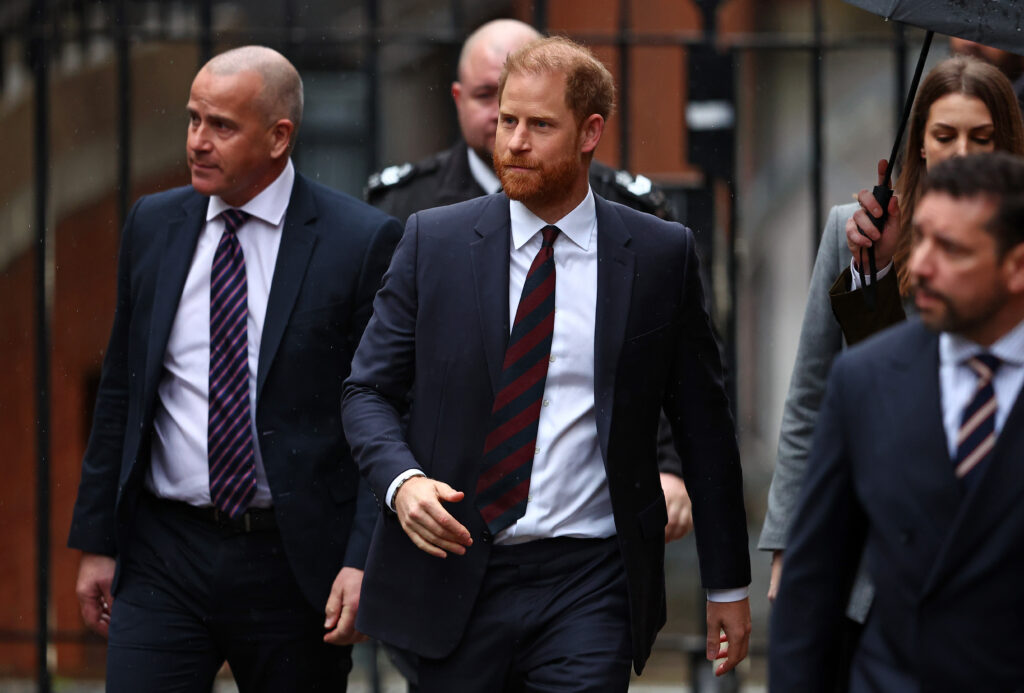
Approximately 23,000 people lost their lives to preventable accidents in 2023 (Photo by Graeme Robertson/Getty Images)

For too long, preventable accidents have been viewed as an afterthought, but more should be done to ensure they do not occur in the first place, writes Matilda Smith

Accidents kill as many people as a full capacity crowd at London’s 02 Arena - and send more than the entire population of Devon to hospital every year. They cost the NHS over 5 million bed days and at least £6 billion in direct treatment costs alone, while the wider economy takes an additional hit of £6 billion in lost working days, not including the impact on the benefits bill of supporting people unable to work as a result. Human suffering, economic costs and over-stretched health services are the price the UK pays for failing to get to grips with this public health crisis – a price that is getting higher as accident rates rise. Across the UK, tens of thousands of people lose their lives and hundreds of thousands are admitted to hospital each year due to preventable accidents. Falls, accidental poisonings, and road traffic collisions are just some of the tragic and widespread causes of accidental death and serious injury happening across every area of people’s lives – at home, at work, on our roads and during leisure time.  The Royal Society for the Prevention of Accidents (RoSPA)’s latest Annual Review of Accidents exposes the scale of the crisis. In 2023 alone, an estimated 23,000 people lost their lives due to accidents, while almost 900,000 required hospital treatment. These are not just numbers; they represent devastating, life-altering events for individuals and families, and a growing, often overlooked, burden on society. Accidents were already increasing over the long term, but recent data shows a sharp escalation. The rate of fatal accidents has increased by 8% and hospital admissions by 3% in just one year, with two major and growing causes of harm.

"Accidents were already increasing over the long term, but recent data shows a sharp escalation."

Falls are the leading cause of accidental death, responsible for almost half (48%) of all fatalities. In 2023, 11,110 people died from falls - a 12% rate of increase in a single year, contributing to a shocking 34% rise over just two years. Accidental poisonings are also a critical issue. In 2023, they accounted for nearly a quarter (24%) of all accidental deaths, rising by a rate of 11% in one year. Many of these deaths are linked to drugs, including narcotics, but a significant proportion also involve alcohol and everyday medications. This reflects a wider and deeply concerning reality: accidents are not evenly distributed across society.

"Accidents are not evenly distributed across society"

Inequality plays a significant role in determining risk. People in the most deprived areas in England are nearly twice as likely to die in an accident as those in the least deprived areas. Geographic disparities are equally stark. Scotland has the highest rate of accidental deaths in the UK, with people there 62% more likely to die in an accident than those in England. Within England, a clear North–South divide persists, with someone in the North East more than twice as likely to die in an accident than someone in London. Accidents drive demand across the NHS, strain emergency services, disrupt workplaces, and reduce productivity. For employers, accidents contribute to staff absence, lost output and increased insurance costs. In terms of taxpayer’s money, they represent a persistent and growing pressure on already stretched resources. And for individuals and families, the costs - both financial and emotional - can be life-changing. Despite this, accidents rarely receive the same attention as other public health emergencies. The NHS 10 Year Plan contains no mention of the need, let alone any practical steps, to tackle rising accident rates, even though the cost of treating them is comparable to the cost of obesity-related conditions (£6.5 billion) and more than double that of smoking-related conditions (£2.5 billion) —both of which are recognised as urgent public health issues. Yet it is not that solutions do not exist. For over 100 years RoSPA has championed practical evidence-based policies, such as seatbelt laws and improved building safety standards, proven to reduce injuries and save lives. What is lacking is a coordinated national approach to accident prevention. The need for a National Accident Prevention Strategy (NAPS) is clear. Separate accident prevention work currently takes place across different branches of government such as the Department of Transport, Department of Work and Pensions and Department of Business and Trade. A coordinated, cross-sector approach would enable government, industry and public services to better understand risks, share data, and implement targeted interventions – reducing bureaucracy and inefficiency as well as accident rates If we are to effectively reduce harm, ease pressure on public services, and create safer, more resilient communities, we cannot afford to treat accidents as an afterthought. RoSPA’s Annual Review should serve as a catalyst for change, not just within the safety sector, but across all those ...

Subscribe to The Mace

Join the member community shaping British politics and stay ahead of what's really happening in the world of politics and public affairs, with expert analysis, breaking news, and insider insights from Westminster and Brussels. The Mace is the leading news source and resource for the government affairs industry, offering required reading and lobby intelligence for professionals.

To see what you are missing out on by not subscribing to The Mace, click here to download our full membership info-pack. This includes having no paywall on op-ed content or profiles/interviews, allowing professional profiles to be read with maximum impact and visibility by government, special advisers, MPs, peers, civil servants, and policy and political decision-makers.

Dame Antonia’s key civil service reforms are ready to be supported by Whitehall, says Jonathan Freeman

Mace | August 1, 2026

The Civil Service is ready to support Dame Antonia Romeo's flagship changes to government machinery - notably relating to AI and devolution - under new prime minister Andy

Burnham is trying to fix Whitehall, but will the political machinery change?

Mace | July 30, 2026

Andy Burnham is shaking up government with more changes than by any incoming prime minister in memory. But, asks Sir Bernard Jenkin MP, does he understand why the

Experts warn more government support needed to help UK aviation meet net zero by 2050

Mace | July 30, 2026

UK aviation can decarbonise while meeting growth ambitions, but urgent government action is needed to prevent costs increasing for passengers and the sector losing its competitive edge.

Don’t rule out an early election as Burnham may see an opportunity to kick Reform, says Fred de Fossard

Fred de Fossard | July 28, 2026

With the new Prime minister championing policies which go beyond Labour’s very confined 2024 manifesto, an early election is not illogical.

Despite promises of radical change, Labour’s culture of ruling political families remains entrenched

Lucy Carrier-Pilkington | July 28, 2026

Andy Burnham's inner circle appears to perpetuate Labour's long-running culture of nepotism, and is doomed to cause frustration among backbenchers.

Kemi’s true blue purge, with help from Sir Philip May

William Cash | July 26, 2026

The news that former Home Secretary Sir Grant Shapps has failed to make the new Tory candidate list has put fear into dozens of former Conservative MPs. Whether

Why Burnham’s energy VAT cut will make a difference

Mace Magazine | July 25, 2026

Cameron Brown, a former special advisor to the Chancellor of the Exchequer, explains why Burnham's VAT cut on energy bills is a measure people will actually notice.

If Burnham wants growth, he must start by backing AI and Tech founders and risk-takers, says Liam Houghton

Mace | July 23, 2026

New Prime Minister Andy Burnham has an opportunity to make Britain the best place to start and scale a business, argues CEO Liam Houghton.

The continuing political Whydunnit of the murder of Ann Widdecombe

Mace Magazine | July 23, 2026

The strangely guilty way that the media, and some politicians have reacted to Widdecombe’s shocking death shows the double standards that can operate when a politician of the

What James Purnell’s return to No 10, along with the new cabinet, reveals about Burnham’s Labour network

Mark Leftly | July 21, 2026

James Purnell’s return to frontline politics is more than a nostalgic Blair-Brown era reunion. As Andy Burnham builds his Downing Street operation, public affairs professionals will need to