Sustainable technologies in agriculture will be key to EU Africa partnership

Jerome Barbaron | Issue 4 | Comment, Magazine

From the Archive

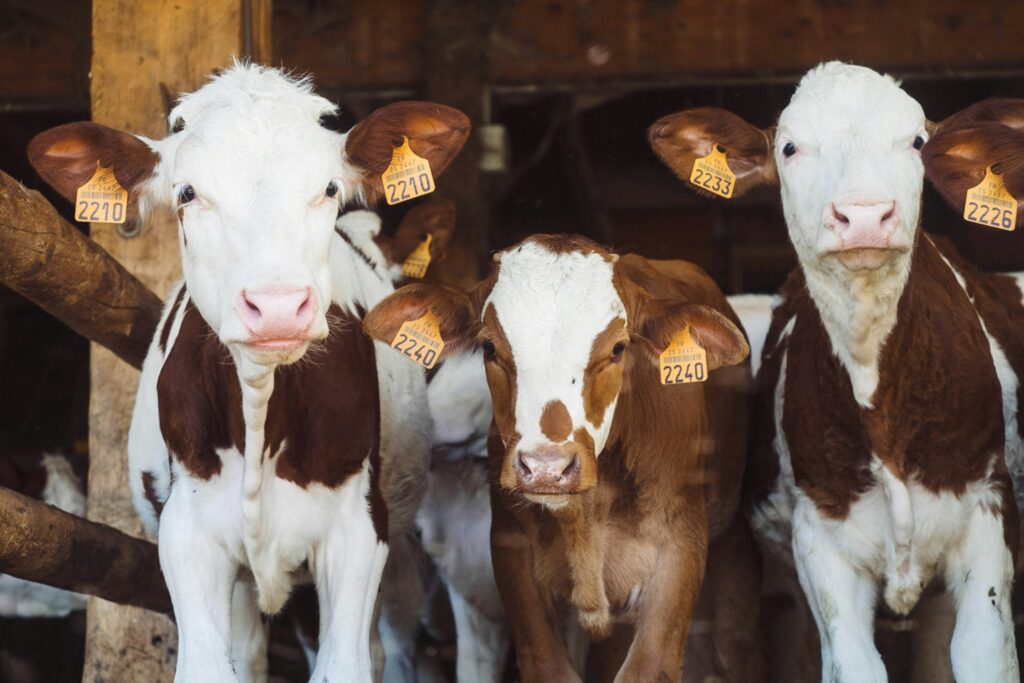
ant-rozetsky--c0PJUAtpSo-unsplash

Agricultural inputs and technology can and should be a core part of delivering sustainable development in African agriculture

As Europe and Africa agree their new partnership areas, agriculture will be key for Africa. For the sector to be an engine for sustainable development, generating inclusive and environmentally sustainable growth, the partnership needs to adapt the EUs Green Deal to the realities of Africa. Sustainable agronomic inputs, including synthetic and organic pesticides, are needed in Africa. The partnership must, however, focus on improved outputs. That is to say – an improved state of the environment, improved food systems and improved food security.  Fueling sustainable development through agriculture Agriculture is the largest sector in Africa accounting for over 50% of the jobs in Sub-Saharan Africa alone. Yet, the average farm in Africa only performs at 40% of its potential. Eighty-four percent do not use agro-chemicals. Studies have found that by increasing productivity on farms, one immediately increases the incomes and livelihoods of about 60-70% of people. Studies also suggest that in Africa, for every 10% increase in farm yields, poverty falls by 7%.  Getting the sustainable growth agenda right in agriculture is essential. Africa is home to more than half of the world’s population facing food insecurity and yet is also the world’s fastest growing continent. Currently, Africa is the second largest continent in the world accounting for almost 17% of the world’s population. Africa’s population increases by roughly that of France every 2 years. By 2040, Africa will be home to the world’s largest labour force. Sustainable technologies can protect and improve food security, incomes as well as the state of our environment. Nowadays, we are seeing European friends focus on the perceived need to reduce agricultural inputs. Yet, studies suggest that enforcing top-down reduction of inputs in Africa everywhere will only leave Africa worse off.  Studies done by a range of groups including the European Commission’s own study, one by the U.S. Department of Agriculture, one by Kiel University, one by Wageningen University researchers and one by Egerton University’s Tegemeo Institute of Agricultural Policy & Development of Kenya, all show that reducing pesticide use will lead to higher food prices and lower yields. A report from independent think tank European Centre for Development Policy Management (ECDPM) titled “A greener Europe at the expense of Africa?” also shows that there could be unintended consequence of worsening food poverty in Africa and increasing global warming outside the EU. Innovating solutions to evolving challenges The world’s leading research and innovation companies are striving to bring sustainable technologies to farmers, that increase yields sustainably, and to train farmers on the correct and safe use of technologies. As an industry, and together with local governments and technical institutes, and distributors and cooperatives, we are also giving agronomic advice so that yields that benefit the farmers, local communities and consumers, and the environment, can thrive hand in hand. Good agronomic practices like crop rotation and soil restoration, coupled with yield enhancing technologies that increase the health of a plant’s roots can help reverse soil erosion for example – a major threat to the sustainable future of our planet. We are also helping increase pollinators on farms, helping safely dispose of waste and helping connect farmers to market.  Technologies can help agriculture become more resilient to the realities of climate change and the evolving pests and diseases that keep threatening food security and livelihoods. These technology offerings can range from seeds that are more resilient to droughts for example, to those that are more resilient to the devastating Fall Armyworm. Crop protection and seed technologies are building resilience into our food systems.  The climate in Africa is causing Fall Armyworm to be a year-long challenge (cool, wet springs followed by warm, humid weather favor survival and reproduction of the pest). Based on 2018 estimates from 12 African countries, up to 17.7 million tons of a staple crop of maize, could be lost annually due to Fall Armyworm on that continent – enough to feed tens of millions of people. Overall, pests like Fall Armyworm and Desert Locusts, while not present in Europe, threaten the food security and livelihoods of over 300 million people in Africa every year. Technology, specifically good quality seeds and crop protection products, synthetic and organic, can help effectively tackle these challenges in an always more sustainable way. Partnering for impact  The necessary sustainable future cannot be made a reality by any single actor alone. Public private partnerships are needed. Billions of dollars of investments are needed to achieve sustainable development, and that needs to be coupled with an enabling regulatory environment, policies that deliver, and rapid implementation. Around 60% of the world’s arable land is in Africa, but Afri...

Subscribe to The Mace

Join the member community shaping British politics and stay ahead of what's really happening in the world of politics and public affairs, with expert analysis, breaking news, and insider insights from Westminster and Brussels. The Mace is the leading news source and resource for the government affairs industry, offering required reading and lobby intelligence for professionals.

To see what you are missing out on by not subscribing to The Mace, click here to download our full membership info-pack. This includes having no paywall on op-ed content or profiles/interviews, allowing professional profiles to be read with maximum impact and visibility by government, special advisers, MPs, peers, civil servants, and policy and political decision-makers.

Dame Antonia’s key civil service reforms are ready to be supported by Whitehall, says Jonathan Freeman

Mace | August 1, 2026

The Civil Service is ready to support Dame Antonia Romeo's flagship changes to government machinery - notably relating to AI and devolution - under new prime minister Andy

Burnham is trying to fix Whitehall, but will the political machinery change?

Mace | July 30, 2026

Andy Burnham is shaking up government with more changes than by any incoming prime minister in memory. But, asks Sir Bernard Jenkin MP, does he understand why the

Experts warn more government support needed to help UK aviation meet net zero by 2050

Mace | July 30, 2026

UK aviation can decarbonise while meeting growth ambitions, but urgent government action is needed to prevent costs increasing for passengers and the sector losing its competitive edge.

Don’t rule out an early election as Burnham may see an opportunity to kick Reform, says Fred de Fossard

Fred de Fossard | July 28, 2026

With the new Prime minister championing policies which go beyond Labour’s very confined 2024 manifesto, an early election is not illogical.

Despite promises of radical change, Labour’s culture of ruling political families remains entrenched

Lucy Carrier-Pilkington | July 28, 2026

Andy Burnham's inner circle appears to perpetuate Labour's long-running culture of nepotism, and is doomed to cause frustration among backbenchers.

Kemi’s true blue purge, with help from Sir Philip May

William Cash | July 26, 2026

The news that former Home Secretary Sir Grant Shapps has failed to make the new Tory candidate list has put fear into dozens of former Conservative MPs. Whether

Why Burnham’s energy VAT cut will make a difference

Mace Magazine | July 25, 2026

Cameron Brown, a former special advisor to the Chancellor of the Exchequer, explains why Burnham's VAT cut on energy bills is a measure people will actually notice.

If Burnham wants growth, he must start by backing AI and Tech founders and risk-takers, says Liam Houghton

Mace | July 23, 2026

New Prime Minister Andy Burnham has an opportunity to make Britain the best place to start and scale a business, argues CEO Liam Houghton.

The continuing political Whydunnit of the murder of Ann Widdecombe

Mace Magazine | July 23, 2026

The strangely guilty way that the media, and some politicians have reacted to Widdecombe’s shocking death shows the double standards that can operate when a politician of the

What James Purnell’s return to No 10, along with the new cabinet, reveals about Burnham’s Labour network

Mark Leftly | July 21, 2026

James Purnell’s return to frontline politics is more than a nostalgic Blair-Brown era reunion. As Andy Burnham builds his Downing Street operation, public affairs professionals will need to