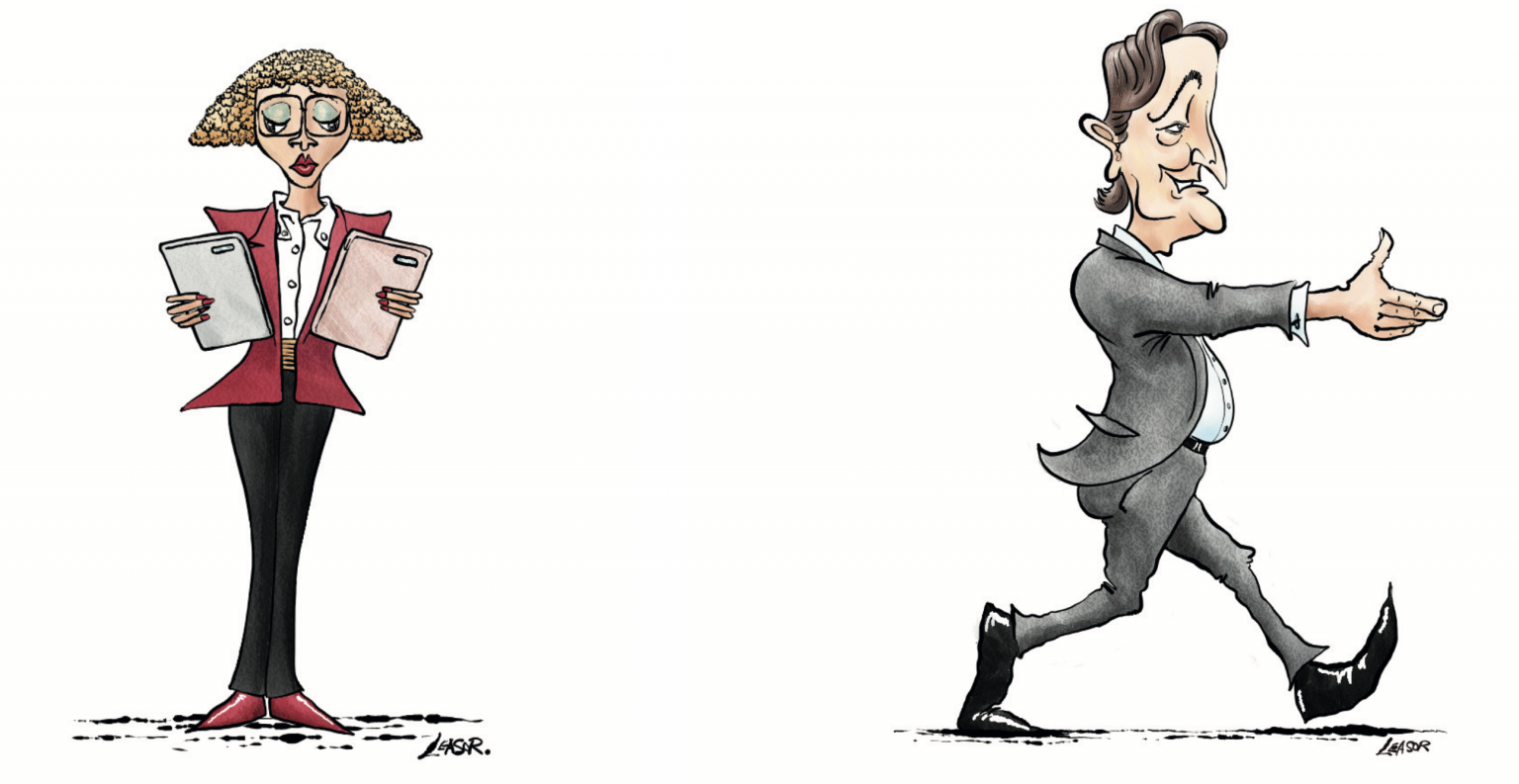
Peter Cardwell, special adviser to four cabinet ministers, introduces our exclusive survey of the Top 50 Spads across all political parties – and explains why the politico breed are here to stay
Until Dominic Cummings made clear he disapproved of the practice, special advisers – ministerial aides personally appointed by UK cabinet ministers as their political sidekicks – often worked from home on the occasional Friday.
Having spent Monday to Thursday being grilled on matters of state in the gilded rooms of Whitehall and parliament, their secretary of state generally will work in their constituency on Friday, spending the day in a dingy community hall at a constituency surgery, dealing with planning, drains, passports and sewerage.
It is not yet known whether his Downing Street replacement, Dan Rosenfield, is a Spad Friday sort of adviser, expecting people in the office at all hours.
But there has been a change of regime already with the trademark 'combative' style of Cummings now being mollified under Rosenfield. The new Downing Street adviser court now has a culture that is more emollient, more technocratic and more collegiate; and probably - I speak as someone who worked for Cummings - less intensely 24/7.
SPAD-U-LIKE
The life of a Spad is a life of extraordinary contrasts as ministers often deal with vastly differing matters simultaneously. I remember armed police officers guarding my main employer in government, James Brokenshire, in an airport one afternoon as we waited for a flight to Belfast, as liveried waiting staff served us tea. James leafed through official documents in his ministerial red box when his phone rang with an urgent matter. The lock on his constituency office door was broken and he needed to organise a locksmith immediately. Such is the nature of ministerial life.
People who did the job I did, special adviser (the contraction “Spad” is a more recent innovation), have been a major part of political life in this country since the 1960s. Some contemporary Spads are well known to anyone who follows politics: Alastair Campbell, Damian McBride, Fiona Hill and Nick Timothy, for example. And one person, a 2020 survey by the pollsters YouGov suggests, is – or was – actually known to 40 per cent of the UK public, with a further 23 per cent at least recognising his name. He is, of course, Dominic Cummings, previously the most senior aide in Boris Johnson’s Downing Street – the man I worked alongside for six months.
That is, before he sacked me.
But despite acres of newsprint devoted to Dominic, many volumes of diaries by Alastair Campbell, various insider accounts by Jonathan Powell and others, and an explosive, jaw-droppingly indiscreet tome by Damian McBride – which is the best book I have ever read about Westminster politics – what special advisers actually do from day to day is still a mystery to many.
The past decade has been a defining one for the United Kingdom, its politics and especially for the Conservative Party - moving out of opposition, into coalition government and then stand-alone Conservative governments, via four elections and two referendums. It has been a defining period, too, in terms of what it actually means to be a special adviser at the heart of Whitehall. The dynamic nature of politics has necessitated huge changes in the ways Spads operate and the level of influence they wield. Spads did not properly exist until 1964. Now, six decades later, no government can function without them.
One of my bosses in government, the former home secretary Amber Rudd, once asked me which wing of the Conservative Party I am on. “Amber,” I answered, “I’m on the sunshine, lollipops and rainbows wing of the party.”
Loyalty and friendship are qualities I came to value very strongly in the sometimes shark-infested waters of politics and I retain the greatest admiration for anyone, from any party, who becomes an adviser, mostly putting their life on hold for a few years in the service of what they believe to be a greater good.
REGIME CHANGE
So what’s the difference between the new Rosenfield era and the Cummings era? As somebody who was originally reluctant to take the role of adviser to Boris Johnson, Dominic Cummings never actually needed the title of chief of staff. That’s because he had more power than almost anyone who has ever had that role. Cummings came into government for three reasons: to secure a large majority for the Conservative Party in an election, get Brexit done and to reorganise the way the civil service interacts with the political team.
The fact that he has achieved all three of these things in less than 18 months is an incredible legacy many cabinet ministers would kill for. And that is why, despite his many detractors – including many Tory MPs – he may be remembered as one the most successful special advisers in the 56 years the role has formally existed.
In the end, Dominic’s demise was much more Albert Square than Downing Street. Just as when a the soap actor’s character gets killed off, the ‘reasons’ are the same – I was planning to leave anyway, I felt I had done everything I could with the character and I look forward to the exc...
Subscribe to The Mace
Join the member community shaping British politics and stay ahead of
what's really happening in the world of politics and public affairs,
with expert analysis, breaking news, and insider insights from
Westminster and Brussels. The Mace is the leading news source and
resource for the government affairs industry, offering required
reading and lobby intelligence for professionals.
To see what you are missing out on by not subscribing to The Mace, click here to download our full membership info-pack. This includes
having no paywall on op-ed content or profiles/interviews, allowing
professional profiles to be read with maximum impact and visibility by
government, special advisers, MPs, peers, civil servants, and policy
and political decision-makers.
From IT engineer to Foreign Office diplomat to advertising regulator, Konrad Shek has built a career by going where curiosity leads - and his instinct for translating complexity
As CEO of Inline Policy, Shomik Panda combines political insight with commercial understanding. Selected as a Mace Top 100 lobbyist, expertise includes where digital technology intersects with travel,
After running Sky, Andrew Griffiths become a high flying MP who rose through the Johnson and Sunak governments. In his Mace profile, the Shadow Secretary for Business and
As Chief Executive of CIPR, Alastair McCapra is both a public affairs industry leader and also one of its more persistent critics. In his Mace profile, subjects range
As Revolut's Head of UK Government affairs, Rory Tanner's mission is to help CEO Francesca Carlesi grow the $75 billion financial app to 25 million customers. He tells
With English Tourism week running until 23rd March, Ben Spier speaks out about the new tourist levy and the impact of increasing taxation and regulation on tourism.
Darren Jones, Chief Secretary to the PM, has released the first tranche of the Mandelson Files to the Commons. In an exclusive, he tells The Mace that his