
Leader in UK Public Affairs: Jacquie Bance de Vasquez, Director of Policy and Engagement, Magic Breakfast
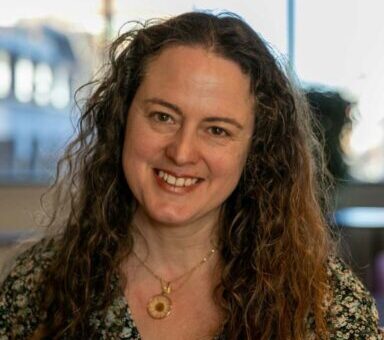
Beginning in the film industry and moving over to working in social enterprise, Jacquie Bance de Vasquez talks The Mace through her work
“It has definitely been a squiggly path,” says Jacquie Bance de Vasquez. From marketing and promotions in the film industry to international social enterprise and now Director of Policy and Engagement at Magic Breakfast, her career reflects a belief that varied experience creates better insight — and ultimately better policy.
She began her career far from Westminster, working in marketing before moving into the third sector. “It was at WWF UK where I first started to work in campaigning and use my influencing skills for advocacy and political change,” she says. The transition felt instinctive. “The transfer across from strategic communications and marketing felt like such a natural transition, with success relying on understanding audiences and motivations.”
That grounding in communications continues to shape her approach to public affairs today. Whether working with policymakers, partners or the public, she sees advocacy as rooted in understanding people — what they care about, what drives them and how change happens in practice.
Her move to Magic Breakfast brought that experience into a new context. “Moving to Magic Breakfast offered me the chance to make a real, positive change for children and young people,” she says, linking it back to earlier roles focused on social equity. “It made absolute sense… creating the narrative to drive change for social equity.”
Her work now focuses on one of the most pressing but often overlooked policy challenges: child hunger and its impact on education. School breakfast provision has become a central policy issue in recent years, and she has seen that change unfold in real time. “It’s not a single moment,” she says, reflecting on her proudest achievements, “but rather the multiple milestones in seeing school breakfast provision moving from being offered to selected communities to being rolled out as a nationwide initiative.”
That shift, she argues, has been both political and cultural. “There has also been a transformation in the narrative… from being a niche issue driven almost solely by Magic Breakfast, to one that’s on front pages,” she says. The impact extends beyond children themselves. “Its impact [is] not only on children and young people, but also their families and communities.”
A key part of that progress has been coalition working. “Each organisation brings a different perspective, expertise and evidence to create a rich picture of the challenge,” she says. “I thrive in the complexity… and wrestle solutions from that together.” That collaborative approach is central to how she sees public affairs functioning at its best.
Internally, she emphasises the importance of aligning policy, operations and culture. “Working in-house means that I sit alongside senior leaders who oversee different aspects of our work,” she says, from delivery in schools to organisational culture. “Each both enables the other, and strengthens the other.”
Her team’s work has been central to pushing the issue up the political agenda. “My team are the real stars,” she says, pointing to colleagues who ensured “that political discussions were shaped and influenced by the real experiences of schools and the children and young people having breakfast.” Campaigns such as Breakfast Powers Opportunity and Breakfast Can’t Wait helped bring both public and political attention to the issue.
For her, effective public affairs is not about imposing solutions but about listening. “Public affairs is as much about listening as it is about presenting the solution,” she says. “By working with politicians as people… we can come to even better solutions together.” She is keen to challenge misconceptions about the profession. “Rather than a ‘dark arts’, public affairs is an opportunity for inspiration, collaboration and genuine change.”
Her leadership philosophy reflects that same emphasis on people and development. “Recognise and play to your strengths, and assemble and lean on the strengths of your team where you have gaps,” she says. “It’s just as important to identify the strengths and encourage future leaders to lean into them.”
Outside work, she has found ways to switch off from what she describes as “an often buzzing brain.” “Tai Chi and painting… force a focus on the moment,” she says. At the same time, she continues to draw energy from connecting with others. “Engaging, connecting and networking fire me with energy, but can also be draining — and time to reset refills my cup.”
She also finds perspective in everyday life. Time with her son, she says, brings both joy and a reminder of what her work ultimately aims to achieve. “Most of all, I love time with my son and his incredibly active imagination,” she says — often alongside conversations about politics.
Quick-fire Q&A
How did you start in public affairs?
“It was at WWF UK where I first started to work in campaigning and use my influencing skills for advocacy and political change.”
What’s the appeal of in-house advocacy?
“I thrive in the complexity… and go beyond theory to the solutions that work for the children and young people.”
Proudest career achievement?
“Seeing school breakfast provision… being rolled out as a nationwide initiative.”
Best piece of advice?
“Recognise and play to your strengths, and assemble and lean on the strengths of your team where you have gaps.”
What do people get wrong about public affairs?
“Public affairs is as much about listening as it is about presenting the solution… rather than a ‘dark arts’, it is an opportunity for inspiration, collaboration and genuine change.”
How do you unwind?
“Tai Chi and painting… and time to reset refills my cup.”Any memorable media moment?
“I was interviewed for The Food Programme on Radio 4… a long form interview really gives you the opportunity to explore issues.”