Leader in UK Public Affairs: Andy Brown, Marketing, Communications and Business Development Director, Arup, “Be open”
Andy talks about how career progression isn't just about salary but spending time doing work that you find meaningful


With English Tourism week running until 23rd March, Ben Spier speaks out about the new tourist levy and the impact of increasing taxation and regulation on tourism.
Ben Spier knows regulation from both sides of the table. For ten years he worked inside government drafting legislation and advising ministers in the Government Legal Department. Today he helps businesses navigate those same rules as Head of Regulation and Policy at Forge Holiday Group and as Director of the Forge Holiday Group, that incudes Sykes Cottages.
“I wanted to see the relationship between regulation makers and those operating under those rules from the other side,” he explains.
After a decade in Whitehall, Spier had become deeply familiar with the mechanics of policymaking and the processes that turn political ambition into law. But he was increasingly curious about how those decisions landed in the real economy.
Today he occupies that vantage point at Forge Holiday Group, one of the UK’s largest operators in the self-catering holiday accommodation sector. Alongside that role he also serves as a director of the Professional Association of Self-Caterers, placing him at the centre of policy debates affecting the UK tourism and holiday-let industry.
“In government you’re advising ministers and drafting legislation,” he says. “Now I’m able to use that understanding of parliamentary process and policy development to engage directly with the people designing regulation.”
That experience has proved particularly useful in a sector where policy and politics increasingly intersect. Holiday accommodation has become a contested area of debate in recent years, touching on questions of housing supply, local economies, environmental regulation and tourism strategy across Westminster and the devolved administrations.
Spier believes those debates sometimes overlook the economic reality of the sector.
“Tourism provides accessible, flexible and meritocratic jobs,” he argues. “Often in areas with very few other economic drivers.”
In many rural and coastal communities tourism businesses form a central part of the local economy. Small self-catering operators in particular often function as micro-businesses, relying on seasonal demand and narrow margins.
Yet policy decisions, he says, can sometimes run counter to the government’s stated ambition to support economic growth.
“The cumulative impact of increasing taxation and regulation is at odds with that ambition,” he warns.
Working in-house has also changed how he thinks about advocacy.
“The appeal of in-house work is the two-way street,” he explains. “You use on-the-ground experience to inform policy discussions, and then see how those policy decisions affect the commercial operation, clients and customers.”
One recent campaign illustrated that dynamic particularly clearly.
In early 2025 the government launched consultations proposing that a minimum EPC rating of C should apply to holiday lets. For many small property owners that requirement would have meant expensive upgrades costing thousands of pounds.
Spier helped coordinate a broad engagement effort across government and Parliament.
“We engaged ministers and officials from multiple departments, members of the Energy Security and Net Zero select committee, the press and the tourism sector,” he says.
The campaign generated more than twenty parliamentary questions and drew attention to the potential impact on small operators.
When the government later confirmed it would not proceed with the proposal, it was widely welcomed by the sector.
“It would have required thousands to be spent by micro-businesses for very little environmental benefit,” Spier says.
His background in law still shapes how he approaches policy questions. During his studies one particular area of legal philosophy captured his imagination.
“Jurisprudence was my favourite module,” he says. “John Stuart Mill and his theories on utilitarianism and the harm principle sparked my interest in how societies balance competing rights.”
Away from Westminster debates, Spier’s interests are more physical than political.
“Playing and coaching football is my number one way to unwind,” he says. “Kayaking and camping with my family as well.”
How did you first get into public affairs?
“After ten years in the Government Legal Department advising ministers and drafting legislation, I wanted to see the other side of the relationship between regulators and those operating under regulation.”
What policy issue keeps you up at night?
“The cumulative impact of increasing taxation and regulation on tourism. The sector provides accessible, flexible and meritocratic jobs often in areas with few other economic drivers, perfect for lowering the welfare burden. However, policy in Westminster, Cardiff and Edinburgh is actively eroding the conditions tourism SMEs need to start up and thrive.”
The appeal of in-house versus agency?
Being part of the two way street of using on the ground experience to inform advocacy for sensible policy and then seeing how resultant changes impact the commercial operation, clients and customers.”
Favourite film?
“I don’t think I could ever be as thrilled by, and caught up in, a film as much as my much younger self was when I first watched the Back to the Future trilogy”.
Andy talks about how career progression isn't just about salary but spending time doing work that you find meaningful
Claire captures the appeal of public affairs: influence without exposure, impact without political office.

The government has agreed to fully fund a forthcoming pay increase for teachers in England in a sudden U-turn.

Lexington’s Michelle Howard explains how an unconventional career spanning opera, journalism, hydropower and defence led her into public affairs, why political instability rewards creativity and listening, and what

After two decades spent in advocacy on behalf of business, Ros reveals what parts of the industry she believes needs reform.

Tim reflects on the reality of operating in an environment where political pressure, public scrutiny and long-term infrastructure decisions all collide.
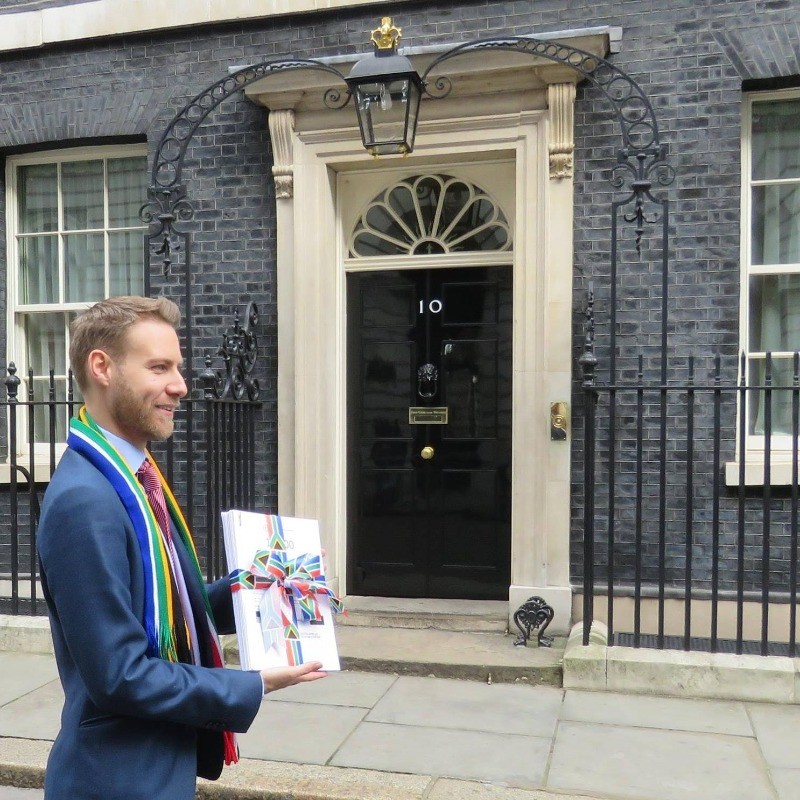
Dan discusses his time in the industry that "literally built Britain", his leadership philosophies, and how AI will never replace empathy.

CityFibre’s Charlie Hall explains why joined-up policymaking is vital to infrastructure investment, how in-house advocacy connects politics with commercial reality and why the best decisions draw on every

Sophie has been passionate about politics since her teenage years. Now, she works at the intersection of policy, delivery and public accountability.

From gaining his politics degree to standing in the 2019 General Election - Lewis reveals how these experiences informed his career in public affairs.
