Net zero is an open goal for Wales

Ben Burggraaf | 9th April 2026 | Comment
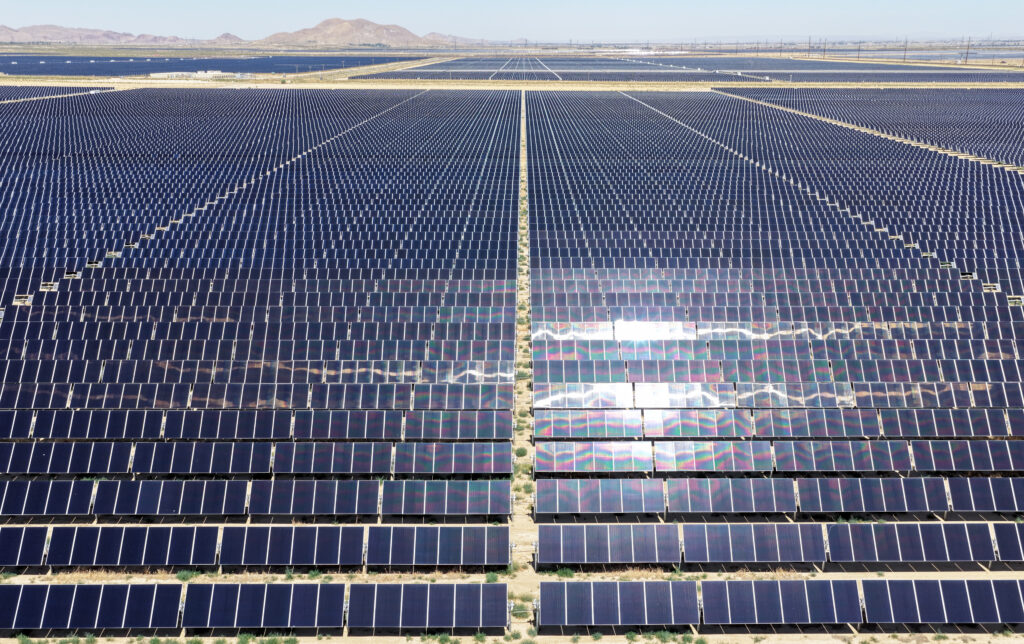
Wales has a unique opportunity to seize on the benefits of net zero (Photo by Carl Recine/Getty Images)

Despite being criticised by some as a costly endeavour, net zero presents a clear opportunity for Wales to benefit, writes Ben Burggraaf

The transition to net zero is often framed as a cost to society and communities. In reality, for Wales, it is one of the greatest economic opportunities of the 21st century. Wales begins this transition from a distinctive position. Its industrial heritage, energy-intensive sectors and manufacturing base mean that per capita emissions are still significantly higher than the UK average, despite the substantial reduction that Wales has seen in emissions since 1990, mainly achieved by the closing of industrial plants. To meet the legally binding net zero targets set by the UK government, between 2020 and 2050, each person in the UK must reduce their emissions by around 125 tonnes of CO₂ per year. In Wales, this figure is on average 225 tonnes per person, almost double the UK requirement.  The challenge is therefore significant for Wales but also presents extraordinary opportunities. Using HM Treasury Green Book values and published decarbonisation pathways, one can quantify the social value of making this economic opportunity a reality. For the UK, the average annual social value is estimated at £93.7 billion (around 5% of 2020 GVA). For Wales, it is £7.6 billion per year - equivalent to roughly 11% of Wales’ 2020 GVA. The social value of industrial decarbonisation alone could contribute £2.7 billion annually (around 4% of the nation's GVA).  Per person, the social value of industrial decarbonisation in Wales is at least two times the UK average. This reflects both the scale of Wales’ industrial base and the depth of the transformation required. In short: Wales has more to do, but also more to gain. Therefore, any UK government financial support reserved to help industry decarbonise should be at least double its population equivalent. In reality, however, Welsh industry currently receives significantly less than its population share.  The barrier to unlocking the greatest economic opportunities of the 21st century is not ambition, nor a lack of projects that represent value for money. It is the infrastructure and the financial support needed to enable investment in Welsh low-carbon energy infrastructure. Slow investment in Welsh electricity networks, leading to grid constraints, limited network reach into rural areas, and an inability to meet the strategic need for new hydrogen and carbon capture and storage (CCS) infrastructure is already slowing progress. Anticipatory investment, building capacity ahead of demand, is essential to unlock low-carbon electricity generation and industrial decarbonisation through electrification, hydrogen and CCS deployment. The Clean Energy Investment Prospectus for Wales highlights a pipeline of investable projects that could transform Wales into a clean energy powerhouse, whilst remaining a cornerstone of the UK industrial base, producing sustainable goods and services.   Collectively, renewables and decarbonisation projects are expected to generate £9 billion in GVA over the next decade. Wales also benefits from Freeports, Investment Zones, AI Growth Zones and a supportive regulatory environment underpinned by the Well-being of Future Generations Act. The case for investment is strong. But funding, including HM Treasury support, must match the scale of opportunity.

"Collectively, renewables and decarbonisation projects are expected to generate £9 billion in GVA over the next decade."

The UK Emissions Trading Scheme (UK-ETS) generated £17.8 billion in auction revenues between 2021 and 2025, as reported by the UK National Audit Office. Unlike the EU scheme, where members states are encouraged to use at least 50% of the revenue to support industrial decarbonisation, there is no legal requirement for HM Treasury to reinvest a minimum proportion of UK-ETS revenues for that purpose, eventhough 10-15% of the verified UK-ETS emissions originate from Wales.  At the same time, the majority of funding allocated by HM Treasury, within the UK Industrial Strategy, to deploy low carbon infrastructure mainly benefits the North of England and Scotland, with only a small proportion benefiting Wales and being significantly less than its population equivalent.  Wales and its industry therefore contribute disproportionately to the scheme - around two to three times its population equivalence - but receive significantly less than that share in return. This significant gap creates an ’unjust’ transition and sends the message to Welsh industries that the UK-ETS is ’just another tax’. This makes their operations even less competitive when compared to other plants and organisations in their sector and therefore creates an uneven playing field.  To enable a just transition, Wales should therefore benefit proportionately, i.e., equivalent to its emission burden (its fair share) from the recycling of UK-ETS revenue to support low-carbon energy infrastructure investment and the decarbonisation of Welsh industries.  Wales has the natural resources, industrial...

Subscribe to The Mace

Join the member community shaping British politics and stay ahead of what's really happening in the world of politics and public affairs, with expert analysis, breaking news, and insider insights from Westminster and Brussels. The Mace is the leading news source and resource for the government affairs industry, offering required reading and lobby intelligence for professionals.

To see what you are missing out on by not subscribing to The Mace, click here to download our full membership info-pack. This includes having no paywall on op-ed content or profiles/interviews, allowing professional profiles to be read with maximum impact and visibility by government, special advisers, MPs, peers, civil servants, and policy and political decision-makers.

Dame Antonia’s key civil service reforms are ready to be supported by Whitehall, says Jonathan Freeman

Mace | August 1, 2026

The Civil Service is ready to support Dame Antonia Romeo's flagship changes to government machinery - notably relating to AI and devolution - under new prime minister Andy

Burnham is trying to fix Whitehall, but will the political machinery change?

Mace | July 30, 2026

Andy Burnham is shaking up government with more changes than by any incoming prime minister in memory. But, asks Sir Bernard Jenkin MP, does he understand why the

Experts warn more government support needed to help UK aviation meet net zero by 2050

Mace | July 30, 2026

UK aviation can decarbonise while meeting growth ambitions, but urgent government action is needed to prevent costs increasing for passengers and the sector losing its competitive edge.

Don’t rule out an early election as Burnham may see an opportunity to kick Reform, says Fred de Fossard

Fred de Fossard | July 28, 2026

With the new Prime minister championing policies which go beyond Labour’s very confined 2024 manifesto, an early election is not illogical.

Despite promises of radical change, Labour’s culture of ruling political families remains entrenched

Lucy Carrier-Pilkington | July 28, 2026

Andy Burnham's inner circle appears to perpetuate Labour's long-running culture of nepotism, and is doomed to cause frustration among backbenchers.

Kemi’s true blue purge, with help from Sir Philip May

William Cash | July 26, 2026

The news that former Home Secretary Sir Grant Shapps has failed to make the new Tory candidate list has put fear into dozens of former Conservative MPs. Whether

Why Burnham’s energy VAT cut will make a difference

Mace Magazine | July 25, 2026

Cameron Brown, a former special advisor to the Chancellor of the Exchequer, explains why Burnham's VAT cut on energy bills is a measure people will actually notice.

If Burnham wants growth, he must start by backing AI and Tech founders and risk-takers, says Liam Houghton

Mace | July 23, 2026

New Prime Minister Andy Burnham has an opportunity to make Britain the best place to start and scale a business, argues CEO Liam Houghton.

The continuing political Whydunnit of the murder of Ann Widdecombe

Mace Magazine | July 23, 2026

The strangely guilty way that the media, and some politicians have reacted to Widdecombe’s shocking death shows the double standards that can operate when a politician of the

What James Purnell’s return to No 10, along with the new cabinet, reveals about Burnham’s Labour network

Mark Leftly | July 21, 2026

James Purnell’s return to frontline politics is more than a nostalgic Blair-Brown era reunion. As Andy Burnham builds his Downing Street operation, public affairs professionals will need to