Deliverance Day: Meet Starmer’s Mr Fixer-in-Chief
Darren Jones, Chief Secretary to the PM, has released the first tranche of the Mandelson Files to the Commons. In an exclusive, he tells The Mace that his



Andy Burnham has promised the ‘biggest rebalancing of power our country has ever seen’. The Mace investigates what industry insiders think of his vision.
Prime Minister-in-waiting, Andy Burnham, has set out his vision for the housing crisis which will see a major transformation in the sector. The MP for Makerfield said in a speech on Tuesday that he pledged to deliver the “biggest council housebuilding programme since the post-war period.” This statement re-confirmed the ambitions for housebuilding that he first laid out earlier this year.
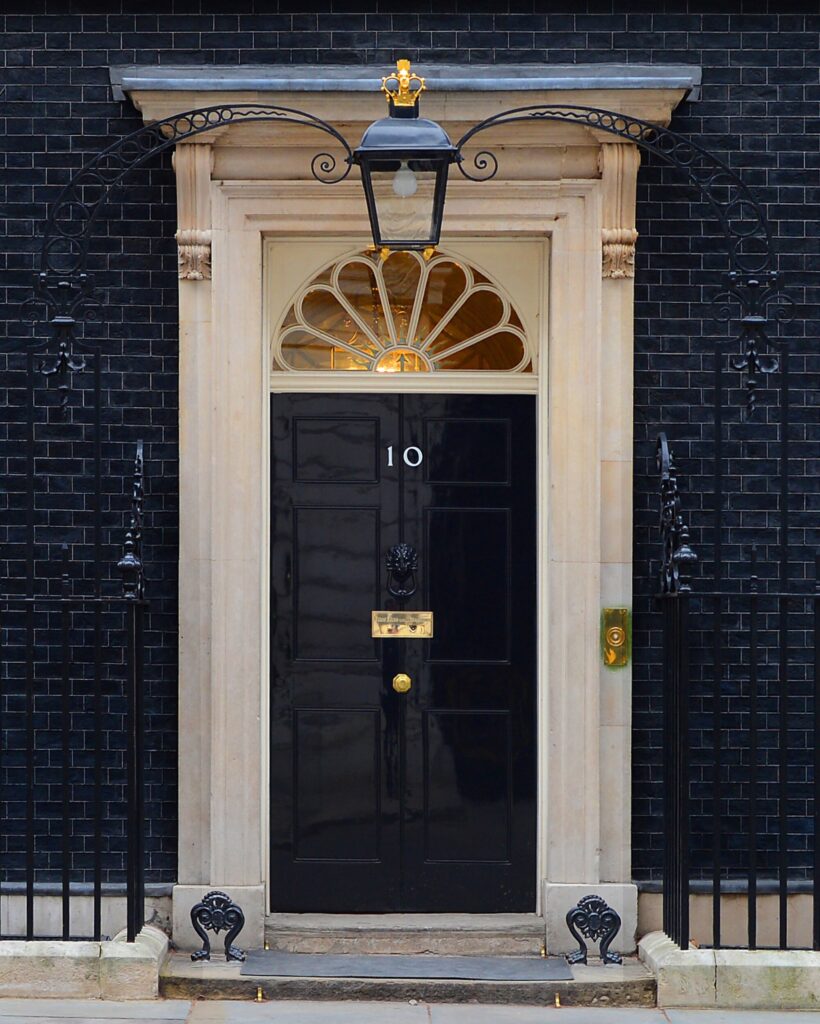
The building programme will be overseen by his pioneering new office, Number 10 North, which Burnham has promised to be the “nerve centre of a rewired Britain”. Number 10 North will seek to reduce costs by using vacant public land and bringing higher density residential development across UK towns. The former Manchester Mayor said the Number 10 North operation would be the “conduit through which we redistribute power and resources across the UK”.
“Since the 1980s, Britain has lost almost 1.5 million council homes”
Since the 1980s, Britain has lost almost 1.5 million council homes and around the same number of people are now on housing waiting lists. Under Starmer, Labour had pledged £39 billion to social and affordable homes and a target to build 1.5 million new homes in total. However, the government has thus far struggled to hit this.
The housing sector has reacted largely positively to the Burnham vision of ‘Manchesterism’ for housing. However, leaders have also highlighted the importance of fine-tuning exactly how this project will unfold.
Bradley Lay, founder of True North Capital Group, has delivered a 10-point plan for Burnham to consider. He outlined:
Lay explained that: “The reality is we’re seeing structural problems that government has the power to solve. Construction businesses are being squeezed by rising employment costs, high taxes, poor access to finance and a payment system that too often rewards bad behaviour.
“Instead of making it easier to employ people, invest and grow, current policy often does the opposite. I regularly speak to owners who’ve spent thirty or forty years building successful businesses. Far too many now tell me they’d rather slowly wind their companies down than sell them because the tax treatment simply isn’t worth it.
“The construction industry doesn’t need more bureaucracy. It needs government to stop making success harder than failure.”
“The construction industry doesn’t need more bureaucracy. It needs government to stop making success harder than failure. If Andy Burnham, or whoever takes office next, wants to unlock growth, create jobs and rebuild Britain’s economy, they should start by fixing the structural problems that have been holding construction back for years.”
True North Capital Group is a London-based private investment firm and family office. It targets profitable, well-managed constructionbusinesses to help founders approaching retirement or those seeking an accelerated growth phase.
The Chartered Institute of Housing has been highly supportive of Burnham’s plans for housebuilding in his impending premiership. They said: “CIH strongly supports his decision to place housing at the centre of his political vision. His recognition that “everything starts with a good home” reflects what housing professionals see every day: that safe, secure, affordable housing is the foundation for health, education, economic participation and stronger communities.
“We believe Andy Burnham is right to highlight the scale and urgency of the crisis.”
“We believe Andy Burnham is right to highlight the scale and urgency of the crisis. With over 1.3m households on waiting lists, rising homelessness, and record numbers of children in temporary accommodation, the need for a step-change in supply – particularly of genuinely affordable homes – has never been clearer.”
Gavin Smart, chief executive at the Chartered Institute of Housing, said: “CIH will continue to work with government, local authorities, housing associations and partners across the sector to help turn this ambition into reality – delivering the homes people need and the foundations for healthier, fairer and more prosperous communities.”
However, Lawrence Turner, director of housing planning consultancy Boyer, argues there are contradictions in Burnham’s plans for housing versus devolution. He asks: “Andy Burnham is encouraging us to imagine a more devolved England.
“If regional mayors are given greater control over housing, skills, transport and economic growth, who decides how many homes a region actually needs?
“If Whitehall continues to set the numbers, is it really devolution?
“But if Whitehall steps back completely, what happens when regional leaders face the same political pressures that councils have wrestled with for decades?”
Hary Bolton, head of the Manchester Office and North West head of planning and development at Carter Jonas, points to the success of Manchesterism. He explains: “Greater Manchester is frequently cited as an example of successful devolution – to the extent that the term “Manchesterism” has come to describe a model in which regional powers and public and private investment combine to support economic growth.
“A key part of Greater Manchester’s success was collaboration between ten authorities which do not always share the same politics but have coalesced around a common model for economic growth. The next step was to apply that model more directly to commercial and industrial development.
“The practical test will be whether strategic authorities turn their new powers into compelling and workable investment programmes. Success should be judged not by the number of strategies produced but by whether businesses of different sizes can establish themselves, expand and remain within the region over the long term.”
Burnham is guided by the idea that affordable housing is crucial for individuals and the economy at large – as it empowers people to reach their full potential.
The Burnham premiership, and his transformative vision of ‘Manchesterism’ for the UK is inching closer. If no contender comes forward to challenge Burnham in a leadership election by 16 July, the ‘King of the North’ is expected to become prime minister on the 20th.
Darren Jones, Chief Secretary to the PM, has released the first tranche of the Mandelson Files to the Commons. In an exclusive, he tells The Mace that his
As Reform's 'Shadow Cabinet' begins to develop, Richard Tice sets out the party's policy on a British sovereign wealth fund plan.
The shortlist for the 2026 Corporate Affairs Awards has been unveiled.
With only 1 in 70 new HGV's being electric, the government must assist with infrastructure investment says industry leader

The Tony Blair Institute for Global Change has published a paper, recommending the expansion of drilling operations in the North Sea. The move challenges the government's position of

The Offshore Energies UK (OEUK, the leading trade association for the UK’s offshore energy industry association has issued an open letter to the government calling for a permanent
Trade bodies and unions in the UK construction and engineering sectors have called on ministers to revise the government’s latest procurement reforms to strengthen standards and address what

The Welsh Government’s announcement of a 15 per cent business rates discount for pubs, restaurants, cafés and live music venues in Wales has prompted immediate reactions from the

The UK Chamber of Shipping has hired former SEC Newgate accounts manager Harry Brown as public affairs manager to strengthen its engagement with government and policymakers.

Great British Energy appoints Dan McGrail as permanent chief executive as the publicly owned company moves from launch to delivery