Is the pub economy coming home for the World Cup?
As England prepares for next Wednesday's World Cup opener, The Mace explores how the tournament could boost the pub economy.



Andy Burnham has promised the ‘biggest rebalancing of power our country has ever seen’. The Mace investigates what industry insiders think of his vision.
Prime Minister-in-waiting, Andy Burnham, has set out his vision for the housing crisis which will see a major transformation in the sector. The MP for Makerfield said in a speech on Tuesday that he pledged to deliver the “biggest council housebuilding programme since the post-war period.” This statement re-confirmed the ambitions for housebuilding that he first laid out earlier this year.
The building programme will be overseen by his pioneering new office, Number 10 North, which Burnham has promised to be the “nerve centre of a rewired Britain”. Number 10 North will seek to reduce costs by using vacant public land and bringing higher density residential development across UK towns. The former Manchester Mayor said the Number 10 North operation would be the “conduit through which we redistribute power and resources across the UK”.
“Since the 1980s, Britain has lost almost 1.5 million council homes”
Since the 1980s, Britain has lost almost 1.5 million council homes and around the same number of people are now on housing waiting lists. Under Starmer, Labour had pledged £39 billion to social and affordable homes and a target to build 1.5 million new homes in total. However, the government has thus far struggled to hit this.
The housing sector has reacted largely positively to the Burnham vision of ‘Manchesterism’ for housing. However, leaders have also highlighted the importance of fine-tuning exactly how this project will unfold.
Bradley Lay, founder of True North Capital Group, has delivered a 10-point plan for Burnham to consider. He outlined:
Lay explained that: “The reality is we’re seeing structural problems that government has the power to solve. Construction businesses are being squeezed by rising employment costs, high taxes, poor access to finance and a payment system that too often rewards bad behaviour.
“Instead of making it easier to employ people, invest and grow, current policy often does the opposite. I regularly speak to owners who’ve spent thirty or forty years building successful businesses. Far too many now tell me they’d rather slowly wind their companies down than sell them because the tax treatment simply isn’t worth it.
“The construction industry doesn’t need more bureaucracy. It needs government to stop making success harder than failure.”
“The construction industry doesn’t need more bureaucracy. It needs government to stop making success harder than failure. If Andy Burnham, or whoever takes office next, wants to unlock growth, create jobs and rebuild Britain’s economy, they should start by fixing the structural problems that have been holding construction back for years.”
True North Capital Group is a London-based private investment firm and family office. It targets profitable, well-managed constructionbusinesses to help founders approaching retirement or those seeking an accelerated growth phase.
The Chartered Institute of Housing has been highly supportive of Burnham’s plans for housebuilding in his impending premiership. They said: “CIH strongly supports his decision to place housing at the centre of his political vision. His recognition that “everything starts with a good home” reflects what housing professionals see every day: that safe, secure, affordable housing is the foundation for health, education, economic participation and stronger communities.
“We believe Andy Burnham is right to highlight the scale and urgency of the crisis.”
“We believe Andy Burnham is right to highlight the scale and urgency of the crisis. With over 1.3m households on waiting lists, rising homelessness, and record numbers of children in temporary accommodation, the need for a step-change in supply – particularly of genuinely affordable homes – has never been clearer.”
Gavin Smart, chief executive at the Chartered Institute of Housing, said: “CIH will continue to work with government, local authorities, housing associations and partners across the sector to help turn this ambition into reality – delivering the homes people need and the foundations for healthier, fairer and more prosperous communities.”
However, Lawrence Turner, director of housing planning consultancy Boyer, argues there are contradictions in Burnham’s plans for housing versus devolution. He asks: “Andy Burnham is encouraging us to imagine a more devolved England.
“If regional mayors are given greater control over housing, skills, transport and economic growth, who decides how many homes a region actually needs?
“If Whitehall continues to set the numbers, is it really devolution?
“But if Whitehall steps back completely, what happens when regional leaders face the same political pressures that councils have wrestled with for decades?”
Hary Bolton, head of the Manchester Office and North West head of planning and development at Carter Jonas, points to the success of Manchesterism. He explains: “Greater Manchester is frequently cited as an example of successful devolution – to the extent that the term “Manchesterism” has come to describe a model in which regional powers and public and private investment combine to support economic growth.
“A key part of Greater Manchester’s success was collaboration between ten authorities which do not always share the same politics but have coalesced around a common model for economic growth. The next step was to apply that model more directly to commercial and industrial development.
“The practical test will be whether strategic authorities turn their new powers into compelling and workable investment programmes. Success should be judged not by the number of strategies produced but by whether businesses of different sizes can establish themselves, expand and remain within the region over the long term.”
Burnham is guided by the idea that affordable housing is crucial for individuals and the economy at large – as it empowers people to reach their full potential.
The Burnham premiership, and his transformative vision of ‘Manchesterism’ for the UK is inching closer. If no contender comes forward to challenge Burnham in a leadership election by 16 July, the ‘King of the North’ is expected to become prime minister on the 20th.
As England prepares for next Wednesday's World Cup opener, The Mace explores how the tournament could boost the pub economy.
A new workers' rights consultation could spell the end of 'exploitative' zero-hours contracts, but critics warn the move could further damage the shrinking labour market.

Despite the new 5% VAT tax break for holiday attractions, tourism trade body leaders are speaking out about how government policies may not help the sector.

Latest data released by the shipping industry reveals duel-fuel vessels are taking over the market.

Widespread pub closures comes as troubling news for football fans who want a local venue to watch the World Cup this summer.

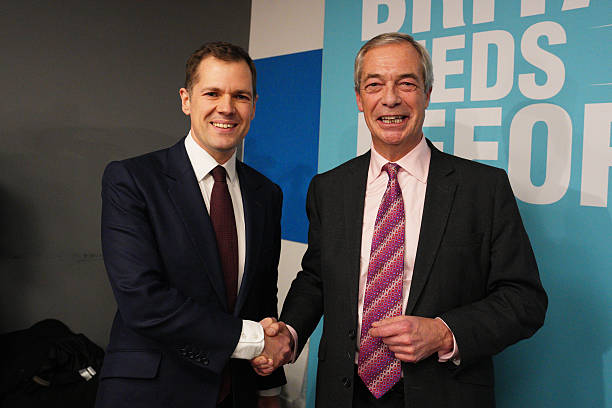
Robert Jenrick, Reform's Shadow Chancellor, used the Bank Holiday to make clear that his party would not be introducing a tourism tax.
Keir Starmer's "boys club" culture was called out during the grilling of Morgan McSweeney.

As the Charity for Civil Servants marks its 140th anniversary, Neil Woollard argues that the officials who keep Britain functioning are too often caricatured, underpaid and overlooked —
As war in Iran shocks global oil prices, trade bodies argue that the UK should recognise the importance of renewable energy sources - and begin investing in them.

Properties which are susceptible to floods could become unsellable, unless the government changes course, warns UKSIF