The Economic Paradox: Can Britain Afford to Penalise Parenthood?
In an exclusive op-ed for Mace, hospitality industry leader Robert Richardson sets out why the sector must do more to become accessible to young families.



Andy Burnham is shaking up government with more changes than by any incoming prime minister in memory. But, asks Sir Bernard Jenkin MP, does he understand why the political machinery has failed for previous PMs?
We should be encouraged that our new prime minister gave some thought to fixing Whitehall before he took on the role. He announced the most substantial machinery of government changes by any incoming PM in recent times, but has he shown any understanding of why that machinery was not working for his predecessors?
His announcement included positive action on the Government Recruitment Service, pensions, shared services, the Government Car Service and security vetting is not his agenda. But this belongs to the welcome Review into the Organisation, Performance and Transformation of the Permanent Civil Service, led by the cabinet secretary, Dame Antonia Romeo, announced under Sir Kier Starmer. It does not report until early 2027, so Mr Burnham has started his rewiring before the work that might have told him what to rewire. His own changes look like a shuffling of deckchairs rather than transformation.
“Burnham is reorganising Whitehall because he can look in charge…He should beware Peter Drucker’s adage, “Culture eats strategy for breakfast.”
Transformation requires a comprehensive plan, and a reorganisation is not that. Restructurings have little if any effect on organisational effectiveness, which is determined by the way people believe, feel, think and behave, not by their job titles. Move officials between departments, or in and out of the Cabinet Office, and they re-embed the same culture: the same attitudes and behavioural norms that hold things back.
What would work is a plan to change the attitudes and behaviours reorganisation leaves untouched. In Restoring Public Confidence in Government, for the Effective Governance Forum, Professor Nada Kakabadse of Henley Business School and I propose a State Effectiveness Council. It is not another rewiring: there is no new department to build and no boxes to move. Chaired by the prime minister and modelled on the National Security Council, it would meet regularly and hold permanent secretaries to account for the culture and capability of their departments, not merely for in-year spending.
Our research found seventeen or eighteen attempts at ‘reform’ since the 1968 Fulton Committee lamented the cult of the generalist in Whitehall. Today that cult is more in the ascendancy than ever. The culture assumes that any permanent secretary can run any department or agency. Little value is attached to domain knowledge or subject expertise. Tenures are far shorter than for CEOs in companies.
The churn of officials is universally lamented, yet it carries on. Competency-based interviews, open recruitment, uncompetitive salaries and no real performance management leave little reward for staying long enough to do a job well.Except in a crisis like Covid, caution and process are rewarded more than experimentation and bold decisions. Defence procurement shows how risk aversion costs money and delay. The disillusioned stay to build a CV that earns them more in the private sector. The “slow horses” stay for the inflation-protected final salary pension. Machinery changes will not fix this and probably make it worse, because every reorganisation sets off another round of churn.
“Our research found seventeen or eighteen attempts at ‘reform’ since the 1968 Fulton Committee lamented the cult of the generalist in Whitehall. Today that cult is more in the ascendancy than ever”
We also found that the present political Whitehall culture fits the adage, “Nothing big gets done unless No 10 drives it.” Mr Burnham’s changes both reflect and reinforce exactly that. His big idea is a bigger No 10, merged with the Cabinet Office into the Office of the Prime Minister and the Cabinet. The Institute for Government’s Commission on the Centre of Government recommended precisely this in 2024, and its verdict now is that he has not gone far enough. But the centre has been enlarged and rewired by successive governments of both parties, and delivery has not improved. Concentrating power in No 10 is the antithesis of the devolved power and delegated decision-making that underpins leadership in every successful company.
He is also pulling his most treasured ‘strategic’ programmes into No 10 and No 10 North: devolution strategy and local growth from the Ministry of Housing, Communities and Local Government, and local growth policy from the Treasury. This hollows out the departmental accountability that has served Whitehall well after Haldane in 1919.
Giving the Cabinet Office the lead on AI adoption makes some sense, but responsibility is now split three ways. A taskforce sits in the new Office of the Prime Minister and the Cabinet, adoption with the Cabinet Office, and the new AI minister operates from both the CO and the business department, with the science department abolished. AI is failing in Whitehall because the experts recruited from outside leave, exasperated at explaining AI to generalist bosses instead of being given authority to lead their own programmes.
So Mr Burnham is silent on the two words that matter: culture and leadership. He is reorganising Whitehall because he can look in charge by announcing this in his first week. He should beware Peter Drucker’s adage, “Culture eats strategy for breakfast.” Without leadership to change culture, this government will fail in the face of the big challenges: debt, an ageing population, immigration, security, Russia, China and, above all, economic sclerosis.
Sir Bernard Jenkin is MP for Harwich and North Essex. He has served as chair of the Liaison Committee and is a Mace columnist.
In an exclusive op-ed for Mace, hospitality industry leader Robert Richardson sets out why the sector must do more to become accessible to young families.
End Fuel Poverty Coalition coordinator Simon Francis examines the four stories politicians hear about electricity and gas, and argues that the fight over which story shapes the agenda

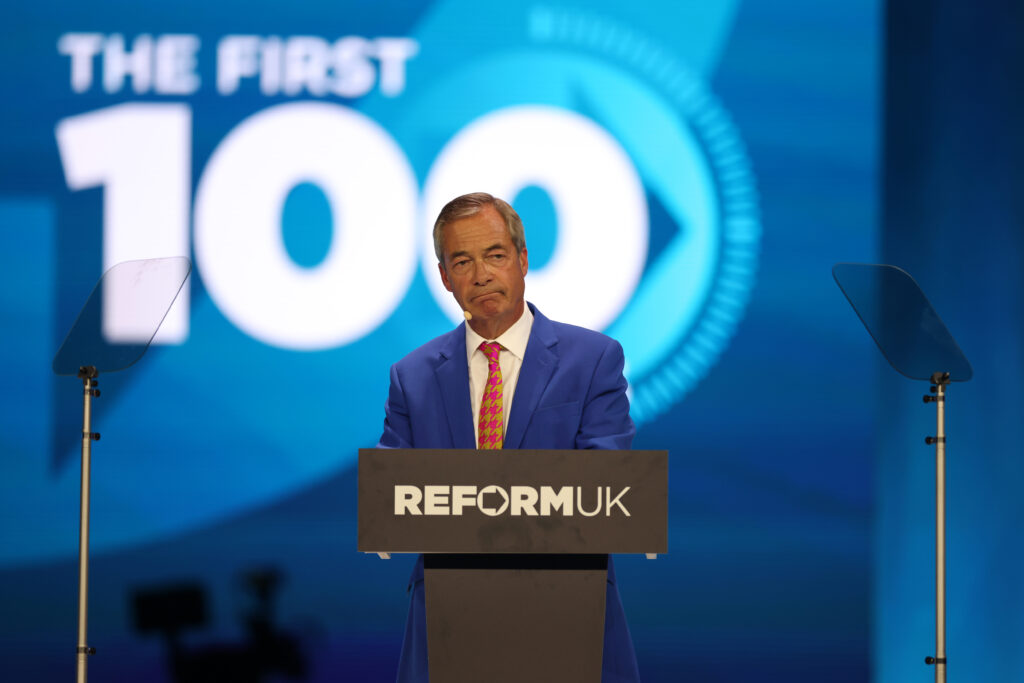
Seasoned Farage aide-de-camp Gawain Towler reflects on Reform's first ever Business Day at the NEC - and what it's like when a media grenade goes off during the
With a new team behind her, the latest Tory reshuffle has put the party on early election watch as well as showing her ruthless side.

Andy Burnham addressed the House of Commons for the first time as Prime Minister as MPs returned to Parliament. How did he do at the dispatch box and

Britain’s farmers have battled repeated heatwaves and droughts, but MP John Cooper says the government’s Family Farm Tax is piling further pressure on an industry that desperately needs

September and October usually mark the most intense period of political activity in the UK, here is what to expect.
The former Downing Street communications chief believes “there are hard truths coming” for Burnham.

You don’t have to like the Sussexes to believe the government has a duty to protect them.

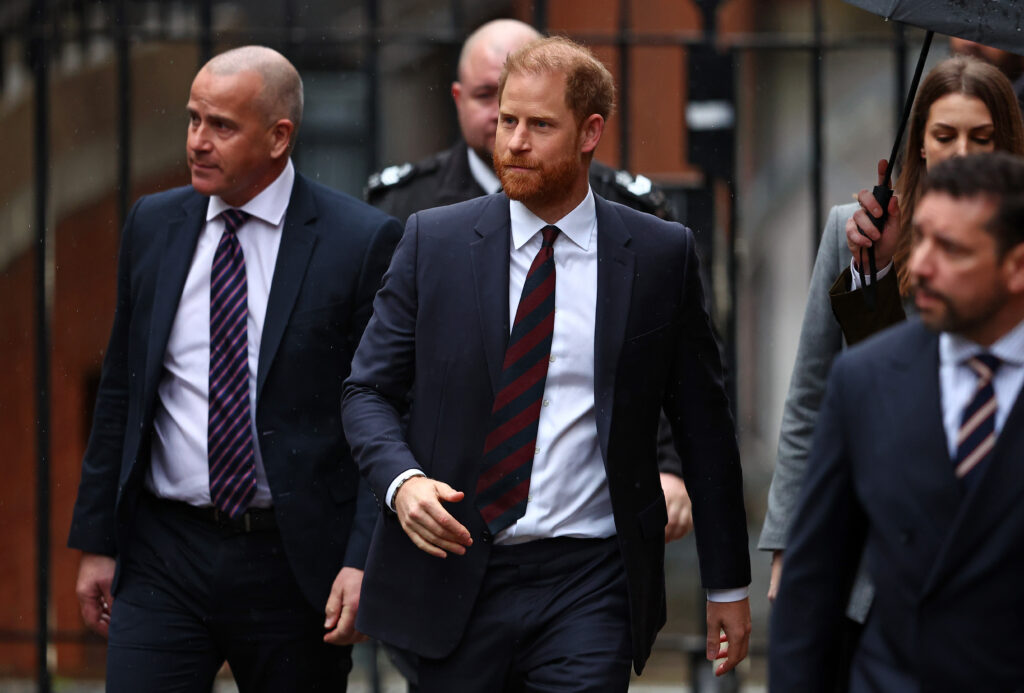
Is there a connection between Prince Harry's share of a £34 million legal bill and his sudden move back to the UK? The Mace follows the money.