Budget Domesday

Ross Clark | 16th October 2025 | Politics
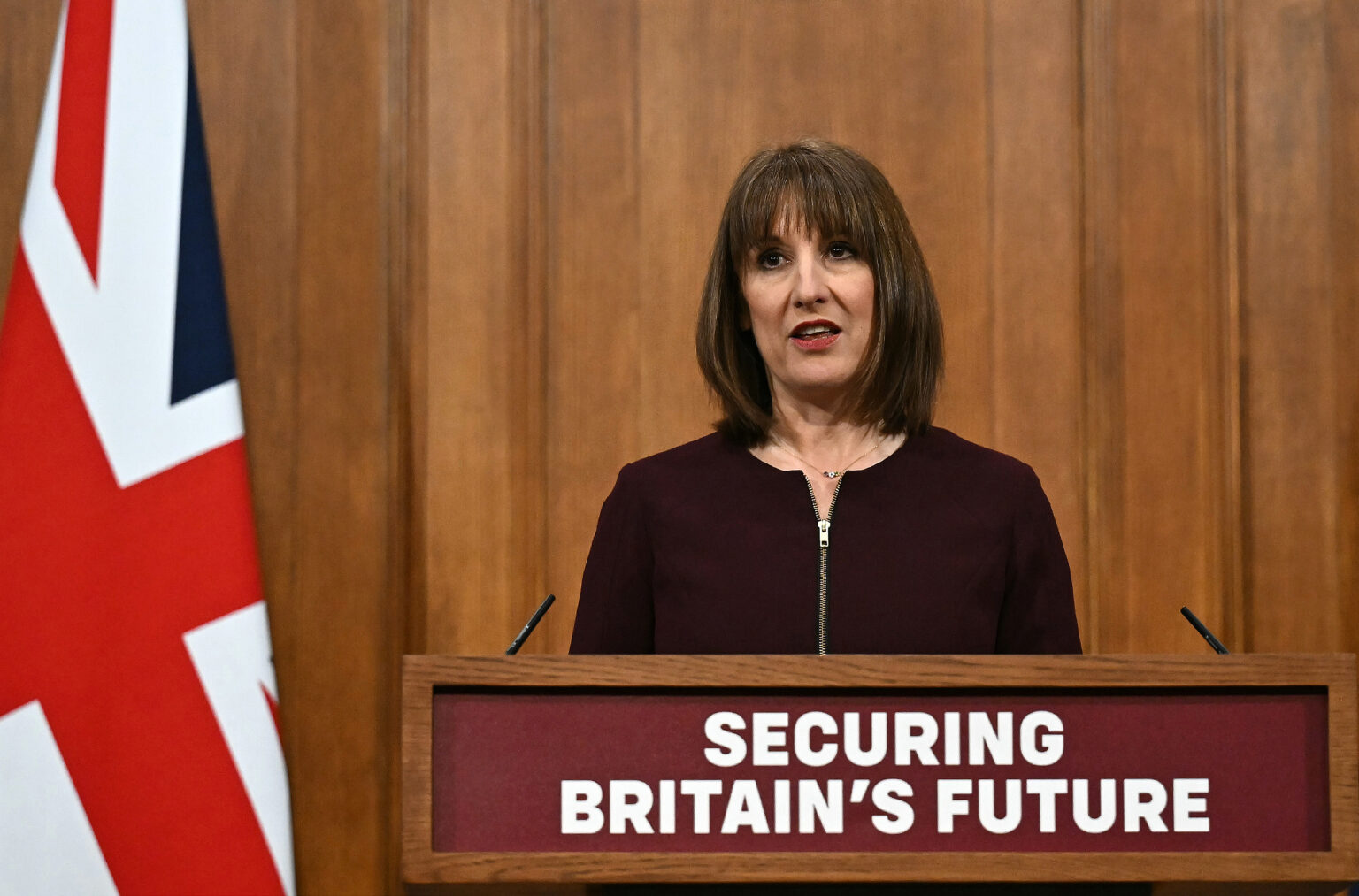
LONDON, ENGLAND - MARCH 26: Britain's Chancellor of the Exchequer, Rachel Reeves, speaks during a press conference in the briefing room at Downing Street on March 26, 2025 in London, United Kingdom. Chancellor Rachel Reeves is speaking to the press after delivering her Spring Statement to Parliament. The statement provides a progress report on the government's economic goals, and coincides with a report by the Office for Budget Responsibility (OBR), forecasting the impacts of tax and spending policies presented in the statement. (Photo by Ben Stansall - WPA Pool/Getty Images)

Rachel Reeves faces a worsening fiscal storm ahead of the 26 November Budget, as forecasts point to tax rises, sluggish growth and record inflation, leaving Labour with few options but to tighten the nation’s purse strings.

Nobody can say they have not been prepared for the Budget on 26 November. Almost daily, Rachel Reeves’ aides have dropped suggestions for yet more tax rises — from new property taxes to removing the family home allowance from inheritance tax, to extending National Insurance to rental income. It has now been put about that the Chancellor may cut the Gordian knot and break Labour’s manifesto promise not to raise rates of income tax. Some of this, presumably, is expectation management. Condition people to expect something really bad and maybe they will be pathetically grateful when things turn out merely to be quite bad. But nothing is going to disguise the overall picture, which is that the Chancellor is going to have to raise an extra £30–£40 billion a year just to stick to her fiscal rules. That the International Monetary Fund (IMF) has also predicted the UK will have the highest inflation in the G7 is yet another pre-Budget blow to Reeves. The word is that she will try to blame Nigel Farage and Brexit. But it is not going to wash. It is true that the public finances were in a poor way when Labour took office. Nevertheless, everyone can see that Reeves dug her own fiscal black hole by waving through fat public sector pay rises within days of taking office — indeed, they accounted for £9 billion of the £22 billion budgetary shortfall she claimed had been left behind by the Tories. We can all see, too, that the government balked at even modest cuts to the welfare budget in the face of protests from backbench MPs. Growth, which Keir Starmer promised would lift us out of the fiscal quagmire, has been harmed by last year’s hike in employers’ National Insurance and by the prospect of the Employment Rights Bill becoming law. A reassessment of productivity by the Office for Budget Responsibility is one reason why the coming Budget is going to be so grim. Reeves can propose whatever tax rises she likes, knowing that they will play well to Labour’s levellers. Whether those hikes would actually raise any revenue is another matter. The Independent Schools Council has revealed that the numbers of pupils transferring to the state sector as a result of VAT on school fees is already higher than HMRC forecast. A drop in buy-to-let investment will likely mean that last year’s rise in stamp duty for additional properties will lead to a net loss of revenue. The Treasury has apparently warned Reeves that a hike in Capital Gains Tax could cost her several billion pounds a year as people clung onto assets they would otherwise have sold. As for a wealth tax (apparently ruled out by Reeves), the only country which does raise significant revenue in this way is Switzerland — which uses it as an alternative to inheritance tax and capital gains tax, not as an additional levy. This is why Reeves seems now to be contemplating raising income tax. But it would come at a terrible political price for her, threatening to send her the same way as George Bush the First, whose promise “Read my lips: no new taxes” condemned him at the 1992 presidential election. But who would be the biggest political beneficiaries? Kemi Badenoch seems to be the winner of the conference season, thanks in large part to her promise to abolish stamp duty — which would be a boon to aspirational voters of all ages. She could only make that offer, though, thanks to proposals to trim £47 billion from public spending. That is what is missing from Reeves’ toolbox: Labour’s long-held antipathy to “austerity” has made it politically impossible for her to trim any meaningful sums from the budget. It is interesting that Nigel Farage this week has backtracked on his promise of massive tax cuts. He must be well aware that Reform UK’s 2024 manifesto was fiscally irresponsible. Perhaps that did not matter last year when no one expected Farage to be Prime Minister, but it certainly will do next time around. Reform’s manifesto will be pulled apart line by line. A gathering fiscal crisis makes it likely that budgetary responsibility will be a winning ticket in 2029, just as it was in 2010 when Gordon Brown’s spending splurge, exacerbated by the financial crisis, left behind a deficit of £160 billion. The victor may well be the party which can make the most convincing plan to balance the books. At present, that seems unlikely to be Labour. Rather, it will be the party which can see that the Covid-era fad for big government and big spending is over. The Conservatives and Reform UK will naturally want to woo their target supporters with a promise of moderate tax cuts, but they will have to be prepared to make deeper cuts to public spending — and convince us that they will save us from the national bankruptcy which at the moment looks all too possible....

Subscribe to The Mace

Join the member community shaping British politics and stay ahead of what's really happening in the world of politics and public affairs, with expert analysis, breaking news, and insider insights from Westminster and Brussels. The Mace is the leading news source and resource for the government affairs industry, offering required reading and lobby intelligence for professionals.

To see what you are missing out on by not subscribing to The Mace, click here to download our full membership info-pack. This includes having no paywall on op-ed content or profiles/interviews, allowing professional profiles to be read with maximum impact and visibility by government, special advisers, MPs, peers, civil servants, and policy and political decision-makers.

‘Al is a born leader’: The dark horse of the Labour leadership contest 

Lucy Carrier-Pilkington | June 16, 2026

Ex-Royal Marines commando emerges as the plan B candidate in the race for Labour leadership.

The social media ban: game changer or rushed job?

Lucy Carrier-Pilkington | June 16, 2026

Debate has erupted over whether the new policy is an overdue attempt to rein in Silicon Valley or a short-sighted, politically motivated move that will push children towards

Reform v Restore: the English civil war in Makerfield that will decide the next Labour prime minister

William Cash | June 15, 2026

With Restore and Reform tearing votes off each other, the Makerfield by-election could propel Andy Burnham into Number 10. But, asks William Cash, will Restore's percentage of the

Memo to the new Defence Secretary before the NATO summit: “It’s not all about the money”

Mace | June 12, 2026

Creating a Defence Industrial base with no new money is going to be a challenge for any Defence Secretary. But, argues defence expert William Wallace, there are several
Reflections on May: London’s new political landscape

Jonny Popper | June 11, 2026

May’s local elections completely transformed London’s political landscape, argues CEO Jonny Popper.

When it comes to English police reform, do not repeat the mistakes made north of the border

Mace | June 5, 2026

The dismal results of reducing the police force in Scotland should act as a cautionary deterrent for English police reform, writes Sharon Dowey, a former member of the

Checkmate DC’s bold London move

William Cash | June 5, 2026

Tristan Breijer is the new London head of Checkmate Government Relations. The move into London gives the US lobby firm its first European base, bringing its global power-broking

Gradually and suddenly: how VAT is slowly killing off traditional private education

Mace | June 5, 2026

Latest Dept of Education figures reveal over 40,000 independent school pupils dropping out since Labour's VAT raid. But, The Mace argues, surging fees, an arms race for facilities

What the Mandelson files reveal about Global Counsel

Lucy Carrier-Pilkington | June 4, 2026

Lord Peter Mandelson has found himself in the headlines again, as the 'Mandelson Files' reveal the true extent of his involvement in the Labour Party.
Do outsiders in government really work?

Mace | June 4, 2026

As politicians call for more external appointments in Whitehall, Professor Nada Kakabadse argues that the real challenge lies not in recruitment, but governance.