Trump’s Russian Diesel Deal: A Turning Point in US Policy Towards Moscow?
The US says its Russian diesel deal is about bringing down fuel prices. But for Ukraine and America’s European allies, the move raises a bigger concern: whether Washington



With the Democrats sweeping to victory in the midterms, it looks like many US lobbying firms may have made the wrong bet. Over the next two years, K Street firms will be spending more time defending clients at hearings, reports The Mace
Washington’s lobbying industry had prepared for a Democratic House. It had not prepared for this. Democrats won the Senate overnight, flipping at least six Republican seats, and are projected to take the House with a commanding majority. By morning, K Street’s message to clients had shifted from hedging to damage control, nowhere more urgently than in artificial intelligence and Big Tech.
K Street’s consensus was a split Congress. In Punchbowl News and LSG’s March survey of 187 senior lobbyists and corporate affairs chiefs, 91% expected Democrats to win the House, but 82% expected Republicans to keep the Senate. Their contingency plans were built around a Democratic House with subpoena power, checked by a Republican Senate that could still move nominations and industry-friendly bills.
That model failed on Tuesday night. The Associated Press called the Senate for Democrats after Josh Turek won in Iowa. Democrats also took seats in Texas, Kansas, Ohio, North Carolina and South Carolina. James Talarico became the first Democrat to win a Texas Senate seat since 1988, and Adam Hamilton the first in Kansas since 1932. NBC News projected that Democrats could hold as many as 244 House seats, putting Hakeem Jeffries in line to become Speaker when the new Congress meets on 3 January.
Politico called it “a GOP defeat of historic proportions”, and the closest parallel is 2006, when an unpopular war and rising prices handed both chambers to Nancy Pelosi’s Democrats. For lobbyists, the worrying detail is in the exit polls. The Spectator reported that 90% of voters called corruption a major factor in their vote. An NBC exit poll found that 56% said AI or data centres were a “crucial or major factor”. Corporate closeness to power was on the ballot, and it lost.
Rep. Robert Garcia, the incoming chair of the House Oversight Committee, needed two words to set the tone: “Lawyer up.” Fortune reports that the Trump family’s crypto firm, World Liberty Financial, is expected to be first in line. Donors to the White House ballroom, and companies that struck deals with Trump family members, could face inquiries as early as February. Oversight Democrats have also asked the Pentagon’s inspector general to examine more than $725 million in defence contracts awarded to companies linked to Eric Trump or Donald Trump Jr.
With control of both chambers, the threat now extends to the Senate. Its committees can subpoena executives, and companies lack the executive privilege the White House used to stall investigations during Trump’s first term. Amazon, Apple, Comcast, Meta, Microsoft and Nvidia have already received Democratic letters about ballroom donations, Bloomberg reported last month. Robert Kelner, who leads Covington & Burling’s congressional investigations practice, predicted “a broad wave of congressional investigations directed against Corporate America.” Squire Patton Boggs’s Giancarlo Pellegrini warned clients to expect “an awful lot of subpoenas and demands in the next year.” Jeffries himself promised to “hold the crooks accountable beginning on Day One.”
The advisers Politico interviewed before the vote were blunt about timing. “The smart companies have not been waiting for the election results,” said Brian Bartlett of Kekst CNC, who warned that building Democratic relationships in February “looks like damage control.” Vianovo’s Matthew Miller said: “The most damaging allegations are allegations of a quid pro quo.” Emily Loeb of Jenner & Block added that an engagement with the administration “that is lawful can still be brand-damaging.” For firms that spent two years cultivating the White House, that is the core fear. A lawful relationship can still look damning under a hearing-room spotlight.
No sector took the result harder than AI. Markets moved first. Japan’s Nikkei 225 fell 3.6% to its lowest level since early May, SoftBank, an investor in OpenAI, dropped 8%, and memory-chip maker Kioxia lost more than 5%, City AM reported. “Technology stocks… could feel the heat as a Blue sweep raises worries that the sector is in store for greater regulatory scrutiny, especially when it comes to the buildout of data centres,” said Kit Rees, investment strategist at Quilter. Deutsche Bank analysts said the sell-off in US futures partly reflected expectations of tougher AI rules under a Democratic Congress.
The political humiliation was just as stark. Elon Musk spent nearly half a billion dollars backing Republicans, more than $200 million of it against Talarico, according to The San Francisco Standard. Candidates backed by Marc Andreessen and Ben Horowitz were largely defeated. Leading the Future, the pro-AI super PAC launched with $100 million in pledges, is now holding its cash as donors walk away. “The biggest names in tech decided two years ago to stand behind a president who had sold out,” said Cooper Teboe, a Silicon Valley donor adviser and chief strategist to Rep. Ro Khanna. They “made terrible political investments across the country”, he said, and will likely “spend the next two years paying the price.”
Data centres turned a policy dispute into a voting issue. In South Carolina, Annie Andrews beat “Data Center Darline” Graham, who had taken millions from pro-AI PACs, on a pledge of a two-year moratorium on construction. Sherrod Brown won Ohio on rising energy bills. At least 35 local measures to ban or restrict data centres appeared set to pass. “These companies underestimated how much the public despises the data center buildout,” said Rick Claypool of Public Citizen.
The policy consequences are concrete. Federal preemption of state AI laws, which Meta, Google, Microsoft and Amazon have pursued as their “holy grail”, now looks out of reach. Frank Pallone, expected to chair House Energy and Commerce, has dismissed the main Republican privacy bill as “notice-and-consent by a different name.” Jeffries has considered a House select committee on AI with subpoena power. Elizabeth Warren has already written to Meta, Amazon, Google and Microsoft about data centre subsidies, and to Anthropic’s chief executive about risks disclosed in its IPO prospectus. Fortune expects “much more of this” with the Senate in Democratic hands. In his victory speech, Jon Ossoff attacked “titans of Silicon Valley” who “dig bunkers for themselves”. Progressive Caucus chair Greg Casar called for Congress to “investigate how these companies are putting the jobs, freedom, and lives of Americans at risk.”
The crypto lobby saw this coming. Before the election, Davis Polk’s Gabe Rosenberg told the Financial Times there was “an assumption that crypto is not going to have a friendly Congress post-midterms. This is the shot.” The industry missed that shot. Its market-structure bill never cleared the Senate. And its money failed in Ohio, where Brown won despite $55 million in crypto PAC spending against him. The sector now faces Democratic scrutiny of World Liberty Financial’s $500 million Emirati stake and its pending bank charter, and of Trump’s pardon of Binance founder Changpeng Zhao.
The sweep also redistributes K Street’s own business. For two years the money followed proximity to the White House: Ballard Partners, the former firm of chief of staff Susie Wiles, has topped the industry’s revenue rankings for six straight quarters. Democratic-connected firms were already reporting a pick-up in April. They now control the scarcest commodity in Washington: relationships with incoming committee chairs and their staff. “Some companies are trying to reestablish connections on the Democratic side of the aisle,” Covington’s Kelner told Politico. Former Democratic congresswoman Cheri Bustos, now at Mercury Public Affairs, had warned peers in September that anyone waiting until election night was “already late”. This morning many of them are.
There are reasons for industry to stay calm. Trump remains president for more than two years and keeps control of every federal agency. “I have total veto power,” he reminded Democrats overnight, and The Economist notes that they lack the votes to override him. Any AI law would therefore need, in Fortune’s words, “a bipartisan bill with very broad support”. Lombard Odier’s Homin Lee told investors that short-term swings “may have limited impact on the medium-term trajectory” of markets. Republicans also keep both chambers until 3 January, which leaves a lame-duck session for any last push.
But divided government changes the work even when it blocks legislation. For the next two years K Street will spend less time winning favours and more time defending clients at hearings. In AI and Big Tech especially, the industry is learning that the access it bought over the past two years has become a liability.
The US says its Russian diesel deal is about bringing down fuel prices. But for Ukraine and America’s European allies, the move raises a bigger concern: whether Washington
The European Foreign Ministers have issued a joint statement condemning Iran’s violent attacks, but does a statement go far enough?

The combination of government, campaigns and consultancy gives Beth a broad view of Westminster

Fabri discusses his support for greater transparency and his belief that lobbying standards should apply beyond traditional public affairs agencies

It is still early days for the new Prime Minister, but lobbying trackers have witnessed an increase in activity since his arrival in No. 10

Europe may already be entering a new phase of confrontation with Russia, one in which the distinction between peace and conflict becomes increasingly difficult to identify.
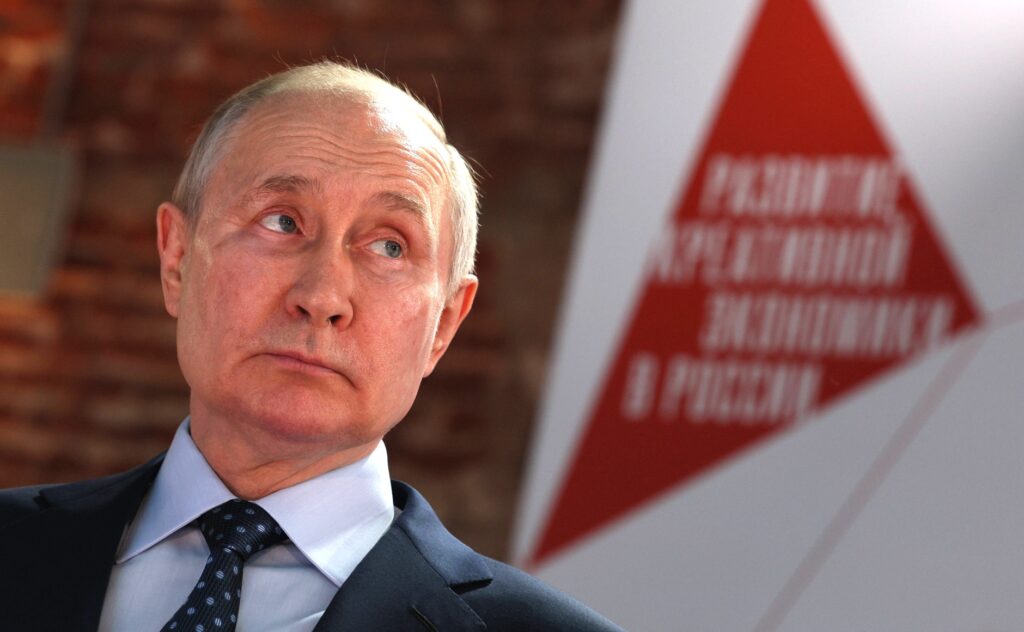
As the UK commits further funding to Ukraine’s reconstruction, British companies are expanding their involvement in energy, finance and defence, creating new opportunities for long-term economic cooperation.

The accusation that AI has the potential to ‘kill all humans’ in the next decade has sent shockwaves around the world, but what are the controversial AI companies’

The Prime Minister’s first foreign visit was a welcome act of solidarity. But for Ukraine, British friendship will be judged by whether it can help unlock the air
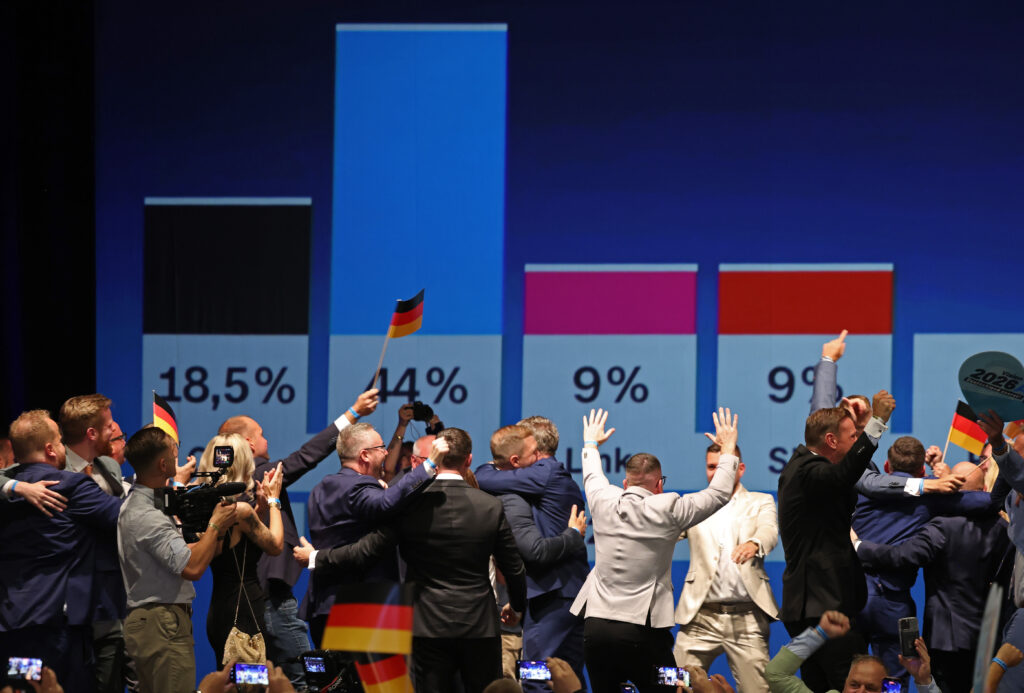
After walking through Saxony, James Jeffrey is not surprised by the AfD’s dramatic election win in Germany.