Azeem Ibrahim | 19th April 2023 | Comment, Uncategorised
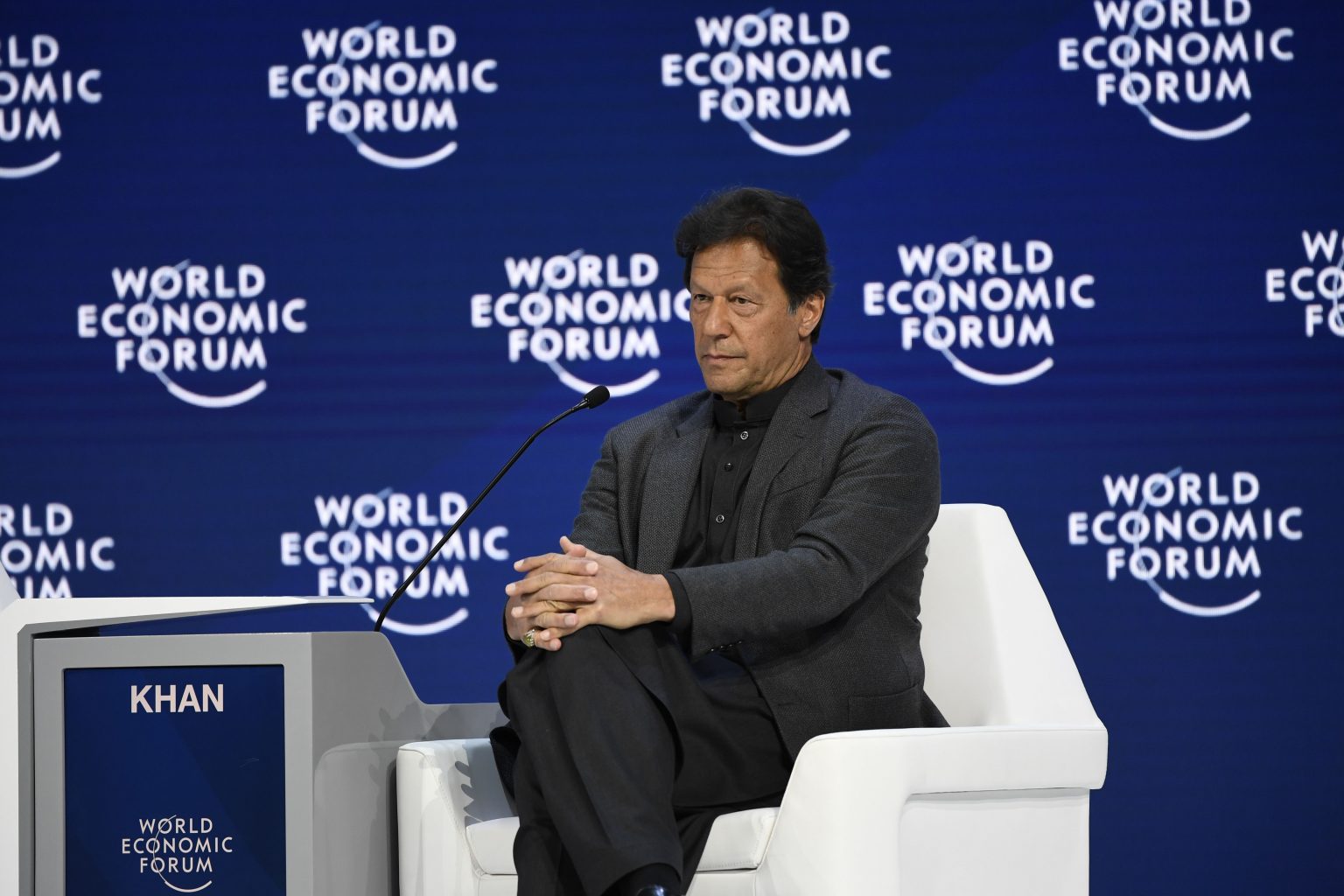
Imran Khan, Prime Minister of Pakistan speaking in the Special Address by Imran Khan, Prime Minister of Pakistan session at the World Economic Forum Annual Meeting 2020 in Davos-Klosters, Switzerland, 22 January. Congress Centre - Plenary. Copyright by World Economic Forum / Valeriano Di Domenico
With the military running out of options, could the assassination of Imran Khan be on the cards?
Rumour swirls in Pakistan and among the Pakistani diaspora. The rumour concerns the de facto leader of the opposition, Imran Khan. Khan was prime minister of Pakistan before his removal from office in 2022. The rumours concern the possibility of Khan’s coming assassination.
This may seem strange: Khan is a heroic sportsman, a national figure. Why would he be killed? The possible reason lies in Pakistan’s politics, and the hold the army still has over the government of the country.
Ever since his ouster, Khan has been on a roll. He has denounced the country’s politicians as corrupt and the military as a malign force. He has called for fresh elections. And he has toured the country, giving barn-burning speeches in a populist manner unknown to the rest of Pakistan’s political class, calling for major reform.
And he has been met with violence, bans, and censorship wherever he has gone.
Khan’s supporters charge that the army is behind all this: the torture and arrest of Khan’s people, an attack on Khan’s person with a gun which left the politician unable to walk, and repeated attempts to jail Khan for alleged corruption (corruption his supporters say is fabricated).
Faced with the prospect of a major shake-up in Pakistan’s elected politics, therefore, they argue that army has decided to do everything it can to remove Khan from the stage. Now that these gambits have failed, and …
Subscribe to The Mace
Join the member community shaping British politics and stay ahead of
what's really happening in the world of politics and public affairs,
with expert analysis, breaking news, and insider insights from
Westminster and Brussels. The Mace is the leading news source and
resource for the government affairs industry, offering required
reading and lobby intelligence for professionals.
To see what you are missing out on by not subscribing to The Mace, click here to download our full membership info-pack. This includes
having no paywall on op-ed content or profiles/interviews, allowing
professional profiles to be read with maximum impact and visibility by
government, special advisers, MPs, peers, civil servants, and policy
and political decision-makers.
A massive power outage hit Spain, Portugal, and parts of France, disrupting transport, hospitals, and daily life. Authorities suspect grid failures linked to interconnections and rare atmospheric conditions.
The European Commission has launched formal proceedings against Apple over suspected breaches of the Digital Markets Act, focusing on restrictive App Store policies. Developers claim Apple’s compliance measures
Brexit has enabled UK trade independence and divergence from EU regulation, especially in AI and climate policy. While Trump’s tariffs prompt a policy rethink, Labour’s green agenda faces
Swiss pharmaceutical giant Roche plans a $50 billion U.S. investment over five years, creating 12,000 jobs and building new facilities. Driven by Trump-era tariffs, it aims to protect
Pope Francis, the first Pope from the Americas, passed away on Easter Monday, aged 88, at Casa Santa Marta in the Vatican. Despite enduring lifelong health challenges, including
Hungarian Prime Minister Viktor Orban announced plans to finalise a U.S. business deal within six months to counter tariffs on steel, aluminium, and cars threatening Hungary's car-reliant economy.
The European Central Bank (ECB) cut its key interest rate by 25 basis points to 2.25%, citing deteriorating growth due to trade tensions and global uncertainty. This marks
President Trump has suggested a potential pause on auto tariffs, sparking optimism in the auto industry and financial markets. While the proposal remains unconfirmed, it could ease industry
European Commission President Ursula von der Leyen addressed the EU’s planned 25% tariffs on €21 billion of U.S. goods with a mix of defiance and diplomacy. She clarified
Marine Le Pen’s shock conviction for embezzling EU funds, with a five-year ban from public office, shook France’s political landscape. While Le Pen vows to appeal, her legal