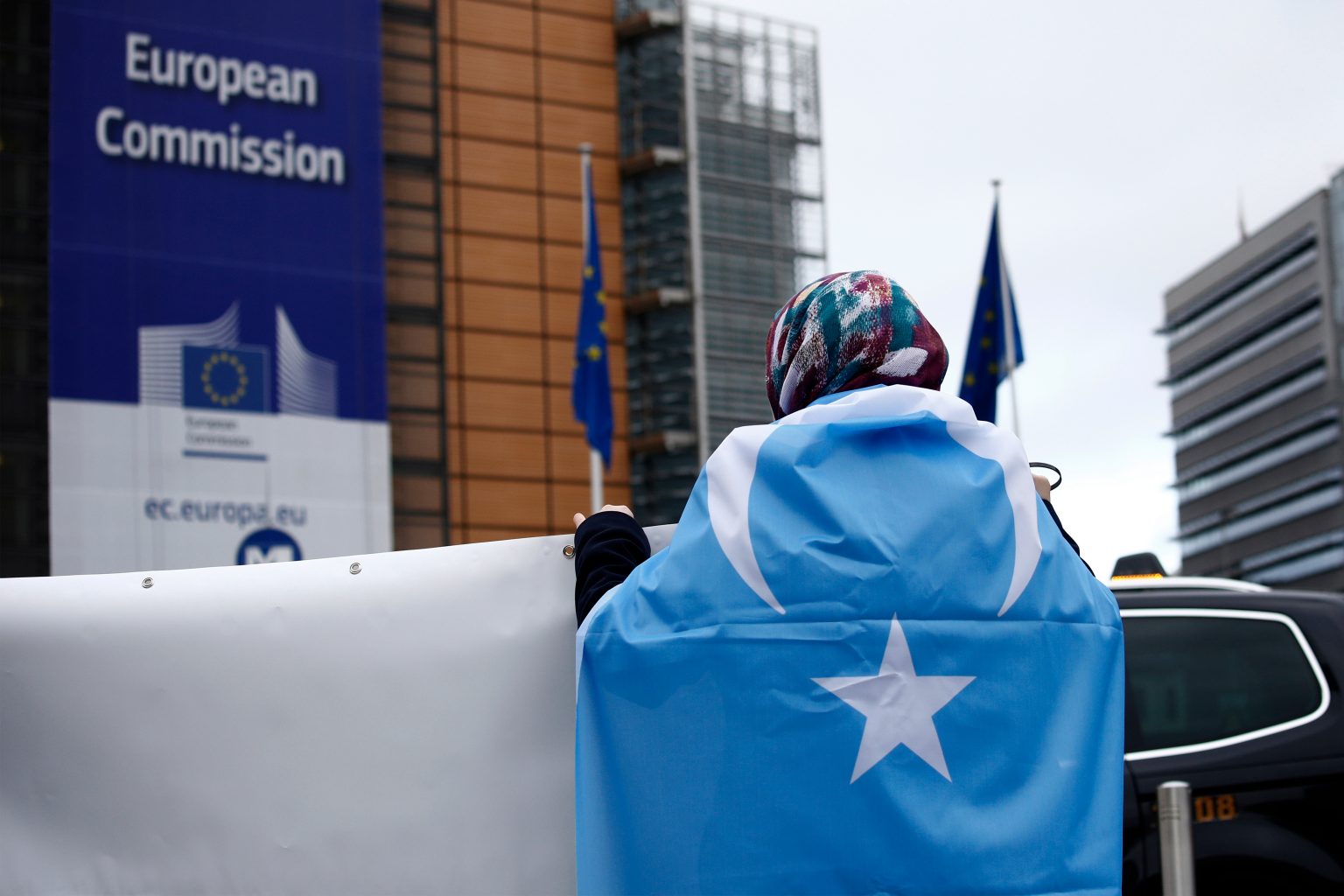
Any move towards closer economic cooperation between the European Union and China must be put on pause until the situation in Xinjiang is entirely remedied
News on China over the past weeks has been dominated by the findings of the independent report from the Newlines Institute, in cooperation with Raoul Wallenberg Centre, which argues that China bears state responsibility for breaching every article of the 1948 Genocide Convention in their treatment of the Uyghur people of Xinjiang province.
Parliaments around the world are now studying and debating it, and many are considering following the path set by the Netherlands and Canada in declaring the situation in Xinjiang a genocide. This is as it must be: some 151 counties are signatories to the Genocide Convention (including China), and each has a duty under the Convention to make their own determination of whether a situation meets the criteria set out in the Convention.
But where the international community ultimately falls on this issue will be a pivotal event in the history of this century. China is currently the second-most powerful country in the world, and its trajectory is still firmly upwards. Sooner or later, China is expected to be able to successfully challenge the US for the top position, if current trends are maintained.
Against that background, the issue of the genocide of the Uyghurs will be of global significance in at least one of two ways. First, if China continues with its policies and successfully destroys the Uyghur identity, and the response from the …
Subscribe to The Mace
Join the member community shaping British politics and stay ahead of
what's really happening in the world of politics and public affairs,
with expert analysis, breaking news, and insider insights from
Westminster and Brussels. The Mace is the leading news source and
resource for the government affairs industry, offering required
reading and lobby intelligence for professionals.
To see what you are missing out on by not subscribing to The Mace, click here to download our full membership info-pack. This includes
having no paywall on op-ed content or profiles/interviews, allowing
professional profiles to be read with maximum impact and visibility by
government, special advisers, MPs, peers, civil servants, and policy
and political decision-makers.
Kamala Harris returned to the spotlight with a fierce speech condemning Donald Trump’s first 100 days in office, slamming his tariffs, immigration policies, and governance as reckless and
Voters across England headed to the polls in a major electoral test for all parties. Labour aims to defend recent gains, while Reform UK eyes breakthroughs in Runcorn,
President Trump marked 100 days of his second term with sweeping policy changes, including a record number of executive orders, mass deportations, major education reforms, and a 145%
The European People's Party (EPP) Congress in Valencia opened today amid political tension and disruption following major power outages across Spain and Portugal. Originally intended to celebrate the
Mark Carney, former Governor of the Bank of England, has led Canada’s Liberal Party to a minority government following the 28 April 2025 federal election. The Liberals won
A massive power outage hit Spain, Portugal, and parts of France, disrupting transport, hospitals, and daily life. Authorities suspect grid failures linked to interconnections and rare atmospheric conditions.
The European Commission has launched formal proceedings against Apple over suspected breaches of the Digital Markets Act, focusing on restrictive App Store policies. Developers claim Apple’s compliance measures
Swiss pharmaceutical giant Roche plans a $50 billion U.S. investment over five years, creating 12,000 jobs and building new facilities. Driven by Trump-era tariffs, it aims to protect
Pope Francis, the first Pope from the Americas, passed away on Easter Monday, aged 88, at Casa Santa Marta in the Vatican. Despite enduring lifelong health challenges, including
Hungarian Prime Minister Viktor Orban announced plans to finalise a U.S. business deal within six months to counter tariffs on steel, aluminium, and cars threatening Hungary's car-reliant economy.