Treasury still wields too much influence, says ex-Commons clerk

Eliot Wilson | Issue 1 | Comment, Magazine

From the Archive

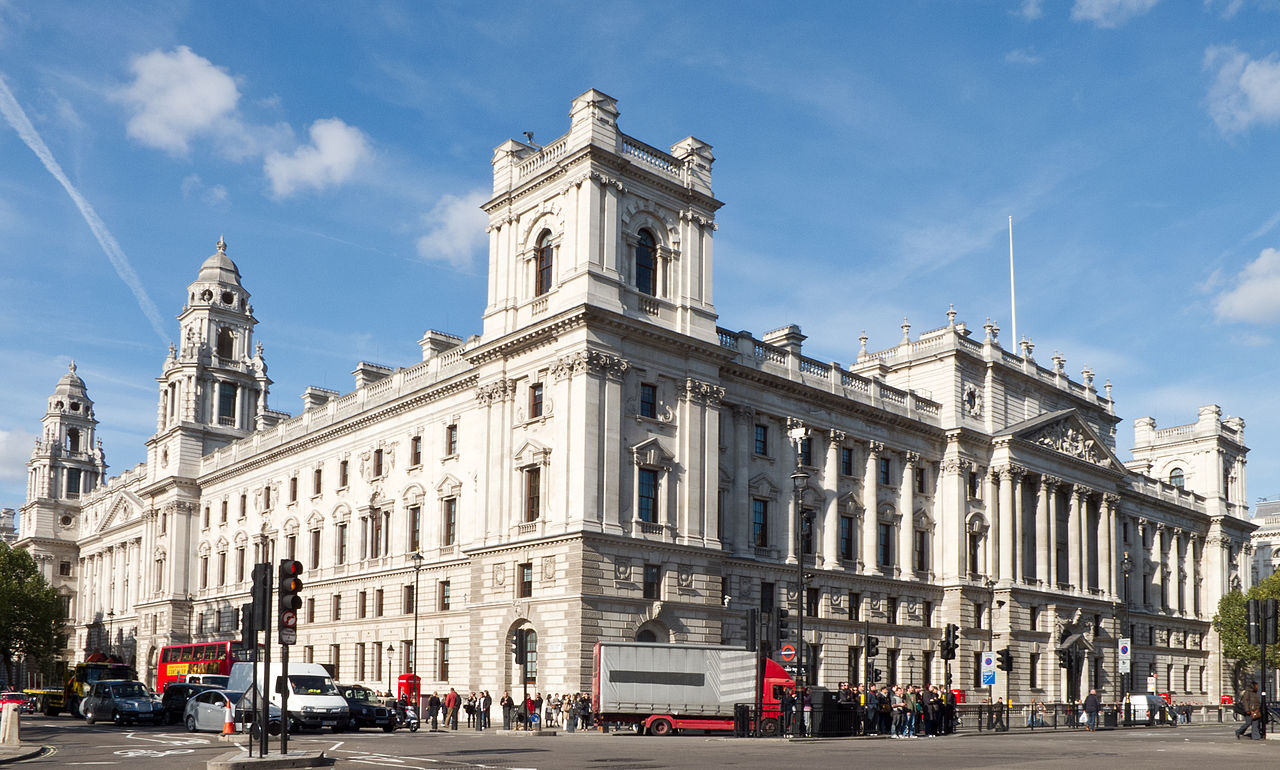
Treasury 3 -- Wikimedia Commons

This fortress at the heart of Westminster acts as if it owns the public finances and such a monopolistic attitude is deeply damaging.

No one ever warned me quite how hectic my 11 years as a clerk in the House of Commons would be, but I still felt fortunate when I saw how much work even the youngest Treasury staffers were tasked with. The Treasury’s civil service fast-stream programme is notoriously (and understandably) competitive, and once you’ve completed it you wouldn’t be expected to last more than a few years without becoming completely exhausted. It’s when you realise how much responsibility you’ll be given that the early-onset Whitehall fatigue syndrome begins to make sense. If you arrive at the Treasury in your early twenties, you’ll quite quickly be operating at a very high policy level: you’ll be making decisions or making recommendations for those decisions with a macroeconomic impact. During the financial crisis, records submitted to clerks like me showed that we had relative newcomers making the really important phone calls to RBS and Goldman Sachs. The Treasury is very much where you want to be when you first arrive in Westminster, but it’s a double-edged sword that could kill you if you stay there too long. And that’s without considering the man (so far only a man, alas) at the top of the pile. I started in Parliament when Gordon Brown was in No 11. He was a dominant Chancellor who, alongside permanent secretaries Nick Macpherson and Gus O’Donnell, had a very tight grip on the public purse strings. Brown’s relationship with those in Parliament was not very good, because he didn’t much like House of Commons scrutiny. In the first few years of New Labour in office, if there was ever a hint of criticism in the Treasury select committee, the chair, Giles Radice, would get an early morning phone call from a shouty Gordon Brown, yelling down the phone and reminding him that he should be on the government’s side. That changed somewhat when Alistair Darling took over. After him, George Osborne was willing to decentralise power to groups like the Parliamentary Commission on Banking Standards, something I can’t imagine Brown ever doing. But the Yes Minister view of the Treasury – as a protective fortress at the heart of Westminster policymaking – is entirely accurate. What does the power of the Chancellor boil down to, beyond collecting and dispersing public money? It doesn’t really have any authority beyond that. Even Transport has some strategy responsibilities it can pursue, such as attempting to rebalance the economy in favour of road and rail. The Treasury occupies an odd place in Whitehall theology, which is being the arbiter of anything that happens: officials within the committees and in smaller departments have a real sense that the Treasury proceeds from the assumption that taxpayers’ money is its money. Any expenditure is thought to be a loss to them. In a sense, that’s a ridiculous way to look at it. The Treasury should be a filter rather than a funnel; we shouldn’t be pouring it all in and then letting a little bit out. It should be a mechanism for distributing the money that the government takes in as revenue. This idea of an institutional ownership of the public finances is a problem going back decades, and extends from the permanent secretary downwards. It’s not necessarily a predatory approach but it’s certainly a proprietorial one. We know that the only way a department can flourish and make a difference is by spending money. If the Treasury isn’t willing to give that money, they’re judged a failure. That’s why the annual spending rounds are so important and why they’re viewed through the lens of winners and losers; who’s up, who’s down, who’s rinsed the Treasury and who hasn’t. There have been some challenges to the monopoly the Treasury seems to hold – for example, in the 1960s with Harold Wilson’s short-lived Department for Economic Affairs. But nobody has really been able to resolve the tension underlying those departments keen to spend and a Treasury keen to prevent them from doing so. We’ve talked about breaking up departments or recreating what they have in Europe – with separate bodies responsible for finance and economics – but nobody’s ever done that because the Treasury is too powerful. That fed my own experience of Treasury officials, who would occasionally breeze into meetings and let everyone know they were from the Treasury and keep reminding you of tit. I saw that when the Public Bill Office asked for information on supply bills originating in the Treasury for the Commons to consider, the department was reluctant to give anything away and blamed the complexity of the calculations. But we knew it was just a case of sitting around with calculators and doing the adding up. - nothing more complicated. But those in the Treasury were keen to exert their stranglehold on that information, which across Whitehall translates quite neatly into power. In Westminster, power is traded as a commodity, and that characterised the relationships between departments and each of the select committees I worked with, but es...

Subscribe to The Mace

Join the member community shaping British politics and stay ahead of what's really happening in the world of politics and public affairs, with expert analysis, breaking news, and insider insights from Westminster and Brussels. The Mace is the leading news source and resource for the government affairs industry, offering required reading and lobby intelligence for professionals.

To see what you are missing out on by not subscribing to The Mace, click here to download our full membership info-pack. This includes having no paywall on op-ed content or profiles/interviews, allowing professional profiles to be read with maximum impact and visibility by government, special advisers, MPs, peers, civil servants, and policy and political decision-makers.

The UK’s unwritten constitution: There are no real rules

Mark Leftly | June 23, 2026

The timing and in what circumstances a leader should stay or go are in flux, argues Mark Leftly.

Britain is drifting towards Italian-style instability — it is time to learn from America 

Lucy Carrier-Pilkington | June 23, 2026

Love or hate the current American administration, at least they have a consistent electoral cycle where the choice of the electorate is upheld.  

Burnham’s popularity bubble is doomed to pop  

Lucy Carrier-Pilkington | June 23, 2026

Andy Burnham wants an immediate coronation, but life in Westminster would quickly expose the limits of popular appeal built from a safe distance. 

Hail Andy, King of Makerfield 

William Cash | June 19, 2026

As vultures circle Downing Street, now that Burnham is back as an MP, Starmer must realise that resigning is going to be better for the Labour Party than

Musical chairs again in Downing Street

Lucy Carrier-Pilkington | June 18, 2026

What will a Burnham government look like ? Lucy Carrier-Pilkington analyses what a change of prime minister will mean for the country and who will be the likely

Reform v Restore: the English civil war in Makerfield that will decide the next Labour prime minister

William Cash | June 15, 2026

With Restore and Reform tearing votes off each other, the Makerfield by-election could propel Andy Burnham into Number 10. But, asks William Cash, will Restore's percentage of the

Memo to the new Defence Secretary before the NATO summit: “It’s not all about the money”

Mace | June 12, 2026

Creating a Defence Industrial base with no new money is going to be a challenge for any Defence Secretary. But, argues defence expert William Wallace, there are several

When it comes to English police reform, do not repeat the mistakes made north of the border

Mace | June 5, 2026

The dismal results of reducing the police force in Scotland should act as a cautionary deterrent for English police reform, writes Sharon Dowey, a former member of the

Checkmate DC’s bold London move

William Cash | June 5, 2026

Tristan Breijer is the new London head of Checkmate Government Relations. The move into London gives the US lobby firm its first European base, bringing its global power-broking

Gradually and suddenly: how VAT is slowly killing off traditional private education

Mace | June 5, 2026

Latest Dept of Education figures reveal over 40,000 independent school pupils dropping out since Labour's VAT raid. But, The Mace argues, surging fees, an arms race for facilities