Treasury still wields too much influence, says ex-Commons clerk

Eliot Wilson | Issue 1 | Comment, Magazine

From the Archive

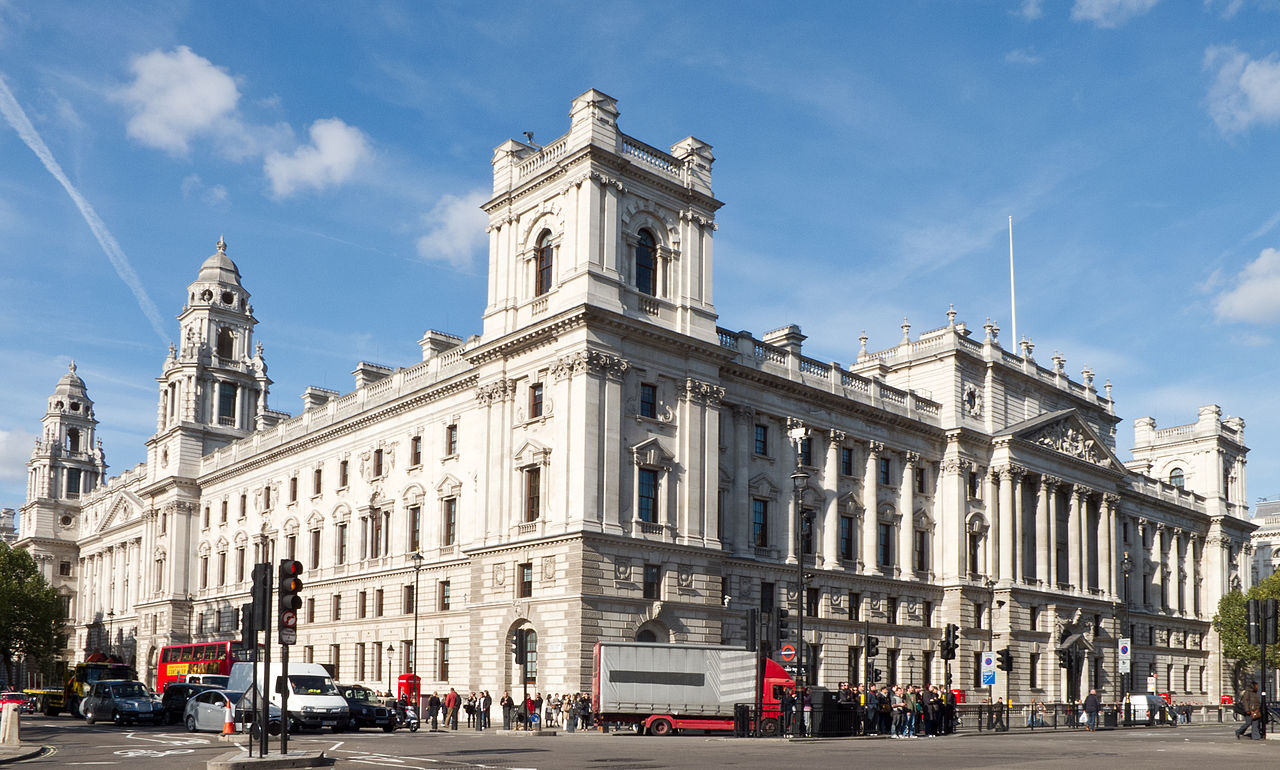
Treasury 3 -- Wikimedia Commons

This fortress at the heart of Westminster acts as if it owns the public finances and such a monopolistic attitude is deeply damaging.

No one ever warned me quite how hectic my 11 years as a clerk in the House of Commons would be, but I still felt fortunate when I saw how much work even the youngest Treasury staffers were tasked with. The Treasury’s civil service fast-stream programme is notoriously (and understandably) competitive, and once you’ve completed it you wouldn’t be expected to last more than a few years without becoming completely exhausted. It’s when you realise how much responsibility you’ll be given that the early-onset Whitehall fatigue syndrome begins to make sense. If you arrive at the Treasury in your early twenties, you’ll quite quickly be operating at a very high policy level: you’ll be making decisions or making recommendations for those decisions with a macroeconomic impact. During the financial crisis, records submitted to clerks like me showed that we had relative newcomers making the really important phone calls to RBS and Goldman Sachs. The Treasury is very much where you want to be when you first arrive in Westminster, but it’s a double-edged sword that could kill you if you stay there too long. And that’s without considering the man (so far only a man, alas) at the top of the pile. I started in Parliament when Gordon Brown was in No 11. He was a dominant Chancellor who, alongside permanent secretaries Nick Macpherson and Gus O’Donnell, had a very tight grip on the public purse strings. Brown’s relationship with those in Parliament was not very good, because he didn’t much like House of Commons scrutiny. In the first few years of New Labour in office, if there was ever a hint of criticism in the Treasury select committee, the chair, Giles Radice, would get an early morning phone call from a shouty Gordon Brown, yelling down the phone and reminding him that he should be on the government’s side. That changed somewhat when Alistair Darling took over. After him, George Osborne was willing to decentralise power to groups like the Parliamentary Commission on Banking Standards, something I can’t imagine Brown ever doing. But the Yes Minister view of the Treasury – as a protective fortress at the heart of Westminster policymaking – is entirely accurate. What does the power of the Chancellor boil down to, beyond collecting and dispersing public money? It doesn’t really have any authority beyond that. Even Transport has some strategy responsibilities it can pursue, such as attempting to rebalance the economy in favour of road and rail. The Treasury occupies an odd place in Whitehall theology, which is being the arbiter of anything that happens: officials within the committees and in smaller departments have a real sense that the Treasury proceeds from the assumption that taxpayers’ money is its money. Any expenditure is thought to be a loss to them. In a sense, that’s a ridiculous way to look at it. The Treasury should be a filter rather than a funnel; we shouldn’t be pouring it all in and then letting a little bit out. It should be a mechanism for distributing the money that the government takes in as revenue. This idea of an institutional ownership of the public finances is a problem going back decades, and extends from the permanent secretary downwards. It’s not necessarily a predatory approach but it’s certainly a proprietorial one. We know that the only way a department can flourish and make a difference is by spending money. If the Treasury isn’t willing to give that money, they’re judged a failure. That’s why the annual spending rounds are so important and why they’re viewed through the lens of winners and losers; who’s up, who’s down, who’s rinsed the Treasury and who hasn’t. There have been some challenges to the monopoly the Treasury seems to hold – for example, in the 1960s with Harold Wilson’s short-lived Department for Economic Affairs. But nobody has really been able to resolve the tension underlying those departments keen to spend and a Treasury keen to prevent them from doing so. We’ve talked about breaking up departments or recreating what they have in Europe – with separate bodies responsible for finance and economics – but nobody’s ever done that because the Treasury is too powerful. That fed my own experience of Treasury officials, who would occasionally breeze into meetings and let everyone know they were from the Treasury and keep reminding you of tit. I saw that when the Public Bill Office asked for information on supply bills originating in the Treasury for the Commons to consider, the department was reluctant to give anything away and blamed the complexity of the calculations. But we knew it was just a case of sitting around with calculators and doing the adding up. - nothing more complicated. But those in the Treasury were keen to exert their stranglehold on that information, which across Whitehall translates quite neatly into power. In Westminster, power is traded as a commodity, and that characterised the relationships between departments and each of the select committees I worked with, but es...

Subscribe to The Mace

Join the member community shaping British politics and stay ahead of what's really happening in the world of politics and public affairs, with expert analysis, breaking news, and insider insights from Westminster and Brussels. The Mace is the leading news source and resource for the government affairs industry, offering required reading and lobby intelligence for professionals.

To see what you are missing out on by not subscribing to The Mace, click here to download our full membership info-pack. This includes having no paywall on op-ed content or profiles/interviews, allowing professional profiles to be read with maximum impact and visibility by government, special advisers, MPs, peers, civil servants, and policy and political decision-makers.

Ann Widdecombe Devon hamlet murder mystery continues as tributes make her a political saint

William Cash | July 16, 2026

The death of Ann Widdecombe raises serious questions about the security of high-profile politicians. The shocking episode seems out of Midsomer Murders with the former Tory minister being turned into

The Families Left Out of the Nicotine Policy Debate

Beatriz Santos | July 15, 2026

Beatriz Santos argues that both scientific evidence and lived experience should remain the foundation of policymaking, especially for understanding how people succeed in quitting cigarettes.

Olly Robbins shows Whitehall is prepared to hold Westminster to account

Lucy Carrier-Pilkington | July 14, 2026

The former head of the Foreign Office is now taking legal action, putting the government's treatment of senior civil servants under fresh scrutiny.

Kemi is right to lift the white, Oxbridge fatwa and purge the Conservative party of non-Tories

William Cash | July 10, 2026

Overhauling the Tory candidates list is a shrewd political move which will allow her to put her own stamp on the party, and more importantly, shape its future,

Burnham is right: The future lies with devolution

Gill Morris | July 1, 2026

After Andy Burnham's first major speech since the resignation, devolution has been the word on everyone's lips - Gill Morris explains why it's the way forward.

Caroline Simpson: Why devolution needs this technocrat

Lucy Carrier-Pilkington | July 1, 2026

Amid the frenzy over who Burnham will choose as his chancellor, his shrewd appointment of Caroline Simpson to lead No. 10 North has been overlooked.

UK’s £4.7 billion Defence black hole: Dan Jarvis is inheriting a defence settlement Britain can no longer afford

Mace Magazine | July 1, 2026

Britain cannot afford to fall behind its NATO allies on defence spending, writes Jasset Harlech.

CPAC GB 2026: “Save Britain, save the West” 

Mace | June 30, 2026

Introducing the inaugural Conservative Political Action Conference (CPAC) on British soil, a landmark expansion of the world's premier conservative networking brand.  

Merkel’s Legacy is in Tatters

Azeem Ibrahim OBE | June 30, 2026

How Angela Merkel Weakened the West and Handed Putin and Xi Leverage

Defence spending controversy aside, the UK cannot turn up to NATO empty-handed 

Lucy Carrier-Pilkington | June 25, 2026

Labour psychodrama is simply not as important as the UK’s diplomatic commitment to its NATO allies.