When it comes to English police reform, do not repeat the mistakes made north of the border

Mace | 5th June 2026 | Comment, Law Enforcement and Crime, Politics
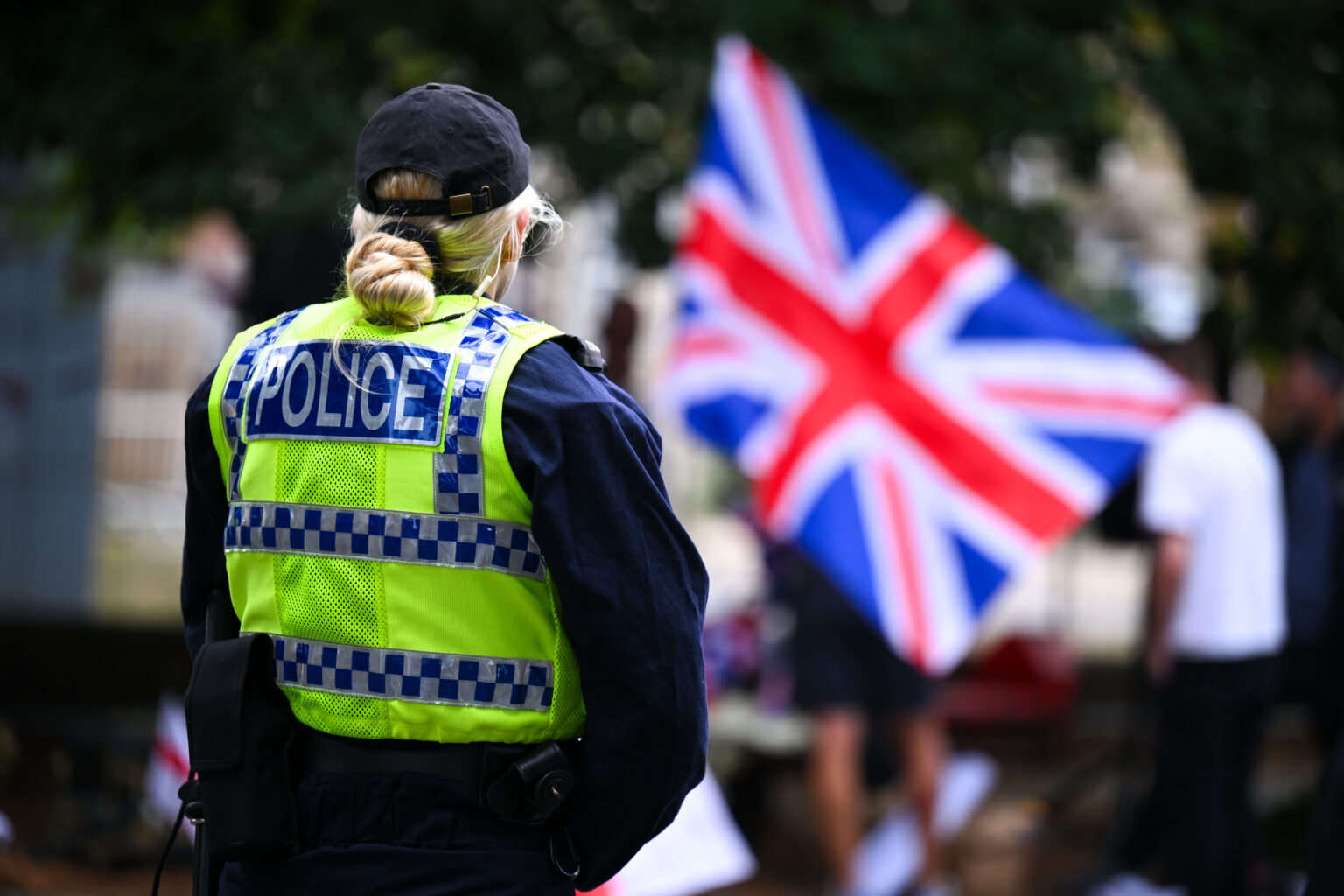
Photo by Finnbarr Webster/Getty Images

The dismal results of reducing the police force in Scotland should act as a cautionary deterrent for English police reform, writes Sharon Dowey, a former member of the Scottish Parliament’s criminal justice committee.

Westminster may not think it has much to take a lead from in relation to Holyrood, Scotland’s concrete parliament building in the heart of Edinburgh. But at the very least, it must not replicate one of its greatest mistakes. The UK Government announced earlier this year it wanted to reduce the number of police forces in England from 43 down to between 10 and 20. It would be a humungous amalgamation, and one of the biggest public sector reforms to have taken place in Britain for decades. As the proposals are being considered, many are wondering what the end result would look like. They should look no further than the dire state of affairs currently afflicting policing and justice in Scotland, the only part of the UK to have gone through anything like a merger on this scale. In 2013 Police Scotland was created out of eight legacy forces, and is now one of the UK’s largest. It means diverse organisations like Strathclyde Police, which were responsible for the mean streets of Glasgow, were thrown together with the likes of Northern Constabulary, which patrolled a gigantic geographical area made up of islands, remote communities and some of Europe’s last true wilderness regions. We’re now more than a decade in, and the results have been catastrophic. The move was all about efficiencies, and some Scottish Government ministers even boasted about savings of around £200 million a year to the public purse as a result. But those aren’t savings, they are cuts. It means officers are more hard-pressed than ever, serious crimes have gone through the roof, and communities are more exposed to a range of criminality. It’s a total of £2.6 billion which has been stripped away from policing in Scotland over a 13-year period. Worse, there’s barely a statistic which suggests this has been a success. Police officer numbers for Scotland in 2013, as the single force was preparing for launch, stood at 17,323 full-time equivalents. In March 2026, the most recent count available, there were 16,430.The creation of a single force has had the effect of nearly 1,000 fewer cops on the streets.

"There may be problems facing England’s police forces. But none of them will improve by emulating the shambolic Scottish model"

And the consequence? Over the same period there have been almost double the number of yearly sex crimes, from 8,600 to 16,000. Shoplifting has rocketed by 129 per cent. Domestic abuse cases are up two-thirds. Violent crime has risen by 14 per cent. It cannot be a coincidence that these horrible events are increasing at the same time there are fewer frontline police officers to deal with them. There is no deterrence; all criminals from the very serious to the petty know there will be little or no consequences for their actions. Dig deeper and we can see the issue with performance levels. In the year after Police Scotland was formed shoplifting enjoyed a 75 per cent clear-up rate. Now it’s less than 50 per cent. So we know the impact on communities and victims has been severe, and it’s not been much better for officers themselves. Since 2019 the number of working days lost to police officers suffering mental health issues has increased by 50 per cent. It shows the dwindling number of officers are being asked to do more, to endure higher levels of stress, and the personal consequence for these hardworking men and women is psychological torment. The single force was supposed to be nimble and innovative. But officers in Scotland received body-worn video years after their colleagues in England, and even now have less advanced technology. The statistics go on and on. From a UK perspective, the warning signs are clear: do not repeat the mistakes made north of the border. Yet a recent report in Scottish policing magazine 1919 showed the UK Government hasn’t even approached Police Scotland for advice on merging the forces. Perhaps they can see things here are so bleak they don’t even want to know the answers. The UK Government may not be considering one force for the whole country. But in terms of the scale of population, the plans are comparable. There is too much diversity between urban and rural demands, between north and south, and between east and west. In Scotland, we’ve had call-handlers in Edinburgh trying to direct responses to incidents hundreds of miles away, in landscapes which may as well be a different world. The amalgamation of forces has been, at best, a farce. The results for officers themselves and for the population of Scotland – especially those who are victims of crime – have been devastating. There may be problems facing England’s police forces. But none of them will improve by emulating the shambolic Scottish model. Sharon Dowey is a former member of the Scottish Parliament’s criminal justice committee and former Scottish Conservative MSP....

Subscribe to The Mace

Join the member community shaping British politics and stay ahead of what's really happening in the world of politics and public affairs, with expert analysis, breaking news, and insider insights from Westminster and Brussels. The Mace is the leading news source and resource for the government affairs industry, offering required reading and lobby intelligence for professionals.

To see what you are missing out on by not subscribing to The Mace, click here to download our full membership info-pack. This includes having no paywall on op-ed content or profiles/interviews, allowing professional profiles to be read with maximum impact and visibility by government, special advisers, MPs, peers, civil servants, and policy and political decision-makers.

Inside the Cummings Revolution

Adam Solomons | January 16, 2020

How much can Whitehall’s antiquated government offices learn from the Palo Alto tech giants?

Dominic Cummings Special

The Jackdaw: Staffers Had It Hardest

Marie Le Conte | January 16, 2020

Over the last year we’ve seen dozens of MPs switch parties or go independent. But how does such an unexpected move affect their hard-working staff?

The Mace guide to being a novice MP

Brooks Newmark | January 16, 2020

Still finding your way around the Palace? Not sure where to sit in the Chamber? Former minister Brooks Newmark is here to assist

Diary: Harry Potter Politics with Damian Collins

Damian Collins MP | January 15, 2020

Damian Collins remembers his election victory and rejoices at the new Commons term