The continuing political Whydunnit of the murder of Ann Widdecombe
The strangely guilty way that the media, and some politicians have reacted to Widdecombe’s shocking death shows the double standards that can operate when a politician of the



James Purnell’s return to frontline politics is more than a nostalgic Blair-Brown era reunion. As Andy Burnham builds his Downing Street operation, public affairs professionals will need to understand the overlapping Labour networks — from the Roses set to the Miliband revivalists — now competing to shape the new administration.
The leak of James Purnell’s return to the heart of British politics took even Andy Burnham’s Labour leadership transition team by surprise. “I think the idea just came straight out of Andy’s head,” huffs one of his plotters.
Purnell was barely a month into his forties when he stood down at the 2010 general election. In less than nine years as MP for Stalybridge and Hyde, Purnell held two Cabinet roles – Work & Pensions; Culture, Media and Sport – and helped lead a rebellion against the prime minister of the day, Gordon Brown.
His fanbase was shocked. Burnham was the Health Secretary at the time and would not swap Westminster for the Mayoralty of Greater Manchester for another seven years (and two failed leadership bids). He said of Purnell’s announcement: “James is a great friend of mine and a man of huge intellect and talent. He won’t be completely lost to the Labour Party I’m sure, because he remains as committed to the party as he ever was.
“I think he’s obviously decided to pursue other options and I wish him well in whatever he chooses to do, but James is a great loss to frontline politics.”
Famously, Purnell and Burnham shared an office when they were cub MPs in the early 2000s. Many political observers unimaginatively compared them to Brown and Tony Blair, who constructed new Labour from cramped House of Commons’ quarters in the 1980s.
The bond, though, is real. After a 16-year hiatus – during which time he strategised for the BBC, created a bizarre supergroup leadership team at the University of the Arts London and ran lobbying group Flint – Purnell is back. As Burnham’s chief of staff, his role involves restructuring Downing Street – including its offshoot, ‘Number 10 North’ – and advising on a specialist policy area, welfare reform.
What is really important for the lobbying industry, however, is what his appointment tells us about Burnham and the Labour networks that influence him.
The new PM
Looking at them, the similarities between the Stone Roses loving, Everton Football Club supporting Burnham and the classical literature adoring, bus model hobbyist Boris Johnson are unclear. Indeed, most would probably only point to their departures from Westminster to mayoral positions and then barnstorming, almost heroic returns to the House of Commons as a way into Number 10 as obvious comparisons.
Yet, many of those who have worked for – or are close to them – point to more-or-less the same issue: they both have plenty of political admirers, but not many genuine mates in Westminster. In other words, their support in the Houses of Parliament is and was broad, rather than deep. “Andy is not even that close to most of the northern mayors, [Liverpool’s] Steve Rotheram aside,” says a senior Yorkshire-based Labour source.
For Johnson, this meant political support was entirely conditional on his public bonhomie delivering parliamentary votes. For Burnham, this has meant his campaign was plotted by networks of MPs and advisers who like rather than really know him. They will now compete for attention from those who did actually work with him in the early 2000s.
Labour’s family
All parties have informal connections, including friendships and rivalries that date back decades to student politics or even just as university colleagues. The competitive tension between Johnson and David Cameron infamously dated back to their days at Eton. A little later – 1987 – the notorious photograph was taken of them gazing into the mid-distance, while dressed in tailcoats, velvet collars and silk lapels, as members of Oxford University’s Bullingdon Club.
Any lobbyist who has attended a special adviser’s house party will know, however, that Labour’s connections run far deeper than those of the Conservatives or the Liberal Democrats. There are MPs debating the future direction of their party who would never have appeared together on the typical stakeholder mapping exercises that are so beloved by public affairs experts and their clients. Certainly, no amount of artificial intelligence would have made these connections.
Mapping Labour is an art rather than a science. To understand which MPs can be used to influence others relies far more on primary research – including a few drinks at private shindigs – than scouring Hansard for portfolio titles and obvious shared interest.
One of the strongest networks is what might be dubbed ‘the Roses set’, which includes Burnham admirers based in Yorkshire and Lancashire. Many of them socialise in Leeds and York. Angela Rayner and Louise Haigh, who were both forced to depart Sir Keir Starmer’s Cabinet, are among their number.
Although the former was tipped as a possible successor to Sir Keir, both noted Burnham’s popularity and ability to connect with the public. They were geographically close enough to Burnham to have the access necessary to persuade him that they should help him become PM.
Haigh, for example, recently admitted such discussions went back a year and has become a key ally, overseeing Burnham’s Makerfield by-election victory in June. The pair’s closest political advisers acted in what insiders have suggested was “in effect, a secretariat for Andy’s campaign” since Labour’s disastrous local election results in May.
In effect, Burnham’s leadership ambitions but lack of organisational apparatus meant that the Roses set could easily impose themselves and their governmental objectives on him as a potential prime ministerial candidate.
Haigh and Rayner are both back in the Cabinet, the former as First Secretary of State, a powerful symbolic position denoting seniority over other secretaries of state. The role was last held by Dominic Raab in 2019-21. Another returnee to the Cabinet is Lucy Powell – the Manchester Central MP is another member of this close knit set and has been appointed Education Secretary. All three became MPs from 2012 onwards, so are of a different generation to those Burnham knew well during his previous time in Westminster.
The family
Labour’s networks should be considered as branches of a huge family tree, with interconnecting roots that, quite often, date back student activism days and even NUS politics. They are wedded to the party for life. “There are real generational links because of Young Labour, Young Fabians and Labour Students,” says one senior party figure.
The familial loyalty is shown by how few MPs cross the floor to join the Conservatives. Reg Prentice remains the most prominent example and the 50th anniversary of his defection takes place next year.
Ed Miliband is a crucial figure, who – whether knowingly or not – will act as the root connecting Burnham’s friends from the Blair/Brown years and the likes of the Roses set. He’s the figure who has been in the Parliamentary Labour Party (PLP) across the quarter-of-a-century since Burnham became an MP the first time around. A minister in the last Labour government, he went on to lead the party into the 2015 general election and returned to government as Secretary of State of Energy Security and Net Zero under Sir Keir.
Also recognising the gaps in Burnham’s operation, Miliband offered his support in exchange for the role of Chancellor of the Exchequer, though he was later pipped to Number 10 by John Healey. “Ed thought he had a deal, but it wasn’t worth the paper it wasn’t written on,” says a Labour source.
Still, Miliband did rather well by being appointed Foreign Secretary. His green agenda also lives on through his great supporter Miatta Fahnbulleh,the former chief executive of the New Economics Foundation who developed Burnham’s policy platform. He previously insisted that Fahnbulleh was made one of his junior ministers as soon as she was elected as MP for Peckham. She is now Energy Security Secretary. Polly Billington, the voce-chair of the PLP and former media adviser to Miliband, was also drafted to “sift through” policy ideas pitched to Burnham during the leadership transition.
The old guard
Miliband, Purnell and Healey – who held several ministerial roles between 2001 and 2010 – are among those Burnham knew from his earlier time in government. His reliance on former ministers from that era is clear from some of his other Cabinet appointments, including promotions for Angela Eagle and Sir Chris Bryant, who have been appointed Environment and Northern Ireland Secretary respectively.
As the aforementioned surprise at Purnell’s appointment shows, there will undoubtedly be generational tensions. The ‘roses’ who bloomed on their branch of the Labour family tree have admired but only known Burnham for a few years; the other network are of a riper vintage. This will cause feuds, tension and distrust.
Understanding those competing interests will be crucial to working out how public affairs experts can best work with the Burnham administration.
Mark Leftly is head of political affairs at Sodali & Co.
The strangely guilty way that the media, and some politicians have reacted to Widdecombe’s shocking death shows the double standards that can operate when a politician of the
The death of Ann Widdecombe raises serious questions about the security of high-profile politicians. The shocking episode seems out of Midsomer Murders with the former Tory minister being turned into
Beatriz Santos argues that both scientific evidence and lived experience should remain the foundation of policymaking, especially for understanding how people succeed in quitting cigarettes.

The former head of the Foreign Office is now taking legal action, putting the government's treatment of senior civil servants under fresh scrutiny.

Overhauling the Tory candidates list is a shrewd political move which will allow her to put her own stamp on the party, and more importantly, shape its future,

In an exclusive special for Mace, expert Dr Daniel Frampton discusses the pivotal shift of the Strategic Defence Review towards a new age of defence technology for NATO.

Mace defence expert, Dr Daniel Frampton, highlights the importance of SME's for UK and NATO defence - and warns they are at a disadvantage.

With the NATO summit in Ankara today, our defence expert Dr Daniel Frampton argues that supply chains have become a strategic asset for the NATO Alliance.
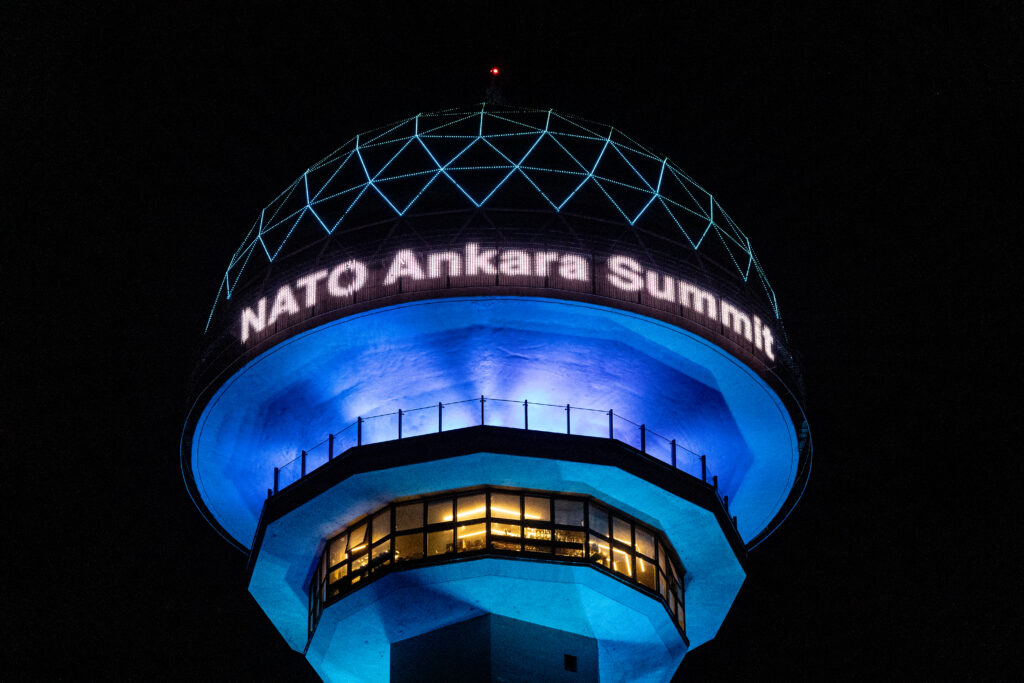
With the NATO Summit in Turkey, our defence expert Dr Daniel Frampton looks at whether the UK is bringing enough security and spending to the table.
Andy Burnham has promised the ‘biggest rebalancing of power our country has ever seen’. The Mace investigates what industry insiders think of his vision.