Adam Solomons | Issue 7 | Magazine, Political Consultants
From the Archive
‘There’s no crystal ball – it’s best to be honest’: the lobbyists rethinking how to campaign amid Trump’s chaos.
“It’s our job to help them make the right decisions” was how Adam Love, itachi Rail’s head of external communications, described his firm’s relationship with government when I first looked into the often shadowy, always deliberate world of lobbying and public affairs in Westminster six years ago. The world has changed in innumerable ways since we sat down at a swanky conference in central London attended by key figures in his industry and representatives from City Hall and TfL. But lobbyists’ fundamental worldview – that it is their job merely to guide policymakers towards enlightened decisions – hasn’t changed. The invisible hand lives on.
For Gareth Stace, director general of the trade body UK Steel, that work has been urgent. Representing the UK’s steel producers – and the roughly forty thousand workers directly employed in it – Stace had as chaotic a spring as anyone. Eight weeks before President Trump’s so-called “Liberation Day” and less than a month after he took office, the UK steel sector faced an existential challenge when Trump more than doubled tariffs on aluminium and extended existing steel tariffs to all countries. Stace warned this would be a “devastating blow” for his members, which include British Steel, Tata Steel and Sheffield-based Marcegaglia. He began a months-long media frenzy which included dozens of appearances on the Today programme, BBC Breakfast and elsewhere, where he pleaded for the government to negotiate better terms with the Americans and to do all it could to protect his sector. And that was only the public side.
British Steel was taken into public hands in mid-April and steel was one of a handful of sectors exempted from Trump’s tariffs as part of the UK–US trade agreement. Stace told The Mace that, amid what he diplomatically called “significant business uncertainty” in his sector, what the government really needed from him was answers on a way forward. He explained his philosophy in representing the sector in Westminster: “Avoid simply voicing complaints. Instead, clearly define the issue, back it with evidence, and, most importantly, present a realistic, workable solution.” He added, “Government doesn’t have a crystal ball to determine what your sector needs to succeed, which is why solutions are far more effective than problems or table-thumping demands. The prime minister deserves credit for his calm and strategic approach.”
Stace concluded that – in simply having to be “honest, open and transparent” – his job is “straightforward.” It sounds anything but.
The experience of Britain’s steel industry in the past few months has been an exception. Parliament hadn’t been recalled on a Saturday, as it was to debate and pass the emergency legislation to return British Steel to public hands, since the Falklands War. Stace was forced to speak on behalf of all UK Steel members almost daily in an ultimately successful attempt to be a voice for an entire industry. But as another influential and well-connected public affairs executive points out, the best advocates for clients tend to be the clients themselves and the example they set. Luke Sullivan, now public affairs director at Headland Consultancy, was Keir Starmer’s political director from shortly after the Hartlepool by-election in 2021 – widely seen as the low point in Starmer’s leadership of the party – until last year’s general election. Sullivan told The Mace that his job has become more important amid political and economic uncertainty: “Ultimately, for a business, their reputation and ability to create the conditions and opportunities to thrive even in challenging times is vital.” Counting TikTok and Lime (purveyor of the notorious e-bikes) among its clients, Headland has helped secure Lime legal permissions to make its services available on Britain’s streets and advised the Chinese-owned tech giant on the Online Safety Act, to which its industry partners are thought to have breathed sighs of relief.
But it was Trump’s tariffs and the resulting economic chaos, again, which proved the most concerning to Headland’s clients. Sullivan explained, “At the height of the tariffs we produced a daily note for clients analysing the situation, including bespoke work for clients in specific sectors affected by the tariffs. This included providing information to government that supported it in trade negotiations, but also ensuring the government had as much real-world evidence of business impact in helping them design a policy response.” Those daily updates were crucial for Headland’s clients navigating unprecedented headwinds in global markets. Quite how the government used information handed to it by Headland and its clients to support its negotiations of trade deals with India, the US and the EU will never become fully clear.
While multinational firms used to lock heads with politicians for the most opportune outcomes and trading conditions possible, the mode of practice since the “Mad Men” era in which public affairs was born ha...
Subscribe to The Mace
Join the member community shaping British politics and stay ahead of
what's really happening in the world of politics and public affairs,
with expert analysis, breaking news, and insider insights from
Westminster and Brussels. The Mace is the leading news source and
resource for the government affairs industry, offering required
reading and lobby intelligence for professionals.
To see what you are missing out on by not subscribing to The Mace, click here to download our full membership info-pack. This includes
having no paywall on op-ed content or profiles/interviews, allowing
professional profiles to be read with maximum impact and visibility by
government, special advisers, MPs, peers, civil servants, and policy
and political decision-makers.
Cameron Brown, a former special advisor to the Chancellor of the Exchequer, explains why Burnham's VAT cut on energy bills is a measure people will actually notice.
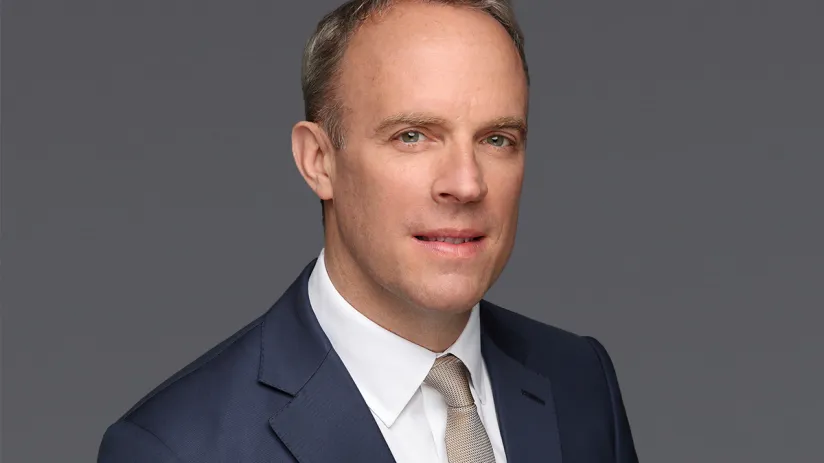
The former deputy prime minister and foreign secretary will be advising Kreab global clients on defence and intelligence-related issues, as well as international geopolitics and Westminster issues.
In her bestselling book, Sarah Vine reinvented the political wife memoir. Soon out in paperback, Melanie McDonagh sat down with the ex-wife of Michael Gove to discuss the
As CEO of Inline Policy, Shomik Panda combines political insight with commercial understanding. Selected as a Mace Top 100 lobbyist, expertise includes where digital technology intersects with travel,
After running Sky, Andrew Griffiths become a high flying MP who rose through the Johnson and Sunak governments. In his Mace profile, the Shadow Secretary for Business and