"International Women's Day", Foreign and Commonwealth Office. CC BY 2.0
Sylvie Bermann was France’s ambassador to the United Kingdom from 2014 to 2017, the first woman to hold the role.
Sylvie Bermann is a career diplomat who was France’s ambassador to the United Kingdom from 2014 to 2017, the first woman to hold the role. Earlier this year she published a book, Goodbye Britannia, in which she examines British identity and the reasons for Brexit.
When Sylvie Bermann was appointed French ambassador to the Court of St James in 2014, the first French woman to be so, numerous Brits warned her that the UK would be a tad “boring” compared to her previous posting in China.
“I did not expect then to witness a revolution or live through a historic moment,” the diplomat of 40 years writes
in her latest book, Goodbye Britannia, about Brexit.
Bermann, who now chairs the prestigious Institute of Advanced Studies in National Defence in Paris, pulls no punches in her book’s damning critique of Britain’s decision to leave the EU. She presents the UK’s exit from the EU as an irrational pursuit of an ideological goal, rooted in a mythologised sense of British superiority, in part underpinned by an enduring belief in the empire. and offers a crushing prognosis about the prospects of post- Brexit Britain.
Beginning her ambassadorship in the last weeks of one referendum campaign (Scotland’s indyref), Bermann’s time as France’s top representative in the UK spanned three tumultuous years of British politics, including two elections and the build-up and aftermath of Brexit.
She had long loved Britain since her first visit there as a teenager on a school trip. And when she returned as ambassador, after a sparkling career which took her from China to Russia and back again via various directorates at the UN and the EU’s political and security committee, she fell in love with its capital.
When Bermann arrived in London, she tells me, she found a vibrant cultural and arts scene, a new and exciting architecture, and a thriving commercial hub that told of a city “totally at peace with its modernity”. “London,” she explains, “was the perfect incarnation of happy globalisation,” unlike France, “which had never been so liberal.”
Reading Goodbye Britannia, it does come across as rather a Londoner’s view of Britain – the best of the country is the best of the metropole.
Fully aware of her seat in the heart of London at France’s embassy in Knightsbridge, Bermann admits that she never got to meet the people proper.
Though the pro-Brexit voices she found were few and far between, with the mayors and other “responsables” that she met across the country largely in favour of remain, she was struck by the ideological arguments that she did hear. They boiled down to: “S what if we are poorer, at least we’ll be free."
Bermann’s striking description of Brexit as “unleashing demons, legitimising xenophobia and racism”, twinned with a rejection of an elite, in Goodbye Britannia hammers home a categorical take on the motivation for the movement.
“It was always about identity," she said. There were no “rational” grounds for it otherwise.
Amid a flurry of British cultural references in Goodbye Britannia, Bermann singles out Our Island Story for its explanation of British exceptionalism. Having not come across it herself, Bermann tells me, it was her British friends who told her to read it.
“You will understand everything,” they said – the sense of British exceptionalism and superiority and all the accompanying mythology.
The “we liberated you” jibes of the post-war years, the accusation of European cowardice and Germany’s use of the EU (sometimes known as, Bermann observes, the “fourth Reich”) to do what it had failed to do in two world wars.
And it was this mythology of Britain’s 20th century that allowed the UK to say tatty- bye to the EU.
The “clearly xenophobic” Nigel Farage and the populists, she asserts, were fearful of “the migration of peoples of colour” and linking the EU to the migration debate, while “it had nothing to do with it”. The confusion about the EU’s role was “deliberately maintained” by populists like Farage, she says.
And Vote Leave?
Before she can answer, her cat struts into view on our Zoom call. Quite clearly piqued by the subject, it (I didn’t catch the name) parked itself on her keyboard staring with cocked head into the camera, before leaping to the floor.
“Take back control, but take back control of what?” she asks.
“This whole anti- European debate [put forward by Brexiters], I think, is a rather distorted illusion of their country.” Though Boris Johnson, she believes, only made the choice to support leave as a means of positioning himself as Cameron’s successor – his support for the campaign and his borderline celebrity status made the vote acceptable to the public. His “incredible ability” to attract adulation is such that he is a celeb even to those who couldn’t stand him.
“On one occasion,” she explained, “I was talking to one of our ministers about how everybody was angry with Boris because of everything to do with Brexit, but when he came to Brussels everyone wanted to have a photo w...
Subscribe to The Mace
Join the member community shaping British politics and stay ahead of
what's really happening in the world of politics and public affairs,
with expert analysis, breaking news, and insider insights from
Westminster and Brussels. The Mace is the leading news source and
resource for the government affairs industry, offering required
reading and lobby intelligence for professionals.
To see what you are missing out on by not subscribing to The Mace, click here to download our full membership info-pack. This includes
having no paywall on op-ed content or profiles/interviews, allowing
professional profiles to be read with maximum impact and visibility by
government, special advisers, MPs, peers, civil servants, and policy
and political decision-makers.
Meta agrees to overhaul its EU ad model, offering clearer data-sharing choices for users after regulators ruled its previous system breached competition rules.
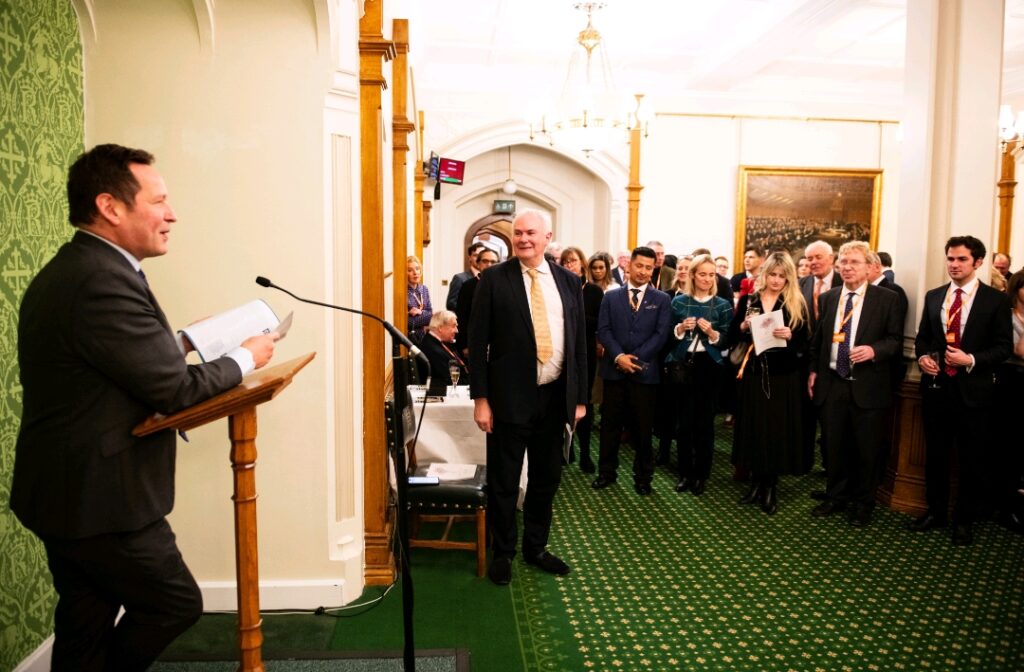
MACE marked its 5th anniversary with a high-profile Commons reception of politicians, diplomats, media figures and lobbyists, launching its influencers report
From self-lacerating memoir to by-election madness and a Labour Together takedown, The Mace’s literary editor Christopher Silvester rounds up the latest political books.
From self-lacerating memoir to by-election madness and a Labour Together takedown, The Mace’s literary editor Christopher Silvester rounds up the latest political books.
Three former Conservative MPs, including ex-deputy chair Jonathan Gullis, defect to Reform UK as the party capitalises on Tory unrest and declining support.
The government plans to end most taxi travel for asylum seekers attending medical appointments, replacing it with public transport and tightening Home Office oversight.
The resignation of Andriy Yermak after anti-corruption raids disrupts Ukraine’s leadership and triggers uncertainty across Europe during a critical phase of the war.
After weeks of tax rumour and expectation-setting, the 26 November Budget landed as a welfare-first package that lifts the benefits cap but tightens the screw on household incomes,