Brussels Opens EU Arctic Policy Review With Public Consultation
The European Commission launches a public consultation to update EU Arctic policy amid climate pressures and rising geopolitical stakes.



Despite the new 5% VAT tax break for holiday attractions, tourism trade body leaders are speaking out about how government policies may not help the sector.
English Tourism Week was overshadowed by proposed legislation for tourism tax that is proving highly unpopular with tourism trade bodies. Now it has made it into the King’s Speech for the next parliamentary session, it will allow mayoral authorities in such Labour controlled mayoral cities as Manchester, Liverpool and London to add a 5% ‘overnight visitor levy’ on stays in the UK.
Tourism trade associations failed to de-rail the measures despite a vocal fight. Ben Spier, director of public affairs at the Association of Self-Caterers and head of regulation and policy at Forge Holidays told The Mace: ‘Tourism provides accessible, flexible and meritocratic jobs often in areas with few other economic drivers, perfect for lowering the welfare burden’.
The industry is now pushing back with trade body leaders such as Spier noting that the government has previously backtracked on measures that would likely damage any growth prospects in the sector. He cites an example of industry advocacy when back in 2025, the Government launched consultations proposing that a minimum EPC rating of C could apply to holiday lets. By engaging with ministers, MPs, members of the Energy Security and Net Zero select committee, the press and the tourism sector through an iParl which led to 20+ Parliamentary questions, Spier and other industry figures succeeded in setting out why a minimum rating was unnecessary and potentially damaging.
‘To receive the news in January this year that the government wouldn’t proceed was a big relief to the sector as the measure would have required thousands to be spent by micro-businesses for very little environmental benefit when those businesses are already heavily incentivised to operate as energy efficiently as possible’ says Spier.
Trade bodies in the tourism sector will be hoping that as we enter Tourism Week, the government might also re-think the tourism tax by not putting it into the King’s Speech. Both the Tories and Reform are opposed to the tourism tax with Labour and the Lib Dems support the controversial policy.
Part of the problem with the UK’s £140 billion tourism industry is that the challenges are split across various ministerial portfolios – DCMS, Employment, Business and Trade, DEFRA – which means issues often do not have a single minister taking responsibility at the top seat of government.
The lack of pro-growth help that the UK tourism sector is receiving is also at odds with the government’s own Visitor Economy Growth Strategy which aims to welcome 50 million international visitors annually by 2030, supported by a 40% business rate relief for tourism businesses. The plan focuses on boosting investment, enhancing the visitor experience, supporting local destinations through Local Visitor Economy Partnerships (LVEPs), and driving year-round, sustainable growth across the UK.
‘There’s too much ‘scatter gun’ thinking’ a former Tourism Alliance Director said in an interview. ‘Tourism is much bigger than both the automative and pharmaceutical industries but we are given little support. Tourism could be contributing so much more to the economy’.
The current head of the Tourism Alliance, Eddy Leviten, agrees that the proposed new tourism tax is a ‘disappointment’ when government messaging had previously stated they had no intention to introduce anything. A senior trade body figure told The Mace: ‘We think there needs to be a lot more done by government. Tourism sits way down the list of priorities despite it making up over 5% of the economy, it could be as much as 7%, so it’s important that we are heard’.
David Sheen, head of public affairs at UK Hospitality, sent a strongly worded response paper to the government arguing that the proposed tax will produce negative growth, employment and investment outcomes; it will make England ‘less internationally competitive’; it is a ‘poor form of devolution’ that overlooks alternatives and worsens the cost-of-living crisis of the domestic population. It will also negatively affect domestic travellers as much as in-bound international visitors. ‘Business and events travel will be caught by this levy, hitting small businesses across construction, engineering, sales and many more’ the trade body wrote.
Hospitality is a major part of the UK economy, employing 3.5 million people, generating over £140 bn in economic activity and paying nearly £60 billion in taxation. Yet as a result of Government policy, hospitality employment levels have decreased over the last 18 months after successful growth, damaging Government’s employment targets, particularly among young people,’ added Sheen.
But with industry figures admitting privately that they do expect to see the levy in the King’s Speech, senior tourism industry figures are now trying to ‘make it the least bad policy’ for hospitality businesses, holiday makers, business travellers and the wider economy.
The key point being stressed by the industry in an attempt to get the government to row back are showing how the proposed ad-valorem (%) tax is ‘unworkable and opposed by the sector’ with a flat fee is preferable, with a tiered approach based on price, that is nationally capped and banded – to avoid being regressive.
In addition, says Sheen, there should be a consistent approach to this legislation across the country with the use of levy revenues should be limited ‘solely to the promotion of the visitor economy’ and levy payers should have significant input as to how they are spent. Admin costs should be minimal with no levy should be charged until at least 12 months after the decision has been formally ratified at mayoral level.
Another part of the problem is that ever since the success of the London Olympic Games tourism has been seen to be doing well enough on its own. But as historian and restauranteur Loyd Grossman warned when he was chair of the Heritage Alliance: ‘The Government might think we are doing OK despite the disproportionate cuts and a virulent fiscal policy. But laissez faire is not the answer. It takes positive measures by government to improve the operating environment so that the benefits of heritage – social, economic, educational and environmental – are realised by Government, communities and individuals’.
Alas, such sentiments still rings true of the much embattled tourism sector a decade later.
The European Commission launches a public consultation to update EU Arctic policy amid climate pressures and rising geopolitical stakes.
Virgin Atlantic opens a competitive pitch for its consumer PR account as the airline reassesses brand strategy and agency partnerships.
European legislators agree major reforms to medicines law, reshaping market exclusivity, boosting access, and tightening rules on shortages and antibiotics
Meta agrees to overhaul its EU ad model, offering clearer data-sharing choices for users after regulators ruled its previous system breached competition rules.

From self-lacerating memoir to by-election madness and a Labour Together takedown, The Mace’s literary editor Christopher Silvester rounds up the latest political books.
From self-lacerating memoir to by-election madness and a Labour Together takedown, The Mace’s literary editor Christopher Silvester rounds up the latest political books.

Beijing calls on London to publicly endorse One-China, signalling a push for strategic alignment as China confronts Tokyo over Taiwan.

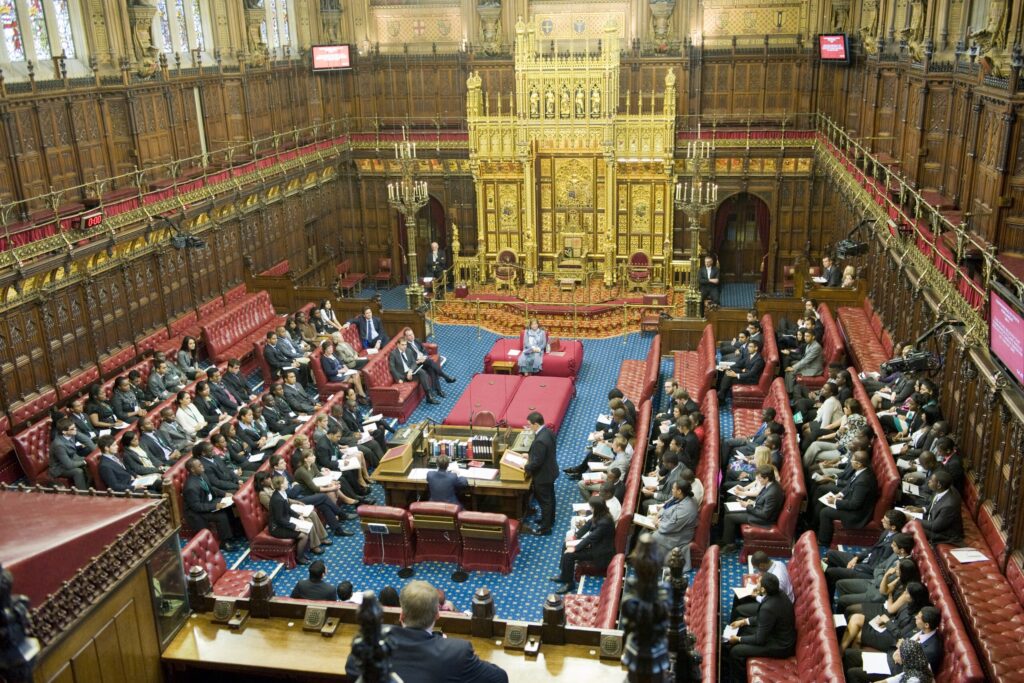
Two long-serving members of the House of Lords have been suspended after an official inquiry found they provided parliamentary services in return for commercial gain.
Mega‑mergers are surging in 2025, with Q3 deal values exceeding $1 trillion. Big names include Union Pacific’s $85 billion rail deal, Synopsys acquiring Ansys, and the creation of Paramount Skydance.

Labour‑aligned Resolution Foundation proposes shifting a 2p cut in employee National Insurance to income tax, targeting pensioners, landlords and self‑employed to raise £6bn. The plan aims to avoid