The question of money buying influence in politics is centuries old and not going away
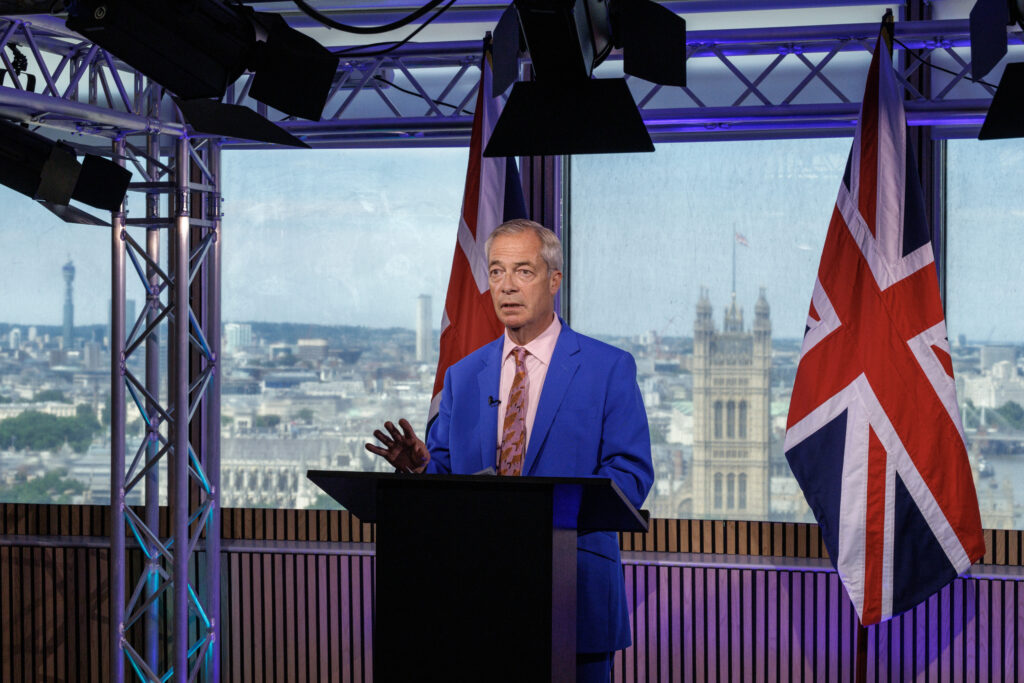
Just a week after Reform’s conference was overshadowed by a Channel 4 sting that focused unwanted attention on how the disruptor party is funded, Nigel Farage openly welcomed a record-breaking £72 million from two crypto-billionaires leading to a heated row about money and influence in UK politics. Angela Rayner, the Communities Secretary, said there should be an overhaul of UK law to prevent wealthy donors “buying their way into democracy” after the record gifts, over just two days, added a much-needed boost to Reform after a summer of troubles.
Reform have said they are not expecting anything in return, One of the donors, Ben Delo, has said his huge donation is a ‘philanthropic gift’ to the country which aims to “level’ the playing field, enabling the party to fight an election with a war chest that can fund a professional political machine that can hire a department of specialist policy wonks, a national team of constituency managers, as well as paying – legally – for the sort of critical digital polling data that – along with hiring veteran lobbyist Jim Messina as his campaign manager – helped Barack Obama win the White House in 2012.
Labour, looking rattled, is trying to derail the donations by introducing retrospective rules – at the House of Lords Committee stage of the Representation of the People Bill (seeking to put a backdated £100,000 cap on foreign donations) – that require any donor to have been resident in the UK for a year, as well as passing an ‘enhanced’ residency test (i.e they are doing everything possible to stop the money being legal).
The government previously itself rowed back on the idea of capping donations due to being bankrolled by the Trade Unions, leading to accusations of self-serving hypocrisy. Unite the Union has given £52 million to Labour since 2001.
“Speculation in Westminster has been mounting over an early election, so that Reform doesn’t have a chance to spend its new spoils”
Speculation in Westminster has been mounting over an early election, as early as the Spring 2027, so that Reform doesn’t have a chance to spend its new spoils. For some, indeed, Reform’s narrative now looks less like the People v the Establishment than the Super-Rich Crypto v Unions. Yet the idea that Burnham will go to the ballot box before he needs to seems unlikely, unless he is a very brave gambler, as the majority of his backbenchers – afraid of losing their £98,500 a year jobs and unemployment – will be urging him to stick it out until 2029.
The question of money buying influence in politics is centuries old and not going away. The Watergate Scandal of 1972 exposed a huge network of illegal, hushed corporate campaign contributions to Richard Nixon’s re-election campaign, showing how “secret money” was influencing the Democratic party’s executive branch.
At least, Reform’s £72 million windfall – if not blocked – is out in the open and fully transparent. Rewriting the donor rules retrospectively to block the money looks like Labour are running scared and regard the disrupter party as an existential threat. It would make a mockery of Burnham’s claim, in his first speech to the Commons as PM, that he wanted to “restore trust in politics”.