Martyr in the Cathedral

William Cash | 5th January 2021 | Comment, Magazine, Politics
Thomas Becket Canterbury Cathedral
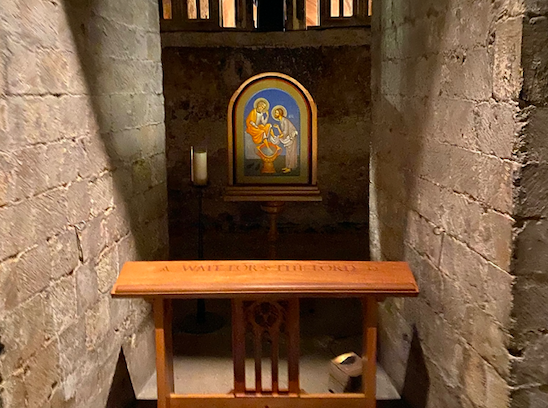
In Canterbury Cathedral crypt: the spot where Becket’s original shrine stood until 1220

Why Thomas Becket’s murder 850 years ago remains a cautionary tale for special advisers today, says William Cash

In a year of ‘special advisers’ falling on swords, the tale of Thomas Becket, martyred on 29th December 1170, can read like an overdramatized telling of Dominic Cummings resignation – sacrificing himself for his colleague, though comparing Lee Cain to Canon Law might be a bit of push. But the recent purge of Boris’s inner court at Downing Street reminded me how the wheel of political power and patronage is always turning – what medieval philosophers called the Rota Fortunae. I was reminded of how quickly the very closest to the king can be exiled from power by the recent 850th anniversary of the martyrdom of Thomas Becket. On 29th December I attended the evensong service in Canterbury cathedral to mark the 850th anniversary of his murder. , As every British schoolboy knows – or used to know – it was whilst celebrating Vespers on 29th December 1170, around 5.30 pm, that Archbishop Thomas a Becket was hacked to death by four knights loyal to Henry II in the north-west transept. Exactly 850 years to the hour that Becket’s head was left severed on the bloodied stone floor, I stood close to the very ‘Martyr’s Door’ (the door is the original) through which the knights had barged after Becket had ordered the doors to be opened, knowing full well the fate that awaited him. The dramatic events of that infamous night were to change British history with Becket canonised as a saint in 1173. His shrine at the Cathedral swiftly became one of the most popular pilgrimage destinations in Europe. Normally, on the 29th December, the Dean of Canterbury and the Archbishop of Canterbury lead a special candle-lit Evensong service in the packed cathedral, which stopped off  – like a passion play – at the various parts of the cathedral where the infamous events of Dec 1170 took place. But this 850th anniversary year, the congregation was reduced to perhaps 80 members of the public. In the Dean’s introduction to this ‘very significant act of worship’, which began ‘as darkness falls’, the Very Rev Robert Willis reminded the audience that it was because of Becket’s martyrdom that ‘a flowering of pilgrimage began’ to Canterbury. This year over 1000 events were planned to celebrate the double Becket 2020 anniversary, including the loan – from the papal church of Santa Maria Maggiore in Rome – of the blood-splattered ‘tunicle’ (vestment) worn by St Thomas Becket during his fateful last Vespers as archbishop. Alas, most were cancelled or postponed including the Thomas Becket: murder and making of a saint at the British Museum (this is now re-scheduled to open in April 2021). The evening atmosphere in the cathedral was less baroque than usual due to scaffolding and more sanitisers than candles and social distancing. T.S Eliot was given top billing in the service, with two readings from his play, Murder in the Cathedral, commissioned by the cathedral in 1935. No public singing. The Archbishop of Canterbury Justin Welby — the 105th — held a rather disappointing new-looking wooden crosier – I was expecting at least a few jewels. The highlight was some noisy banging on the original 12th-century oak doors of the Cathedral that Becket ordered to be opened. This came during a reading from Eliot’s Murder play: ‘Unbar the door! unbar the door!… We are not here to triumph by fighting…..Now is the triumph of the Cross…Open the door! I command it’. Here Eliot helps us to unlock the mystery as to why the Becket cult and his popular appeal as a saint have remained so powerful for 850 years. In short, his appeal is that Becket was no saint before becoming anointed as a priest. His conversion is that of a man who loves his hunting, his money and his status. His conversion is all too human. Becket’s murder – at the hands of four reportedly intoxicated knights, in full armour, claiming to be carrying out the wishes of Henry II – changed the course of history, and the events leading up to the killing remain one of the most debated episodes of the Middle Ages. Becket has had devotees but also enemies – such as Henry VIII, who destroyed Becket’s bones and the famous shrine which had done more than anything to spread Becket’s cult. But why does the world remain so obsessed with Becket, and what does his fall and martyrdom tell us about the unflinching nature of political power. In order to understand the Becket cult, it helps to remember his origins. He was born in London, the son of a middle-class draper: a relatively humble start, which has helped people relate to him. His career break was to get an early legal training in the curia of Theobald, archbishop of Canterbury, before studying law (and pleasure) in Bologna. He soon rose to being Henry II’s glamorous warrior chancellor – but when Theobald died, Henry decided that the Chancellor would be a suitable primate of the English Church. At this point, in a well-known twist, Becket resigns as Chancellor and “converts” to a new ascetic life, scourging himself and devoting hours to prayer. He starts wearing a ha...

Subscribe to The Mace

Join the member community shaping British politics and stay ahead of what's really happening in the world of politics and public affairs, with expert analysis, breaking news, and insider insights from Westminster and Brussels. The Mace is the leading news source and resource for the government affairs industry, offering required reading and lobby intelligence for professionals.

To see what you are missing out on by not subscribing to The Mace, click here to download our full membership info-pack. This includes having no paywall on op-ed content or profiles/interviews, allowing professional profiles to be read with maximum impact and visibility by government, special advisers, MPs, peers, civil servants, and policy and political decision-makers.

Racing the sunset: a pilgrim odyssey across a dying Europe

Mace | August 4, 2026

For 10 months, ex-army officer James Jeffrey trekked 3500 km across Europe by foot. The scale of migration he witnessed may not have been as dramatic as the

Leader in Public Affairs: Grace Pritchard, Downing Street Director of News and the Prime Minister’s Political Spokesperson

Mace | August 3, 2026

After heading the Makerfield by-election comms team, Grace Pritchard was singled out by Andy Burnham as being a key part of his northern campaign team. The self-styled 'Yorkshire

Dame Antonia’s key civil service reforms are ready to be supported by Whitehall, says Jonathan Freeman

Mace | August 1, 2026

The Civil Service is ready to support Dame Antonia Romeo's flagship changes to government machinery - notably relating to AI and devolution - under new prime minister Andy

Burnham is trying to fix Whitehall, but will the political machinery change?

Mace | July 30, 2026

Andy Burnham is shaking up government with more changes than by any incoming prime minister in memory. But, asks Sir Bernard Jenkin MP, does he understand why the

Experts warn more government support needed to help UK aviation meet net zero by 2050

Mace | July 30, 2026

UK aviation can decarbonise while meeting growth ambitions, but urgent government action is needed to prevent costs increasing for passengers and the sector losing its competitive edge.

Don’t rule out an early election as Burnham may see an opportunity to kick Reform, says Fred de Fossard

Fred de Fossard | July 28, 2026

With the new Prime minister championing policies which go beyond Labour’s very confined 2024 manifesto, an early election is not illogical.

Despite promises of radical change, Labour’s culture of ruling political families remains entrenched

Lucy Carrier-Pilkington | July 28, 2026

Andy Burnham's inner circle appears to perpetuate Labour's long-running culture of nepotism, and is doomed to cause frustration among backbenchers.

Kemi’s true blue purge, with help from Sir Philip May

William Cash | July 26, 2026

The news that former Home Secretary Sir Grant Shapps has failed to make the new Tory candidate list has put fear into dozens of former Conservative MPs. Whether

Why Burnham’s energy VAT cut will make a difference

Mace Magazine | July 25, 2026

Cameron Brown, a former special advisor to the Chancellor of the Exchequer, explains why Burnham's VAT cut on energy bills is a measure people will actually notice.

If Burnham wants growth, he must start by backing AI and Tech founders and risk-takers, says Liam Houghton

Mace | July 23, 2026

New Prime Minister Andy Burnham has an opportunity to make Britain the best place to start and scale a business, argues CEO Liam Houghton.