Markets seize up after unexpected 73 k jobs gain

Mace | 4th August 2025 | Policy & Think Tanks, Politics
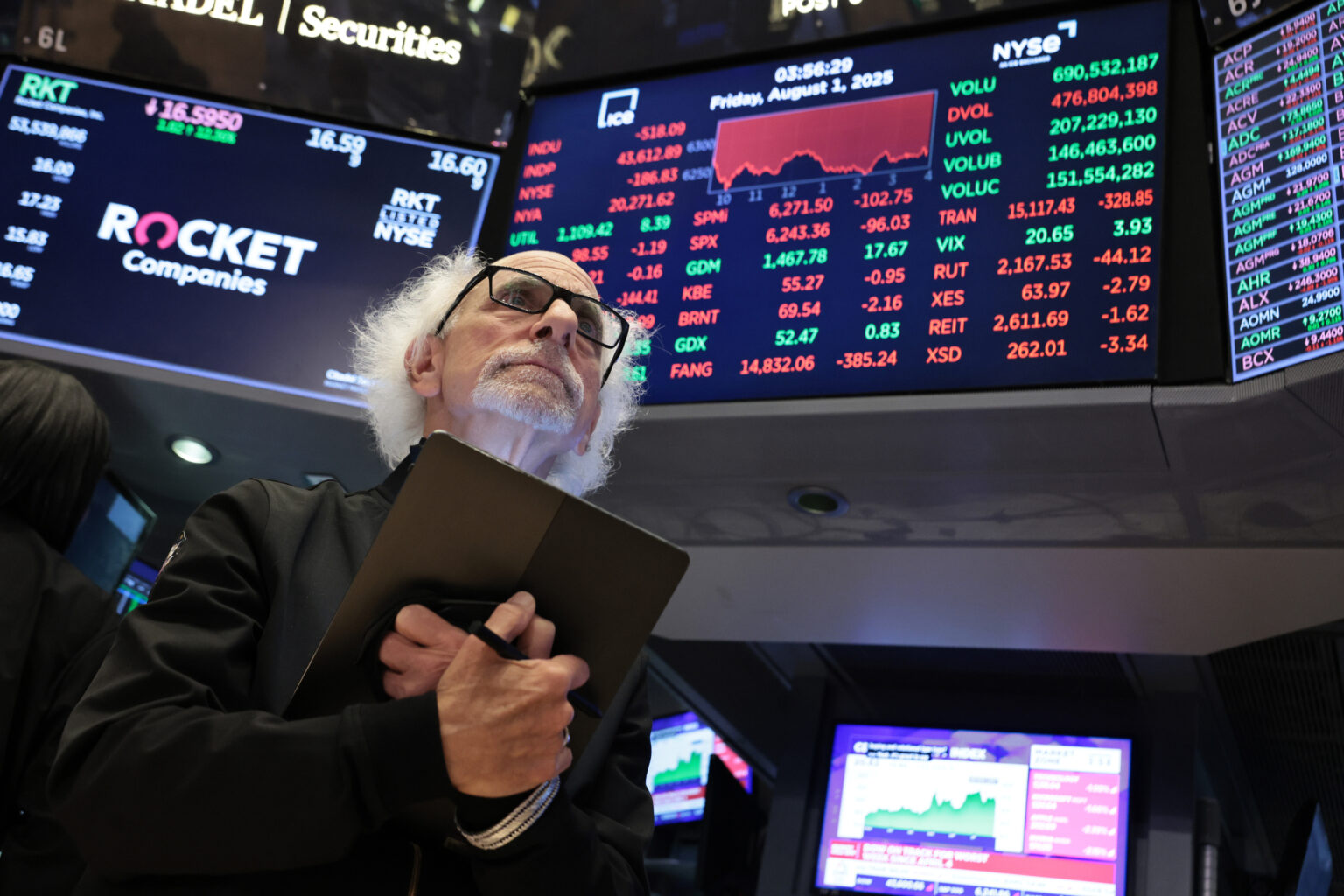
NEW YORK, NEW YORK - AUGUST 01: Traders work on the floor of the New York Stock Exchange during afternoon trading on August 01, 2025 in New York City. All three major stock indexes tumbled with the Dow Jones leading the way losing over 500 points amid signs of a weakening economy and U.S. President Donald Trump’s modified tariff rates. (Photo by Michael M. Santiago/Getty Images)

Markets plunge after weak jobs data and sharp downward revisions.

U.S. markets plunged after the July jobs report revealed only about 73,000 new payrolls and steep downward revisions to prior months’ data. Investors interpreted the weak figures and revised losses as a sign that inflation pressures might ease, but at the same time it stirred concerns over whether the Federal Reserve should hold rates longer or pivot sooner. The S&P 500 fell around 1.6 percent, the Nasdaq dropped over 2 percent, and the Dow suffered its worst weekly slide in months .  That report exposed revision losses totalling roughly 258,000 jobs from May and June, casting doubt on prior optimism about labour strength. The unemployment rate inched up from 4.1 percent to 4.2 percent and average wages continued edging higher, posing the risk of wage inflation even amid falling hiring. The Fed’s outlook suddenly appeared less straightforward.  Markets reacted with visceral speed. The S&P lost about 1.6 percent, the Nasdaq slumped more than 2 percent, and the Dow fell roughly 1.2 percent in a single session. The weekly performance marked the sharpest decline in months for the Dow, reflecting renewed volatility after a serene July . Investor concerns were amplified by political turbulence. President Trump abruptly fired the head of the Bureau of Labour Statistics, accusing her of manipulating data. The firing triggered fears about the credibility of official statistics and the Fed’s capacity to make policy on reliable metrics. Those anxieties lent extra momentum to the sell‑off . The drop in Treasury yields and the dollar accompanied equities’ slide as markets recalibrated expectations on Federal Reserve policy. Futures pricing shifted abruptly so that the likelihood of a September interest rate cut soared to as high as eighty per cent according to some models.  Concerns about trade policy also fed investor nerves. New tariffs announced by the administration further unsettled corporate outlooks and added to the sense of economic uncertainty. Those developments reinforced the notion that inflation risks may be structural and sticky even if hiring slows. By Monday markets attempted to recover some losses but remained fragile as sentiment continued to sway on incoming data and Fed commentary. The episode illustrated how quickly risk appetite can evaporate once confidence in labour resilience and data integrity is shaken. The broader context held additional cautionary signals. Economists noted this was the weakest three‑month job growth trend since the pandemic era. Average monthly payroll gains sank to just 35,000 jobs. Long‑term unemployment ticked up. Manufacturing and trade‑sensitive sectors showed signs of cooling. On the whole the data sparked debate about an impending recession or at least a slowdown strong enough to prompt early Fed action.  At the end of the week the markets had experienced their steepest decline in months across all major indices. Headlines emphasised the unexpected fragility of employment, serious downward revisions and growing investor pressure on the Fed to change course. That combination drove a volatile start to August after a calm record‑setting July. ...

Subscribe to The Mace

Join the member community shaping British politics and stay ahead of what's really happening in the world of politics and public affairs, with expert analysis, breaking news, and insider insights from Westminster and Brussels. The Mace is the leading news source and resource for the government affairs industry, offering required reading and lobby intelligence for professionals.

To see what you are missing out on by not subscribing to The Mace, click here to download our full membership info-pack. This includes having no paywall on op-ed content or profiles/interviews, allowing professional profiles to be read with maximum impact and visibility by government, special advisers, MPs, peers, civil servants, and policy and political decision-makers.

The Cummings Legacy Is Not What The Pundits Think

William Cash | November 14, 2020

As Dominic Cummings leaves Downing Street for the last time, William Cash notes that his legacy will extend far beyond his own disruption of Whitehall

Dominic Cummings Special

The 2017 Campaign Exposed the Real Theresa May

Benjamin Goodwin | October 8, 2020

May at 10, by Sir Anthony Seldon, reviewed by Benjamin Goodwin

Has Covid killed the party conference?

Marie Le Conte | October 6, 2020

Marie Le Conte

The Cummings Revolution – help or hindrance?

Ed Amory | October 6, 2020

Ed Amory

Recline and sprawl

Adam Solomons | January 16, 2020

Jacob Rees-Mogg’s languid pose on the Treasury bench launched a thousand memes on social media. Five observers interpret his body language for us.

Inside the Cummings Revolution

Adam Solomons | January 16, 2020

How much can Whitehall’s antiquated government offices learn from the Palo Alto tech giants?

Dominic Cummings Special

The Jackdaw: Staffers Had It Hardest

Marie Le Conte | January 16, 2020

Over the last year we’ve seen dozens of MPs switch parties or go independent. But how does such an unexpected move affect their hard-working staff?

Diary: Harry Potter Politics with Damian Collins

Damian Collins MP | January 15, 2020

Damian Collins remembers his election victory and rejoices at the new Commons term