Chris Law MP: From promise to practice: why global human rights commitments keep stalling
The international order has the tools required to protect people. What is lacks is the will to use them, writes Chris Law MP


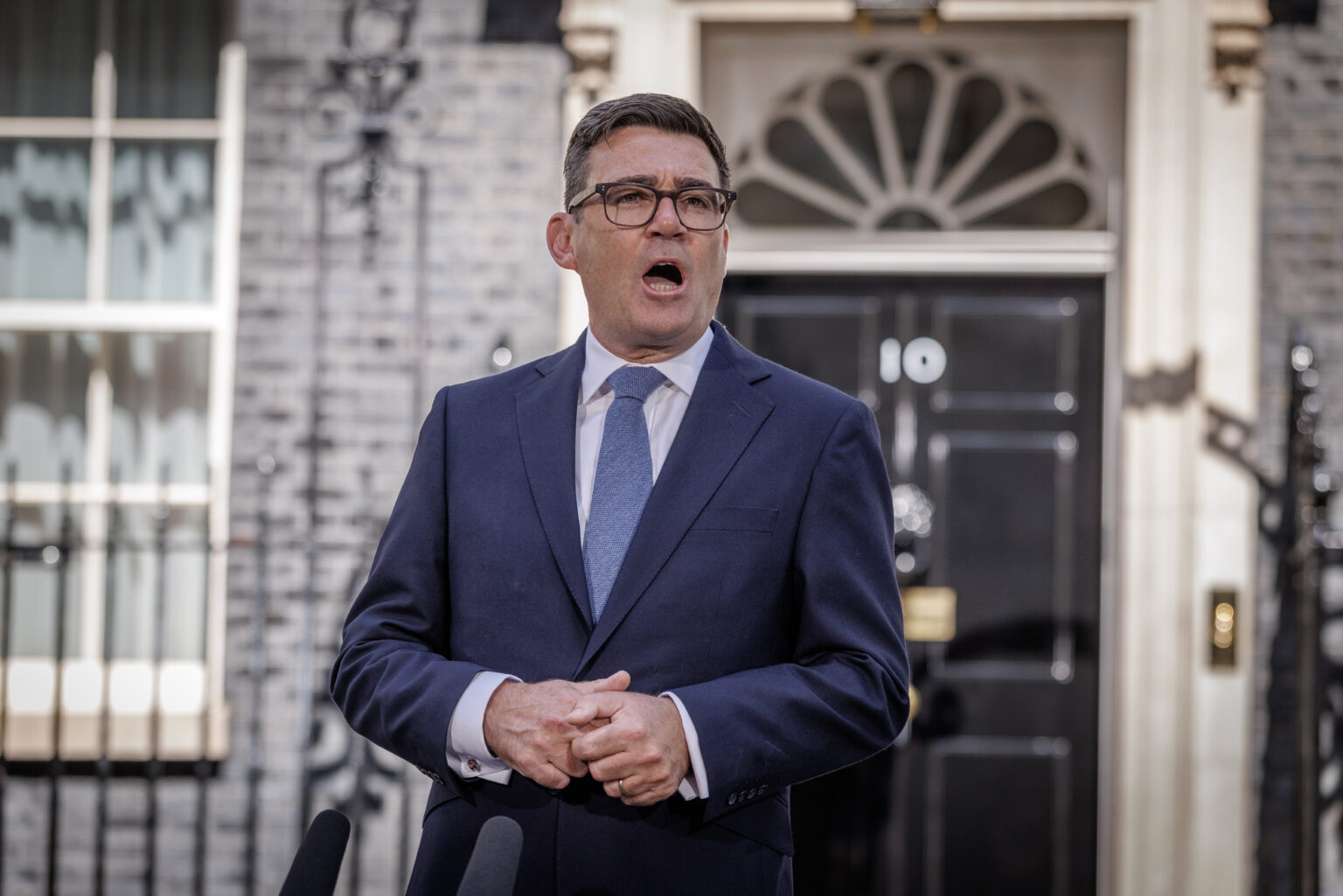
With the new Prime minister championing policies which go beyond Labour’s very confined 2024 manifesto, an early election is not illogical.
New Prime Minister Andy Burnham has arrived in office, bringing some of the summer’s sunshine with him. After a dour two years of Sir Keir Starmer and Rachel Reeves, Burnham has taken an optimistic approach to his return to government. While Manchesterism remains undefined beyond broad brush strokes around buses and devolution, the broad brushstrokes themselves strike the upbeat tone than many Labour MPs had hoped the Government might have struck since its election in 2024.
The contrast with last summer, when Labour was outflanked by Reform UK’s flurry of announcements on crime and immigration, couldn’t be starker. Last year, Reform had an irresistible momentum, and they took advantage of the summer lull to set the agenda for the rest of the year. This year, Reform are fighting troubles of their own, and the vacuum has been filled by the King of the North.
This has led to speculation that Burnham may go for an early election. There is some logic to this. He is promising a departure from his predecessor on policy which would go way beyond the confines of Labour’s very confined manifesto from 2024, and some see an opportunity to kick Reform UK when they are at their lowest ebb since the election, dipping in the opinion polls after riding high for some 16 months.
“His hopes of running the most radical government in 40 years seem more outlandish when one remembers the fundamentals facing the country.”
Speaking of departing on policies from the previous Prime Minister, one of his aides briefed the press that Burnham will “run towards problems” that other parties have neglected. This may explain his interest in trailing policies to fix social care funding, floating (but then withdrawing, more on that below) a Land Value Tax, welfare reform to get young people back into work, and significantly increasing defence spending. Each of these are tough nuts to crack individually, much harder to do halfway through a parliament with a fractious group of MPs and the same macroeconomic headwinds that faced his predecessor. His hopes of running the most radical government in 40 years seem more outlandish when one remembers the fundamentals facing the country.
Those fundamentals are painful. Britain’s fiscal situation is dire. Public spending and taxation have become zero-sum calculations between which groups of voters should lose out and which should gain. In the absence of healthy economic growth – and there is little sign of that coming based on the policies floated so far – this dynamic will remain. While Burnham’s Cabinet, drawn heavily from the north of England, may be keen to indulge in a bit of regional sectarianism and try and extract more money out of the south east, he will have to contend with a large cohort of southern Labour MPs who will see this as an attack on their constituents.
As hostilities in Iran ramp up once more, oil has risen to over $100 dollars a barrel and Britain’s precarious situation will worsen as the country remains exposed to high energy prices. Britain’s famous telescope at Jodrell Bank Observatory is the latest victim of spiralling energy costs. Many more businesses and institutions are going to find themselves contending with impossibly high energy costs, something which may worsen if the new energy secretary, Miattah Fanbulleh, continues her predecessor’s agenda.
Beneath the froth and the media excitement over the rapid opening of No10 North, it seems like Burnham’s government will offer more of the same but a bit worse. Burnham’s habit of casually rolling out policy briefings and flying kites to the media is already causing trouble. His team are all over the place when it comes to oil and gas, offering contradictory briefings are the North Sea, and the way that they floated replacing Council Tax and Stamp Duty with a Land Value Tax – only to drop it 12 hours later – is a perfect example of how not to do politics. That is a transformative tax policy which will change asset prices for millions of Britons. Many people will have put house purchases on hold following the briefings, only to be told that it isn’t happening.
A pattern is emerging with Burnham where his jolly, eager to please, public persona runs him into difficulty, followed by a quick U-turn. While he was elected Labour leader unopposed, he was appointed by a nervous group of MPs who have broken the taboo around ejecting a sitting Prime Minister. This is going to be the most important dynamic to watch over the next year or so, and especially when Chancellor John Healy delivers his first Budget in the autumn.
Labour MPs are in the driving seat. When Starmer asked them to vote for welfare cuts in summer 2025, rebels on the backbenches effectively killed Sir Keir’s government stone dead, leaving it to limp on for another year, achieving nothing. While Burnham may have won support from the left of the party by bringing back many of their favourites – Louise Haigh and Angela Rayner, notably – he does so while making enemies on the party’s right, and appointing an inexperienced Chief Whip, Annelise Midgely, who has only served two years in the Commons. Midgely’s letter to all Parliamentary Private Secretaries giving them permission to do greater broadcast media appearances is a sign of things to come: MPs are far more concerned about protecting their own positions and getting what they want out of the Government, instead of delivering a Prime Minister’s agenda.
“Underneath the pork scratchings and the bucket hats remains a precarious government facing trouble from all angles”
Underneath the pork scratchings and the bucket hats remains a precarious government facing trouble from all angles. Burnham has been propelled from the comfortable world of Manchester politics, with no scrutiny and no meaningful opposition, to the cauldron of No.10. The task ahead is massive, and it seems that neither he, his advisers, nor his MPs have yet worked out their path through the storm.
Fred de Fossard is Director of Strategy at the Prosperity Institute and a Mace columnist
The international order has the tools required to protect people. What is lacks is the will to use them, writes Chris Law MP
As the use of artificial intelligence becomes more widespread, the government must do more to support small businesses with AI adoption, writes Polly Dhaliwal

Whilst it may seem easy to cast generalisations over Labour MPs, the reality is that most networks date back decades, writes Mark Leftly

The funding gap is real, but it isn't a shortage of money. It's a shortage of accountability for not deploying it, writes Sarah Mackintosh.

Despite being criticised by some as a costly endeavour, net zero presents a clear opportunity for Wales to benefit, writes Ben Burggraaf
Neither Oxford, Cambridge, UCL or KCL find themselves in the top 10 for the 2025 English Social Mobility Index, and Oliver Dean explores why

Following from Eastern Sunday, religion - and particularly Christianity - seems to be regaining relevance in the British political scene. But will it transform British politics as we

Despite the competitiveness of the elite civil service fast stream, Lucy Carrier-Pilkington warns that it is turning away those with real talent.

Despite contributing significantly to the UK economy, Sophie Brownlee argues that the nightlife economy has been forgotten for too long.

As war in Iran shocks global oil prices, trade bodies argue that the UK should recognise the importance of renewable energy sources - and begin investing in them.
