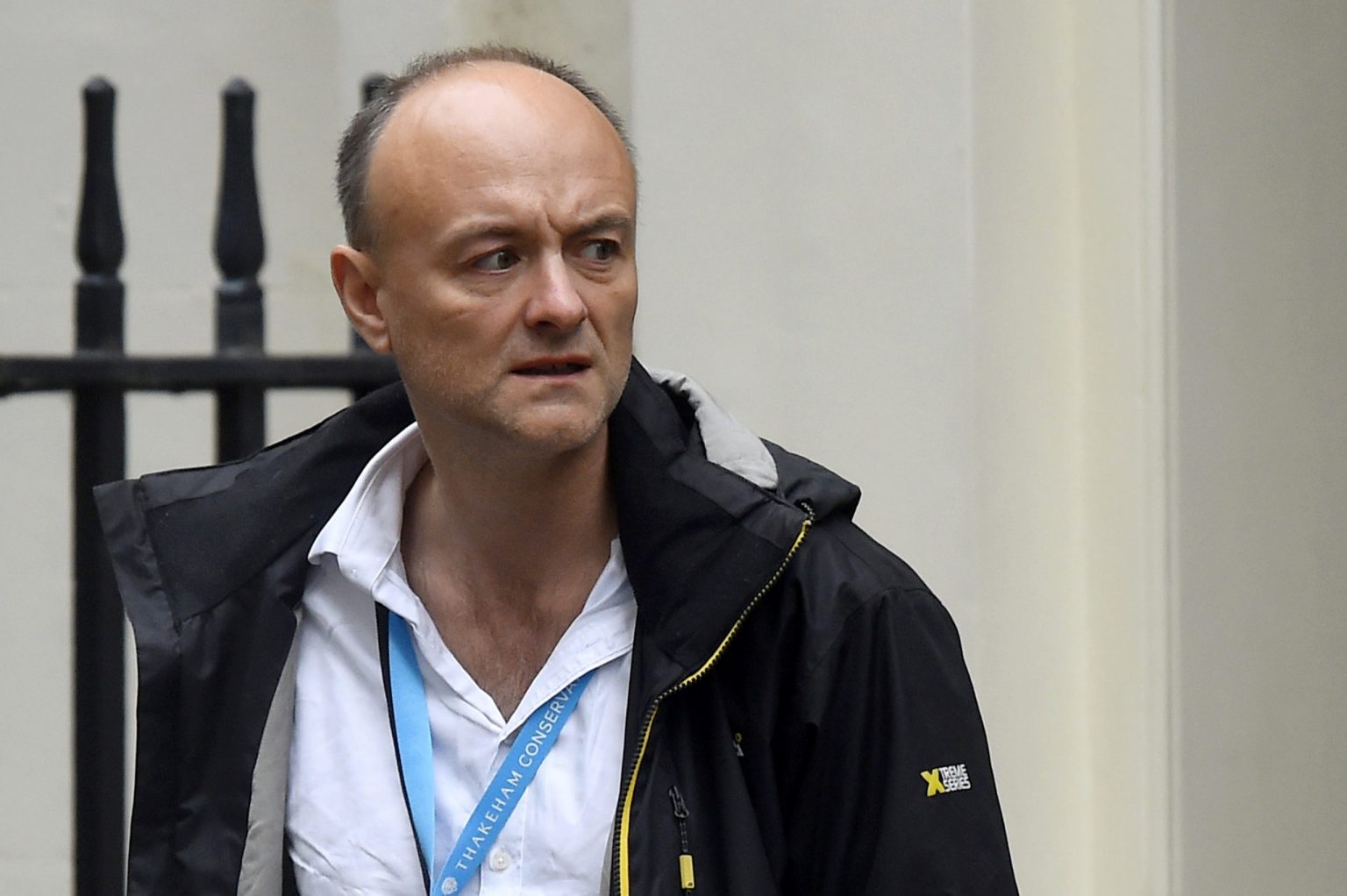
Special Adviser Dominic Cummings leaves 10 Downing Street leaves with British Prime Minister Boris Johnson on October 3, 2019. (Photo by Peter Summers/Getty Images)
How much can Whitehall’s antiquated government offices learn from the Palo Alto tech giants?
During the election campaign Dominic Cummings seemed a remote figure, and now we know why: he was plotting widespread Whitehall reform. In his cri-de-coeur blogpost of 2nd January 2020, Cummings issued a job spec designed to attract unconventional thinkers. Echoing start-up language, he talked of the need for unusual economists, unusual data scientists and “super-talented weirdos”.
It’s something he’s been thinking about for a long while. In 2014, Cummings wrote in another blogpost: “The biggest contrast in personality type and outlook of relevance to politics is not between ‘business’ and ‘politics/civil service’ … [but] between ‘bureaucrats’ and venture capitalists, start-up entrepreneurs and small businesspeople (‘start-ups’ for short).” There is little doubt about which camp Cummings inclines towards.
The idea that Whitehall should learn from business isn’t new. Steve Hilton, former director of strategy to David Cameron, also made northern California his political Mecca, but failed to revolutionise Whitehall during his two years in Downing Street. But will Cummings fare any better at instituting the technical innovation he regards as long overdue?
Plenty of people think Westminster could learn a lot from Britain’s start-up culture. Hayley Smith, head of marketing agency Boxed Out PR, has worked with government task forces in the departments of education and international development. “Start-up businesses are fantastic at adapting and problem-solving, and answering their customers’ demands,” she says. “Politicians need to learn to adapt to changing markets and break away from policies and ideals that no longer suit the public,”
Her view reflects the complexity of the challenges society faces. Simon Paine, who runs the online business school PopUp, says: “Our best hope of solving the most pressing social, economic and environmental challenges is the entrepreneur who is prepared to take risks, act with transparency and create value in the most responsible way.”
Even so, Paine acknowledges that politics will always have a problematic relationship with the business world’s value-creation model. “The success of anything is built on trust: people buy products and services if they know, like or trust the seller. The very nature of politics is that trust is in short supply.”
One institution that seems to have been paying attention to the tech world is the NHS – driven by a particularly tech-oriented secretary of state in the shape of Matt Hancock. The health service’s Long Term Plan includes ambitions to streamline technology throughout the organisation, making information more accessible to patients and health professionals alike. By 2020/2021, the NHS wants patient access to their plans possible via the NHS App, which is already used to gather patient records and access NHS 111 in 95 per cent of GP practices. In the next five years, the NHS hopes patients will be able to reap the benefits of its “digital-first primary care offer”.
The government projects that by 2024 every NHS patient in England will be able to opt for an online or telephone consultation rather than an in-person appointment. Over the course of a year, there are 307 million consultations at GP surgeries in England; online or phone consultations are expected to provide what the NHS hopes will be “fast access to convenient primary care”.
This isn’t vintage Cummings by any means, but it does go some way towards the sort of anti-bureaucratic reforms he has long advocated. In the same blog post from five years ago, Cummings wrote that Westminster is populated largely by politicians and civil servants “with degrees that reward verbal fluency, some fragments of philosophy, little knowledge of maths or science, and confidence in a sort of arrogant bluffing combined with ignorance about how to get anything done.” Describing this toxic combination as “arrogant incompetence”, he concluded: “They think they are prepared to ‘run the country’ but many cannot run their own diaries.”
Another department attempting to learn from the Cummings playbook is the Department for International Trade (DIT), which at just three years old is the youngest of the major Whitehall departments. Permanent Secretary Antonia Romeo has been keen to stress that her department is doing things differently. A DIT spokesperson tells Mace that DIT’s sole focus – signing continuity agreements and, eventually, new trade deals – will drive everything it seeks to do. “Created to deliver against this ambition, [DIT] has brought together support for trade and investment with trade policy and finance. Through this merger we have realised a dividend: the ability, within a single department, to deal with UK and global firms and investors, and develop international economic policies that lead to real exports, creating real jobs and lower prices for consumers.”
That sounds businessy enough, but it’s close to the kind of wordy memo Cummings criticises in his blogpost. However, the department also po...
Subscribe to The Mace
Join the member community shaping British politics and stay ahead of
what's really happening in the world of politics and public affairs,
with expert analysis, breaking news, and insider insights from
Westminster and Brussels. The Mace is the leading news source and
resource for the government affairs industry, offering required
reading and lobby intelligence for professionals.
To see what you are missing out on by not subscribing to The Mace, click here to download our full membership info-pack. This includes
having no paywall on op-ed content or profiles/interviews, allowing
professional profiles to be read with maximum impact and visibility by
government, special advisers, MPs, peers, civil servants, and policy
and political decision-makers.
Fresh from writing an account of Theresa May’s time in Downing Street, the historian finds time to talk about the state of the nation – and other matters.