Robert Jenrick joins UK tourism trade bodies in hitting out at Holiday Tax
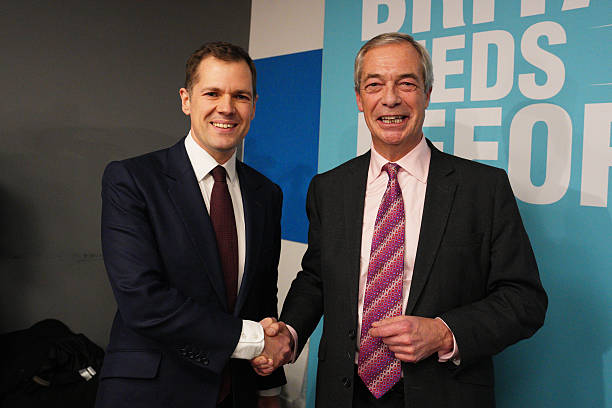
Robert Jenrick, Reform's Shadow Chancellor, used the Bank Holiday to make clear that his party would not be introducing a tourism tax.

The Burnham administration has unveiled an ambitious new vision for Britain's school system. Mace asks leaders across the education sector for their verdict.
Education Secretary Lucy Powell has stated that forcing schools to prioritise academic learning has led to a million young people not in formal study, training or work – a growing group of youths known as NEETs. Powell said that schools are stuck in a ‘straitjacket’ of academic subjects and it has resulted in millions of children being “branded a failure again and again”.
She is looking to undo the education reforms of Michael Gove, now Lord Gove, and make changes to the curriculum as proposed in a review by Professor Becky Francis. One of the recommendations from Francis is that teenagers should take fewer GCSE exams because of fears they are overly stressed and being taught the test rather than understanding the subjects.
The education secretary wrote in an article for The Times: “We can no longer ignore that too many [children] get left behind or are turned off by an education system that’s become too single-minded.
“Nor can we ignore the modern economy, or societal demands to take a fresh look at what we are teaching our children and whether we are equipping them for their life ahead.
“The one-size-fits-all approach simply doesn’t suit all children.”
“The one-size-fits-all approach simply doesn’t suit all children. For some it’s become a straitjacket. A straitjacket that has left too many being branded a failure — again and again — instead of being able to realise their potential.”
The Mace spoke to industry leaders about their thoughts on the proposed reforms.
Pepe Di’Iasio, General Secretary of the Association of School and College Leaders (ASCL)
The ASCL is a leading professional association and trade union in the UK, representing more than 25,000 headteachers, principles, CEOs of multi-academy trusts and other senior educational leaders.
Di’Iasio said: “The government has rightly identified that there is a real issue with the number of young people not in education, employment and training, and we share the ambition of establishing parity between academic and vocational routes.
“What we now need is the detail of how exactly this is going to be achieved, and how the new technical pathways will work in practice. Schools and colleges will need support in getting to a point where they can offer a full range of vocational qualifications, including with staff training and strengthening links with employers. School and college leaders will also need clarity with where this fits in alongside the reforms already in progress, including the curriculum and assessment review.
“There is already a huge burden on the education workforce, and the fact that there has been no new investment announced alongside this policy is something of a concern. There is a limit to what schools and colleges can do with the time and resources available to them.”
Jon Richards, Assistant General Secretary UNISON
UNISON is the largest trade union in the United Kingdom with more than 1.3 million members. It represents workers who provide public services, including people in schools and colleges.
Richards said: “Giving technical education the recognition it deserves is a sensible approach to extend the options available. To deliver these reforms ministers will need to invest in staff, equipment and facilities.
“It’s not just about the teachers and lecturers required for high-quality education. Skilled, specialist support staff including technicians are essential too. Recruiting, retaining and developing that workforce will be crucial if schools and colleges are to offer the opportunities proposed.
“It’s also crucial to give all young people a high standard of careers advice to make informed choices if these opportunities are to be seized.”
Matt Wrack, General Secretary, National Association of Schoolmasters Union of Women Teachers (NASUWT)
NASUWT is a major trade union representing teachers and headteachers across the United Kingdom. It has around 300,000 members and operates across all education sectors from early years to further education.
Wrack said: “At the time we raised significant concern about the approach taken by Michael Gove when he was Secretary of State. Along with the changes he ushered in on the curriculum, his time in office was characterised by austerity, cuts to teachers pay and a huge drive to spread academisation.
“We have long-standing concerns about the lack of breadth and balance in the current curriculum and how well the current curriculum offer meets the needs and aspirations of all young people. However, any changes to the structure of the current curriculum must be developed in close consultation with teachers and school leaders and must be rooted in the current realities facing schools.
“Currently, schools are under significant and increasing financial pressure. They are being asked to do even more with even less. No successful and sustainable package of change is deliverable in such circumstances and the Government must take action to invest in education in order for its plans to succeed.
“Any plans must also cohere with wider changes already in train, including those to the system for supporting children and young people with SEND and changes to inspection. The pending consultation on curriculum reform will be based on a government commissioned review that did not take account of the points that the current Secretary of State now raises. In many important respects, the review recommended that the former government’s curriculum should be left largely untouched. The key principles on which the current curriculum were based were not challenged by the review.
“There is, therefore, a risk that there will be a serious disconnect between the stated ambitions of the new Secretary of State and Prime Minister on the curriculum and the proposals that the government is planning to put out for consultation.”
Paul Whiteman, General Secretary National Association of Head Teachers (NAHT)
NAHT is is a professional trade union and association representing more than 38,000 education leaders in England, Wales, and Northern Ireland.
Whiteman said: “NAHT has long called for vocational and technical, as well as academic pathways, to have a place in a broader, more balanced curriculum.
“All young people across the country should have a genuine opportunity to pursue options which reflect their differing strengths, interests and future aspirations.
“We were pleased that this was backed by last year’s curriculum and assessment review and is now being taken forward by the government through measures including scrapping the Ebacc performance measure, which restricted student choice, and the new proposals announced by the Prime Minister last week.
“We support the principle behind the plans to offer 14-year-olds early access to technical education, skills training, work experience, and connections with employers. However, they must be developed carefully with the profession, and schools need much greater clarity about what they mean in terms of practice and funding.”
Daniel Kebede, General Secretary of the National Education Union (NEU)
The NEU is the largest education union in Europe, representing over 480,000 teachers, lecturers, support staff, and school leaders across state and independent schools and colleges.
Kebede said in an X post: “Lucy Powell is right to recognise that the one-size-fits-all approach to education has failed too many children and young people. And that we must undo Michael Gove’s legacy.
“For 14 years, the Gove vision for education damaged our school system. It brought us high-stakes terminal exams that measure stress rather than ability, an academy model that privatised public education without accountability, chronic underfunding, and an unmanageable workloads that pushed thousands of brilliant educators out of the profession.
“But acknowledging the problem is only the first step. If we are to break with the failed policies of the past, ambition is needed. That means properly funding our schools, investing in SEND, ending the culture of high-stakes testing, replacing Ofsted with a fair and supportive system of school improvement, and restoring teacher pay and conditions so we can recruit and retain the educators every child deserves. Our education system should nurture every child’s talents, not force them into a narrow definition of success.
“So it is welcome Lucy Powell recognises that change is needed. But the government must match its words with the bold reforms and investment our schools, colleges, educators and young people have been waiting for.”
Robert Jenrick, Reform's Shadow Chancellor, used the Bank Holiday to make clear that his party would not be introducing a tourism tax.
As the Charity for Civil Servants marks its 140th anniversary, Neil Woollard argues that the officials who keep Britain functioning are too often caricatured, underpaid and overlooked —
As war in Iran shocks global oil prices, trade bodies argue that the UK should recognise the importance of renewable energy sources - and begin investing in them.

Properties which are susceptible to floods could become unsellable, unless the government changes course, warns UKSIF

Year on year, the UK becomes more dependent on liquefied natural gas, but North Sea investment could change this, OEUK argues.

As Chief Executive of CIPR, Alastair McCapra is both a public affairs industry leader and also one of its more persistent critics. In his Mace profile, subjects range

As the war in Iran continues, Energy UK warns that bills will continue to rise.

Following a report from the UK Covid Inquiry, care providers have expressed their anger over the government's mismanagement of the pandemic.

With English Tourism week running until 23rd March, Ben Spier speaks out about the new tourist levy and the impact of increasing taxation and regulation on tourism.

The International Energy Agency, amongst other organisations, have warned of the knock-on effects of the conflict in the Middle East.
