How to programme the future

Karlo Ressler | 10th January 2022 | Comment
markus-spiske-iar-afB0QQw-unsplash

Modern technologies could make the world a better place - or they could do the exact opposite

Ours is an era of new possibilities, but also new dangers. The fourth industrial revolution means the potential for human rights violations are now greater than ever before. And nowhere are the pros and cons of society’s digital transformation more vivid than in the fierce debate on artificial intelligence regulation that’s rocking the European Union.

When IRL doesn’t quite translate

AI will alter the world radically: it’s so omnipresent that we’re often oblivious to it. Anything that touches our lives so dramatically needs to be regulated. As tech is being designed, the rules that govern it are being written. In the EU, a founding principle guiding rule writing is that nothing should be permitted in the digital world that’s not permitted in the real world. Although this is an uncontroversial principle, in practice it is impossible to directly translate laws that have been designed for the physical world.

It’s a balancing act

Regulators must ask themselves two questions. First, does the new technology violate any  fundamental human rights? Second, does the regulatory framework hamper Europe’s potential to innovate? There is a genuine risk of over-regulation, which would undermine innovation and competitiveness, and the whole continent would lose out in the long term. Yet under-regulation would endanger consumer rights. Clearly, a balance must be struck.

The back of the pack

A …

Subscribe to The Mace

Join the member community shaping British politics and stay ahead of what's really happening in the world of politics and public affairs, with expert analysis, breaking news, and insider insights from Westminster and Brussels. The Mace is the leading news source and resource for the government affairs industry, offering required reading and lobby intelligence for professionals.

To see what you are missing out on by not subscribing to The Mace, click here to download our full membership info-pack. This includes having no paywall on op-ed content or profiles/interviews, allowing professional profiles to be read with maximum impact and visibility by government, special advisers, MPs, peers, civil servants, and policy and political decision-makers.


UK’s £4.7 billion Defence black hole: Dan Jarvis is inheriting a defence settlement Britain can no longer afford

Mace Magazine | July 1, 2026

Britain cannot afford to fall behind its NATO allies on defence spending, writes Jasset Harlech.

CPAC GB 2026: “Save Britain, save the West” 

Mace | June 30, 2026

Introducing the inaugural Conservative Political Action Conference (CPAC) on British soil, a landmark expansion of the world's premier conservative networking brand.  
Merkel’s Legacy is in Tatters

Azeem Ibrahim OBE | June 30, 2026

How Angela Merkel Weakened the West and Handed Putin and Xi Leverage

Defence spending controversy aside, the UK cannot turn up to NATO empty-handed 

Lucy Carrier-Pilkington | June 25, 2026

Labour psychodrama is simply not as important as the UK’s diplomatic commitment to its NATO allies.

The UK’s unwritten constitution: There are no real rules

Mark Leftly | June 23, 2026

The timing and in what circumstances a leader should stay or go are in flux, argues Mark Leftly.

Britain is drifting towards Italian-style instability — it is time to learn from America 

Lucy Carrier-Pilkington | June 23, 2026

Love or hate the current American administration, at least they have a consistent electoral cycle where the choice of the electorate is upheld.  

Burnham’s popularity bubble is doomed to pop  

Lucy Carrier-Pilkington | June 23, 2026

Andy Burnham wants an immediate coronation, but life in Westminster would quickly expose the limits of popular appeal built from a safe distance. 
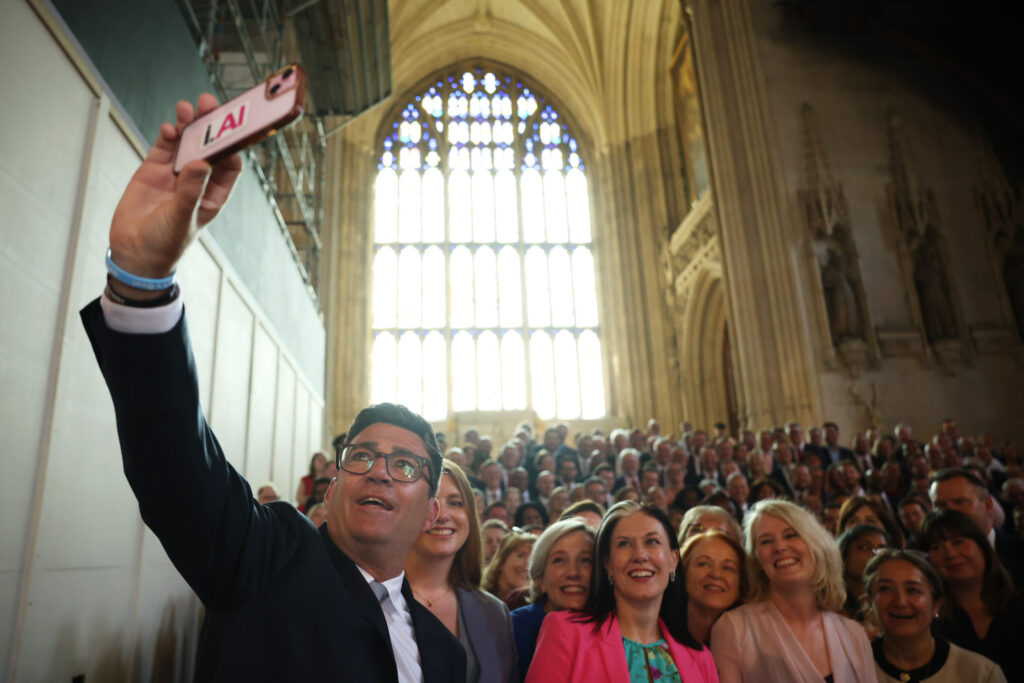
Hail Andy, King of Makerfield 

William Cash | June 19, 2026

As vultures circle Downing Street, now that Burnham is back as an MP, Starmer must realise that resigning is going to be better for the Labour Party than

Musical chairs again in Downing Street

Lucy Carrier-Pilkington | June 18, 2026

What will a Burnham government look like ? Lucy Carrier-Pilkington analyses what a change of prime minister will mean for the country and who will be the likely
Reform v Restore: the English civil war in Makerfield that will decide the next Labour prime minister

William Cash | June 15, 2026

With Restore and Reform tearing votes off each other, the Makerfield by-election could propel Andy Burnham into Number 10. But, asks William Cash, will Restore's percentage of the
