FTSE 100 breaks through 10,000 for first time as London equities start 2026 strongly

Mace | 2nd January 2026 | Policy & Think Tanks, Politics
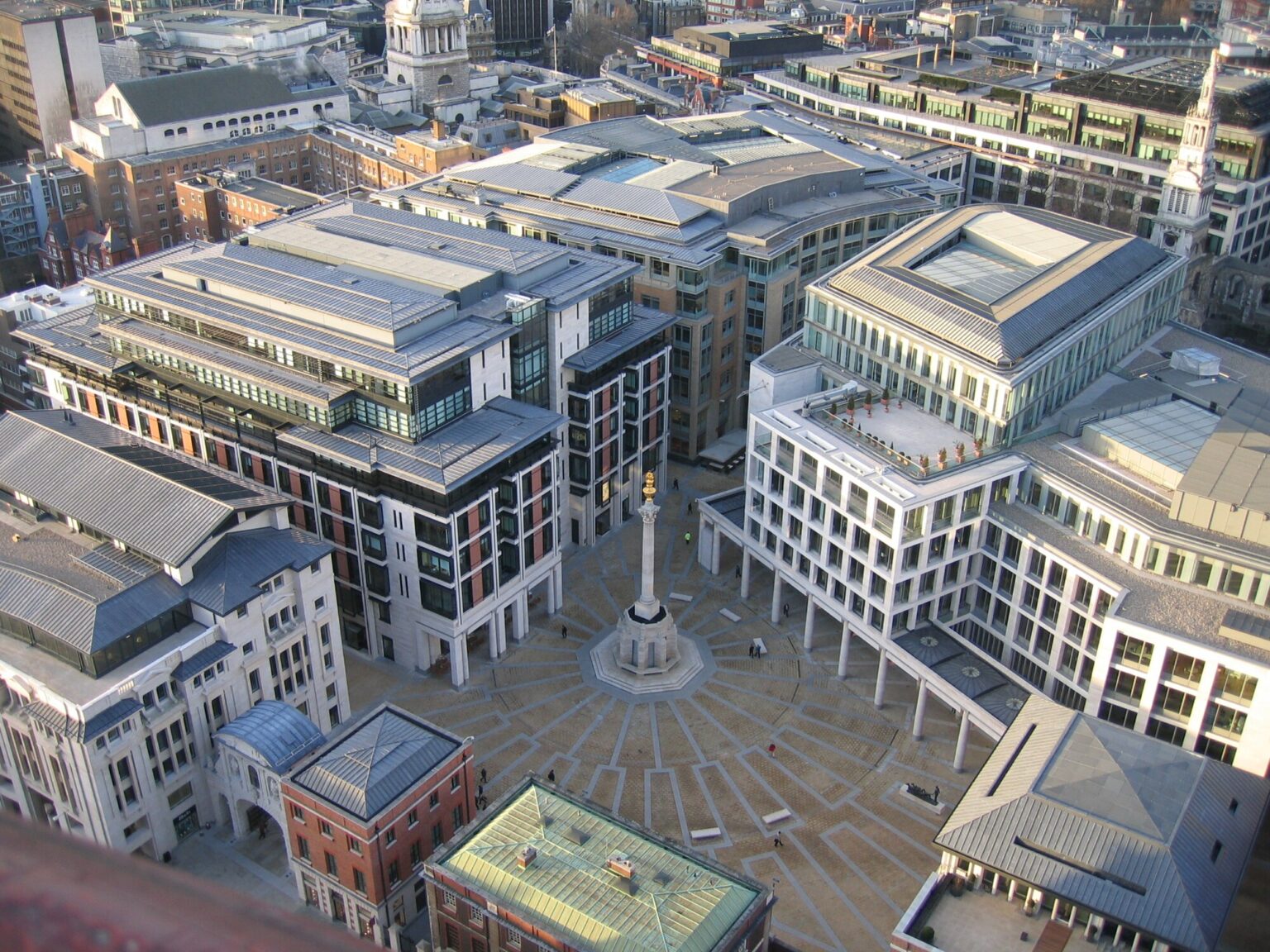
Paternoster_Square

The FTSE 100 surpasses 10,000 for the first time, reflecting strong gains in commodities, defence and financial stocks.

The FTSE 100 index hit the 10,000 mark for the first time on 2 January 2026, crossing the milestone during early London trading as UK equities began the new year on a strong footing. The benchmark index moved above the level after a year of sustained gains, marking a symbolic moment for a market that has often lagged behind major global peers. The move followed a rally that saw the index rise by around twenty two per cent over 2025, its strongest annual performance in more than a decade. The milestone came as global equity markets opened 2026 with broad optimism. European shares advanced in early trading, supported by positive sentiment around economic resilience in the United States and easing concerns over monetary policy tightening. Investors returning after the holiday period pushed several major indices higher, with London benefiting from strong performances in heavyweight sectors. Mining and energy stocks were among the leading contributors to the FTSE 100’s rise. Companies linked to commodities gained as prices for key resources remained elevated, reflecting continued demand and supply constraints in parts of the global market. The index’s heavy exposure to resource firms helped amplify gains compared with markets more concentrated in technology stocks. Defence companies also added to the upward momentum. Increased government spending commitments and ongoing geopolitical tensions have supported share prices in the sector over the past year. These stocks featured prominently in the index’s advance, reinforcing the role of defence as a driver of recent market performance in London. Financial stocks provided further support as banks and insurers rose in early trading. Expectations that interest rates would remain higher for longer than previously anticipated have underpinned earnings prospects for lenders. The strength of the financial sector, which makes up a substantial portion of the FTSE 100, played a central role in pushing the index beyond the 10,000 threshold. The FTSE 100’s structure has shaped its path to the milestone. Unlike US benchmarks that are heavily weighted towards large technology companies, the London index is dominated by multinational firms in energy, mining, pharmaceuticals and finance. This composition has benefited the FTSE during periods when value oriented and dividend paying stocks have outperformed growth focused sectors. The index’s rise also reflects the international nature of its constituents. Many FTSE 100 companies earn the majority of their revenues overseas, meaning currency movements have a significant impact on performance. The relative weakness of sterling over recent years has boosted the value of foreign earnings when translated back into pounds, supporting share prices. While the 10,000 mark carries symbolic weight, it follows a series of record highs reached by the index over the past year. Investors have steadily pushed the benchmark upward as concerns about recession eased and corporate balance sheets remained resilient. The pace of gains has contrasted with earlier periods when UK equities struggled to attract global capital. Mid sized companies did not match the same momentum. The FTSE 250 index also rose at the start of 2026 but remained below its own previous highs, highlighting the divergence between internationally focused blue chip firms and more domestically exposed businesses. The gap has persisted as the UK economy continues to adjust to higher borrowing costs and slower growth. The FTSE 100 was launched in 1984 with a base value of 1,000 points, making the move to 10,000 a tenfold increase over more than four decades. The journey has included periods of rapid growth, sharp downturns and long stretches of stagnation. Reaching the milestone places the index among a small group of global benchmarks to cross such a level. Attention is now turning to whether the gains can be sustained. Market participants are watching central bank decisions, commodity prices and geopolitical developments for signals on the direction of equities in the months ahead. For now, the FTSE 100’s move past 10,000 marks a notable moment for the London market as it enters 2026....

Subscribe to The Mace

Join the member community shaping British politics and stay ahead of what's really happening in the world of politics and public affairs, with expert analysis, breaking news, and insider insights from Westminster and Brussels. The Mace is the leading news source and resource for the government affairs industry, offering required reading and lobby intelligence for professionals.

To see what you are missing out on by not subscribing to The Mace, click here to download our full membership info-pack. This includes having no paywall on op-ed content or profiles/interviews, allowing professional profiles to be read with maximum impact and visibility by government, special advisers, MPs, peers, civil servants, and policy and political decision-makers.

‘Al is a born leader’: The dark horse of the Labour leadership contest 

Lucy Carrier-Pilkington | June 16, 2026

Ex-Royal Marines commando emerges as the plan B candidate in the race for Labour leadership.

The social media ban: game changer or rushed job?

Lucy Carrier-Pilkington | June 16, 2026

Debate has erupted over whether the new policy is an overdue attempt to rein in Silicon Valley or a short-sighted, politically motivated move that will push children towards

Reform v Restore: the English civil war in Makerfield that will decide the next Labour prime minister

William Cash | June 15, 2026

With Restore and Reform tearing votes off each other, the Makerfield by-election could propel Andy Burnham into Number 10. But, asks William Cash, will Restore's percentage of the

Memo to the new Defence Secretary before the NATO summit: “It’s not all about the money”

Mace | June 12, 2026

Creating a Defence Industrial base with no new money is going to be a challenge for any Defence Secretary. But, argues defence expert William Wallace, there are several

Reflections on May: London’s new political landscape

Jonny Popper | June 11, 2026

May’s local elections completely transformed London’s political landscape, argues CEO Jonny Popper.

When it comes to English police reform, do not repeat the mistakes made north of the border

Mace | June 5, 2026

The dismal results of reducing the police force in Scotland should act as a cautionary deterrent for English police reform, writes Sharon Dowey, a former member of the

Checkmate DC’s bold London move

William Cash | June 5, 2026

Tristan Breijer is the new London head of Checkmate Government Relations. The move into London gives the US lobby firm its first European base, bringing its global power-broking

Gradually and suddenly: how VAT is slowly killing off traditional private education

Mace | June 5, 2026

Latest Dept of Education figures reveal over 40,000 independent school pupils dropping out since Labour's VAT raid. But, The Mace argues, surging fees, an arms race for facilities

What the Mandelson files reveal about Global Counsel

Lucy Carrier-Pilkington | June 4, 2026

Lord Peter Mandelson has found himself in the headlines again, as the 'Mandelson Files' reveal the true extent of his involvement in the Labour Party.

Do outsiders in government really work?

Mace | June 4, 2026

As politicians call for more external appointments in Whitehall, Professor Nada Kakabadse argues that the real challenge lies not in recruitment, but governance.